Tuesday:
Maintenance As Art
Art truly is in the eye of the beholder. It’s a shame that most people don’t view the minor intricacies of the world as art until someone calls it out. Art is a mindset. An internal training that sets the world on fire. As long as you look for it, art will always be there. I just have to remember to keep looking.
The American Lawn:
It’s crazy to me that something so common, so simple as a lawn actually holds layers of complexity and controversy. When actually taking a moment to consider the lawn I have come to the conclusion that it is a very unnatural form of cultural oppression on the natural environment. Apart from sports fields they don’t really serve much purpose. The main purpose is to have something clean to look at. Up until recently i had never even given my lawn a second thought and no i’m considering why i even have a lawn and is there a better way to utilise the space. Michael Pollen explores this concept of the American lawn in “Beyond wilderness and Lawn” stating “My conviction is that gardening, as a cultural activity, matters deeply, not only to the look of our landscape but also to the wisdom of our thinking about the environment.”
What is critique for?
- Building capacity to develop your work as well as other peoples work.
Group defined Parameters of Critique:
- Context of location, why, etc.
- personal interest/connection in site
- idea generation
- method of documentation
- presentation of documentation
- further development and final outcome intentions
Critique of my 10 documents so far:
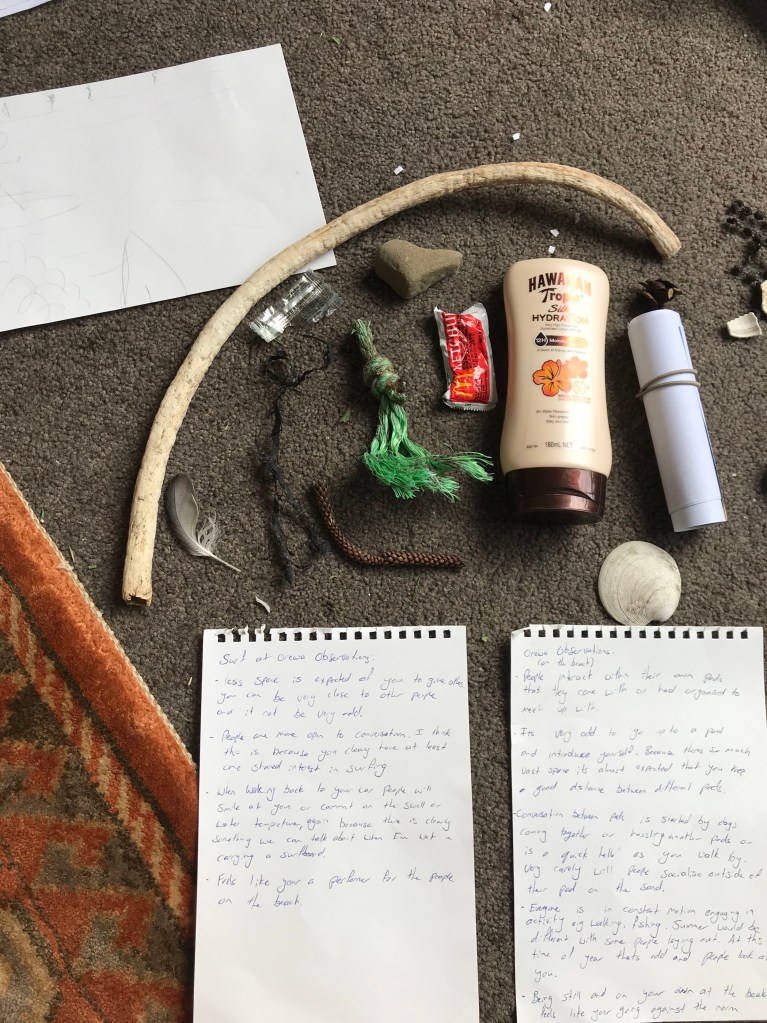
My feedback:
- Explore how the tides affect the way people engage in the space.
- Note the ages of the people engaging at the beach and in what capacity.
- An interesting contrast between the use of colour nature vs man made. Bright vs neutral. The evidence of who has engaged with the space.
Further explorations:
- The people on the beach have made a distinctive choice to be there and enter the space. Why?
- Interviews?
Thursday:
Critiquing each others 5 favourite documents.
Artist research:
Dining Disorder
Dining Disorder
The idea that a process that is normally a one way route could in-fact travel in the reverse is a great new way of approaching my own installations. This would create a new experience with the nostalgia for the original. Through reading this text i was challenged by the term ‘perfect’ in “a perfectly laid table”. Who says that thats perfect? Is there another way that we haven’t considered?
I also liked the way she described the dining experience as choreography as it can feel like a dance when you have a full table and a-lot of dishes to to pass around. It paints a very clear picture and brings new meaning to the dining experience.
Beached whale:
When researching different installations implemented in a beach setting I found this Beached Whale installation by Greenpeace Philippines. Created out of ocean plastic to bring awareness the the level of pollution in the area. The shear scale of the piece is enough to grab your attention. They used colours very effectively creating the gore of spilled guts bringing the horror of the situation to light. The combination of materials, colours, scale and concept are very effective in portraying the intended message. This serves as a good reminder to think abstractly and to think through the most effective way to convey my concepts without needing to explain with words.
In a State of Flux:
I love the concept of just happening upon an installation/ intervention. The reactions are pure and honest and like Ann Jones said in here article “it existed for those who were involved in the building process and in a different way for those who came across the ice enclosures before they melted away.” Everyone reacts and interacts with the world differently and it can be very clear to see these reactions when something unexpected crosses your path.
“Kaprow believed in the use of everyday materials for making art and developed the idea of the happening: experiential art events, with the art emerging from the combination of the activity of the artist(s) and the response and involvement of the audience.” I love this relationship between artist, art and audience and the concept that the art isn’t complete with out all three.
 Spatial Fabrication