Context Talk on Site Material Narratives and Surface Design
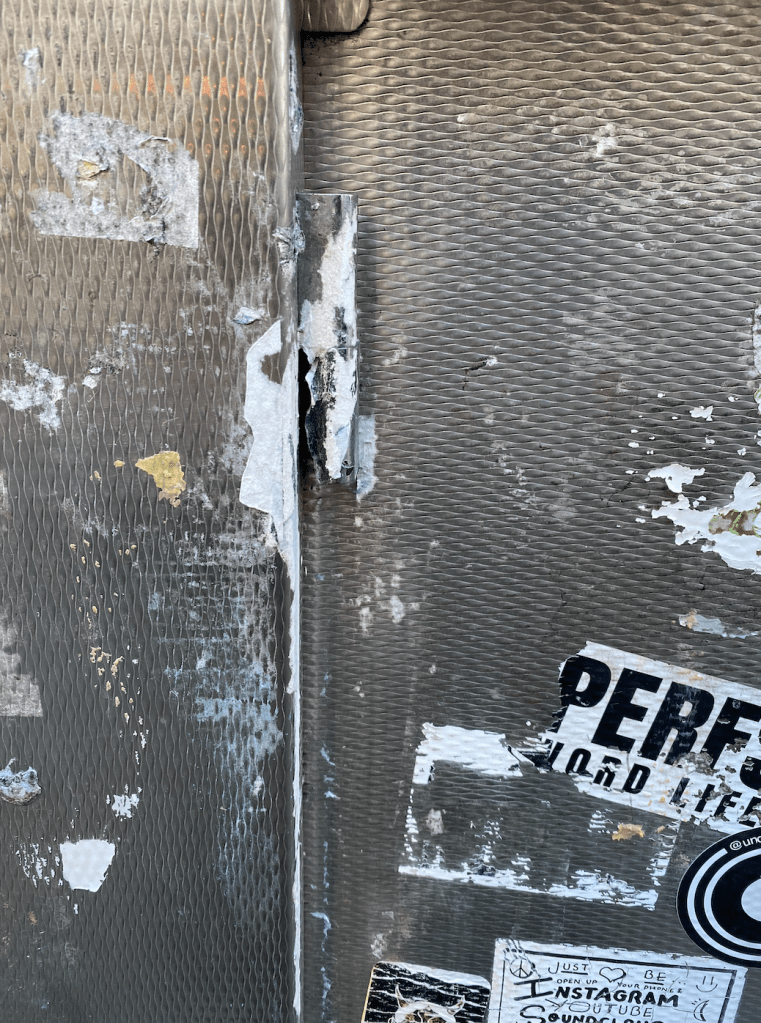
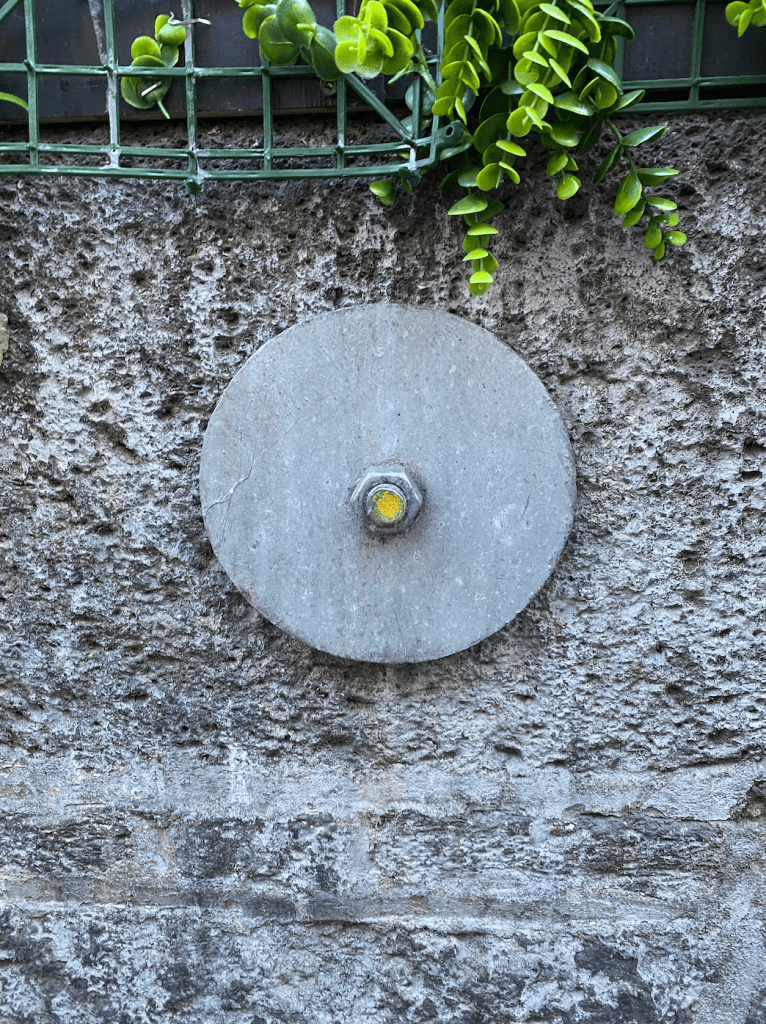
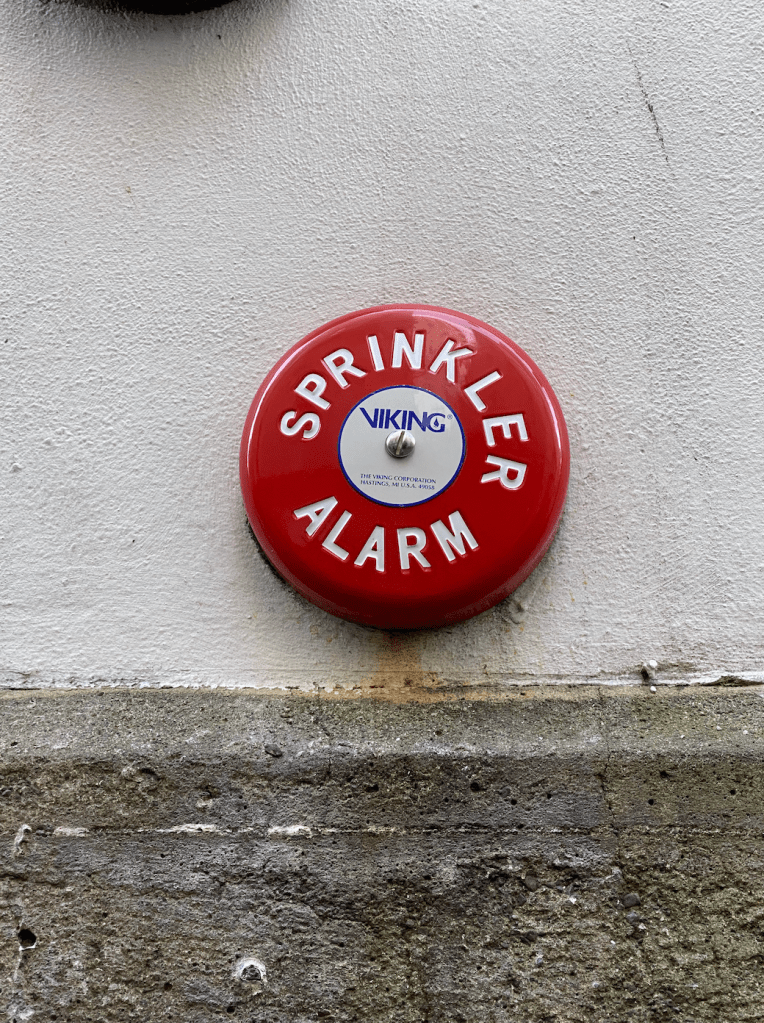
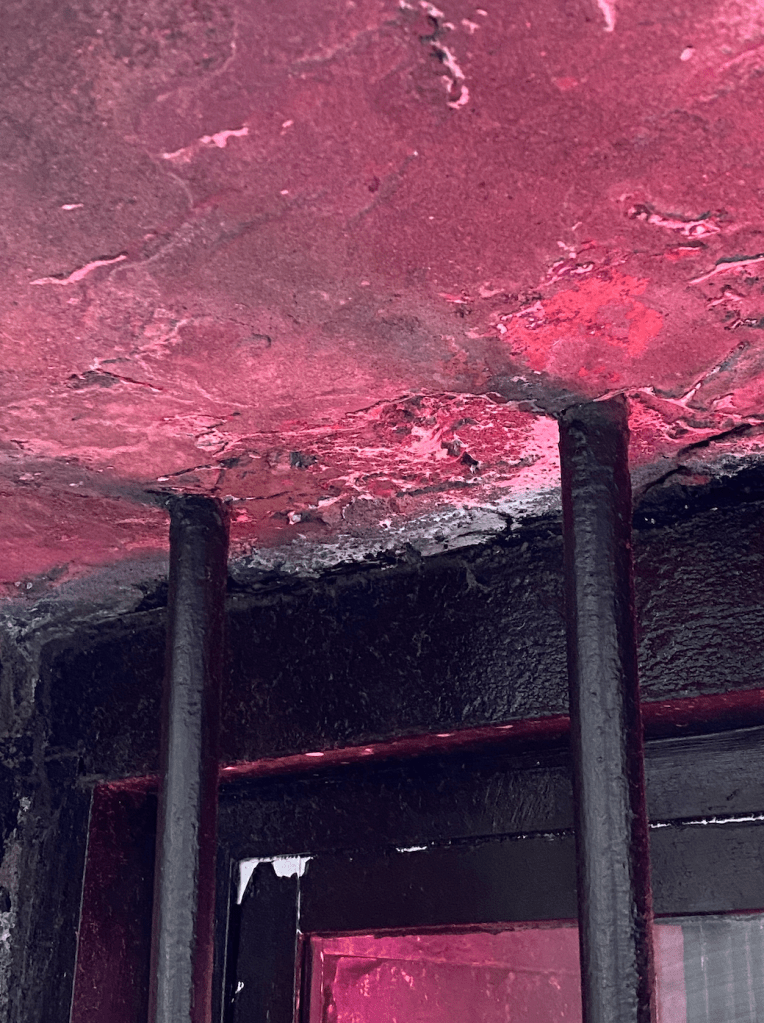
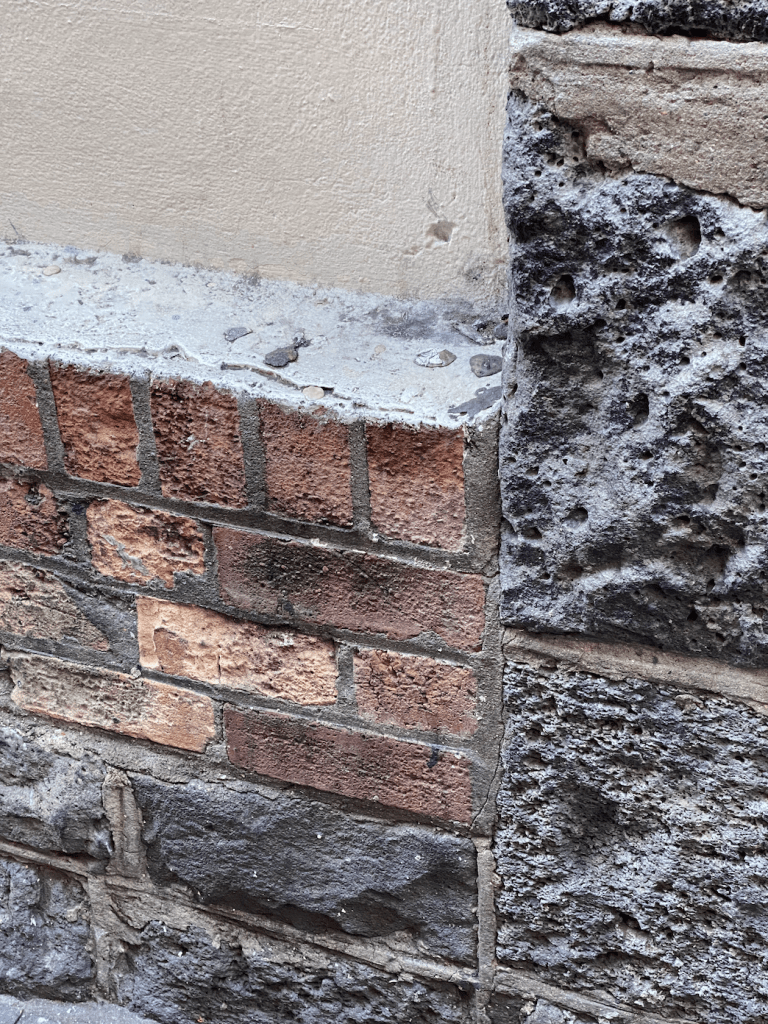
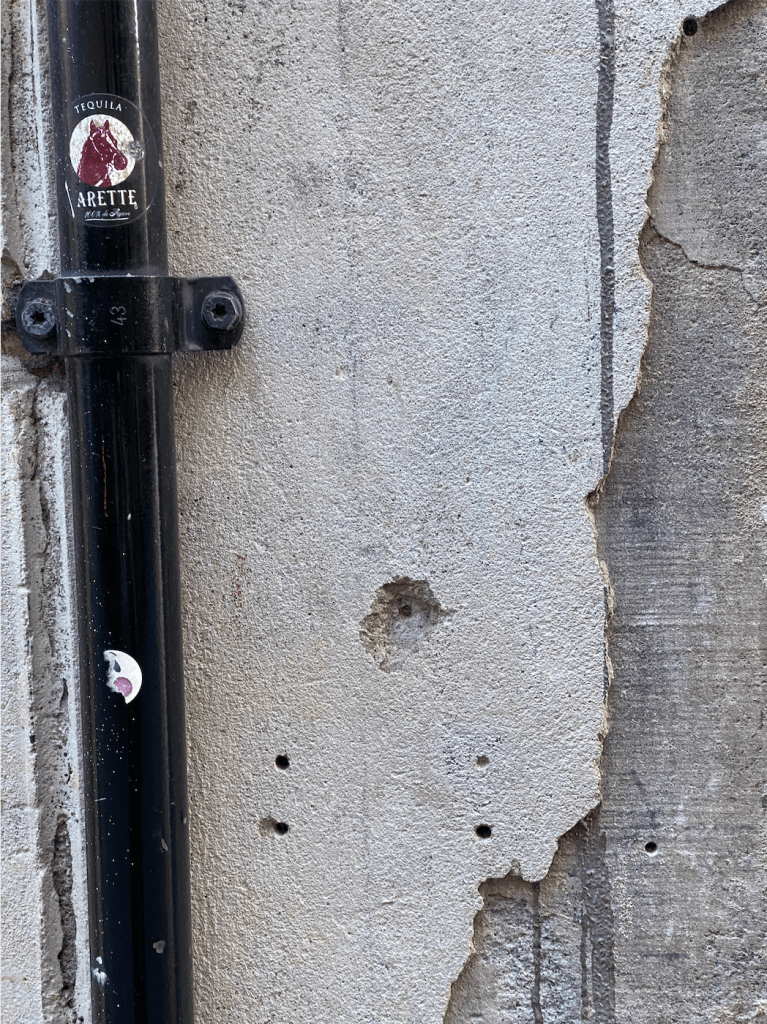
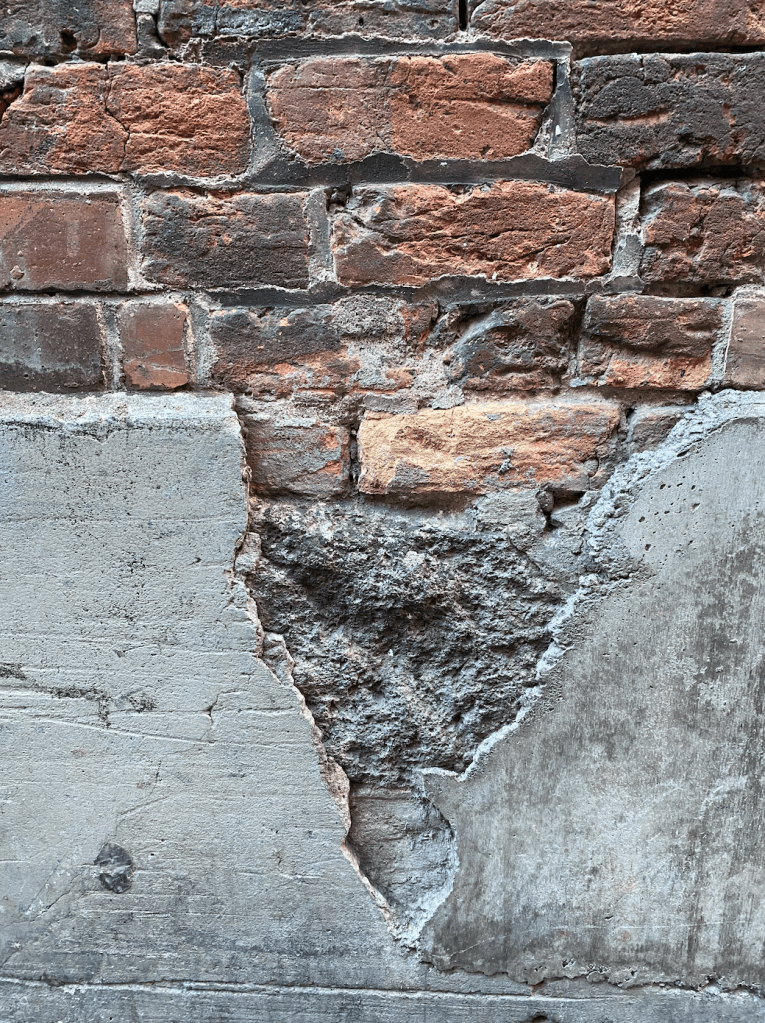
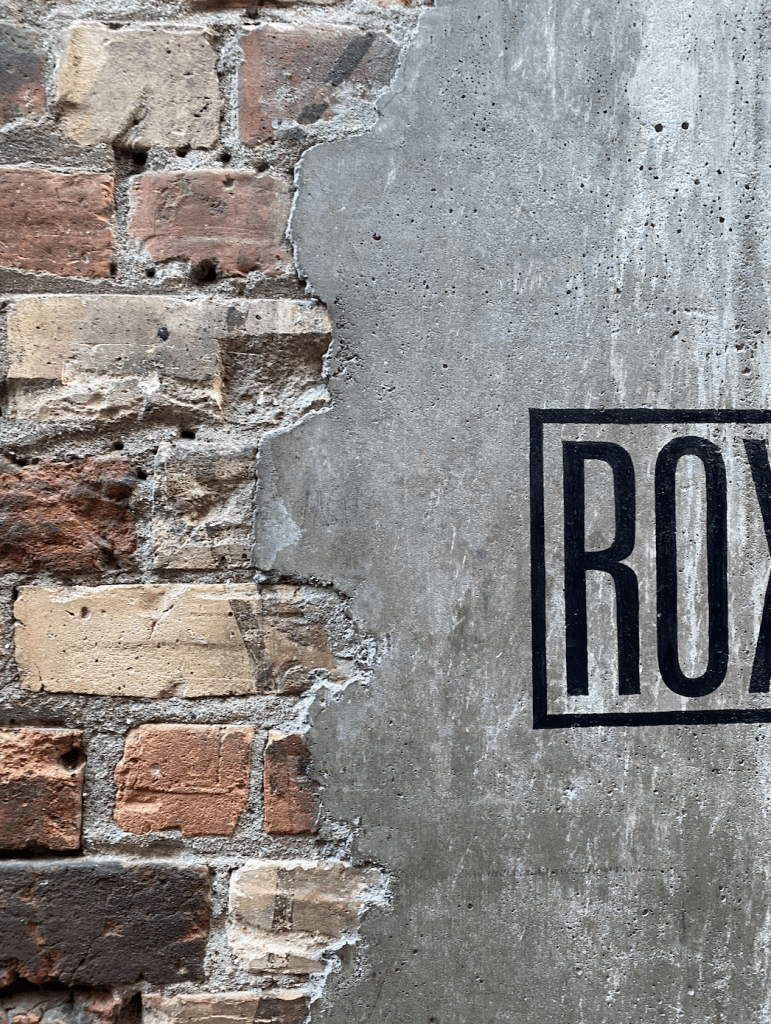
Document in detail surfaces of your site in Fort Lane:
Select 3 case studies (art and design ‘surface’ related projects) and research materiality, assembly, fabrication processes, poetics of space, and relationship to site.
The Cineroleum – contructed using cheap industrial, reclaimed or donated materials and made by volunteers with the help of handbooks. I’m especially drawn to the curtain of this project. ‘The Cineroleum was an improvisation on the rich iconography and decadent interiors of the golden age picture palace.’ ‘The auditorium was enclosed by a curtain, created by hand-sewing about three kilometres of seam in roofing membrane.’ This roofing membrane is incredibly effective with blocking the light but it also has this radiance to it that makes it look very luxurious and very old hollywood. This curtain perfectly marries the industrial nature of the site while bringing the decadence of old cinema and creating an intriguing atmosphere.
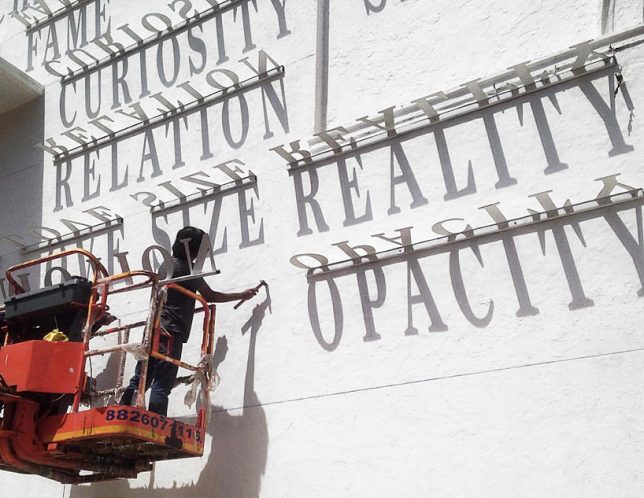
‘Motion is the central principle behind this public artwork, planned especially for Willis Tower. The dynamic pattern on the wall is activated by the motion of people walking, driving, or biking past; by the motion of the earth in relation to the sun as light moves across it; and by changes in the season and weather. Viewing the work from various positions and at various times of day produces a dramatically different experience. The artwork covers the wall with a pattern of metal tiles based on Penrose tiling. Discovered by mathematician and physicist Sir Roger Penrose in the 1970s, this approach produces a system of non-periodic tiling that is based on five-fold symmetry. The result feels both regular and random, hovering just beyond our ability to quickly comprehend it.’
I really like this idea of ‘you only see things when you move’ especially when thinking about a cinematic brief. Creating a surface that animates with the movement of the observer.
‘Rugged construction materials blend with the classic refinement of macramé knotting.’ This idea is very much in line with the fort lane site. Blending materials, textures, patterns as you move through the space.
Create 3 x surface designs. Consider materiality, assembly and detail.
Create a screen – something to see through or a curtain?
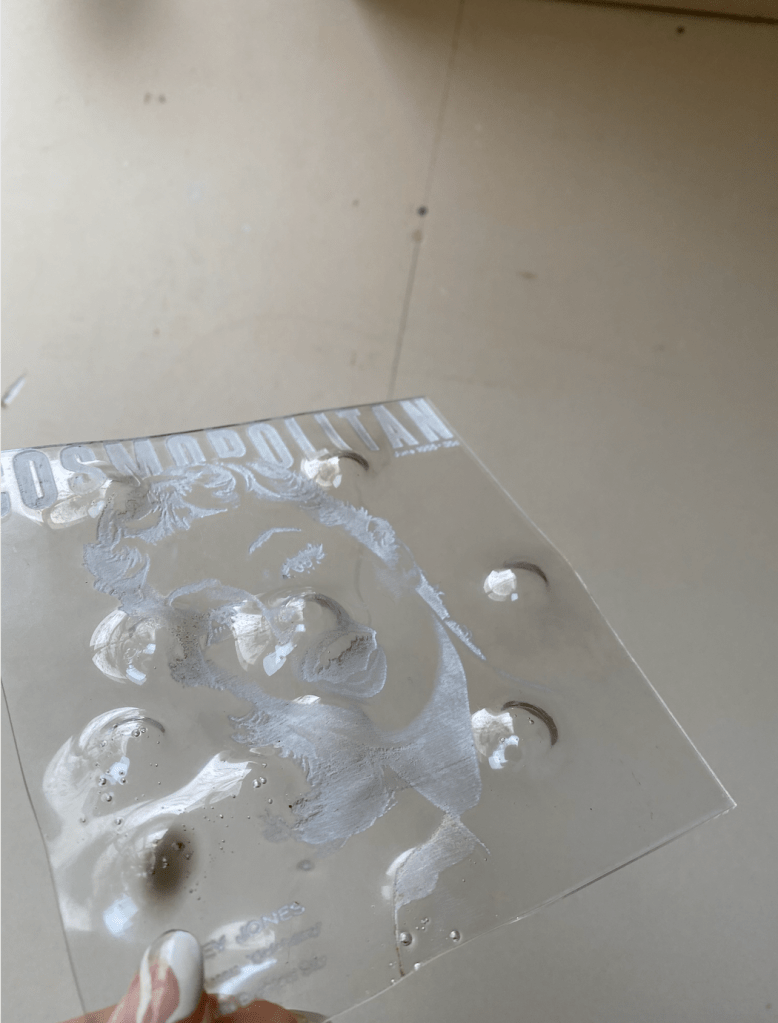
Acrylic Screen
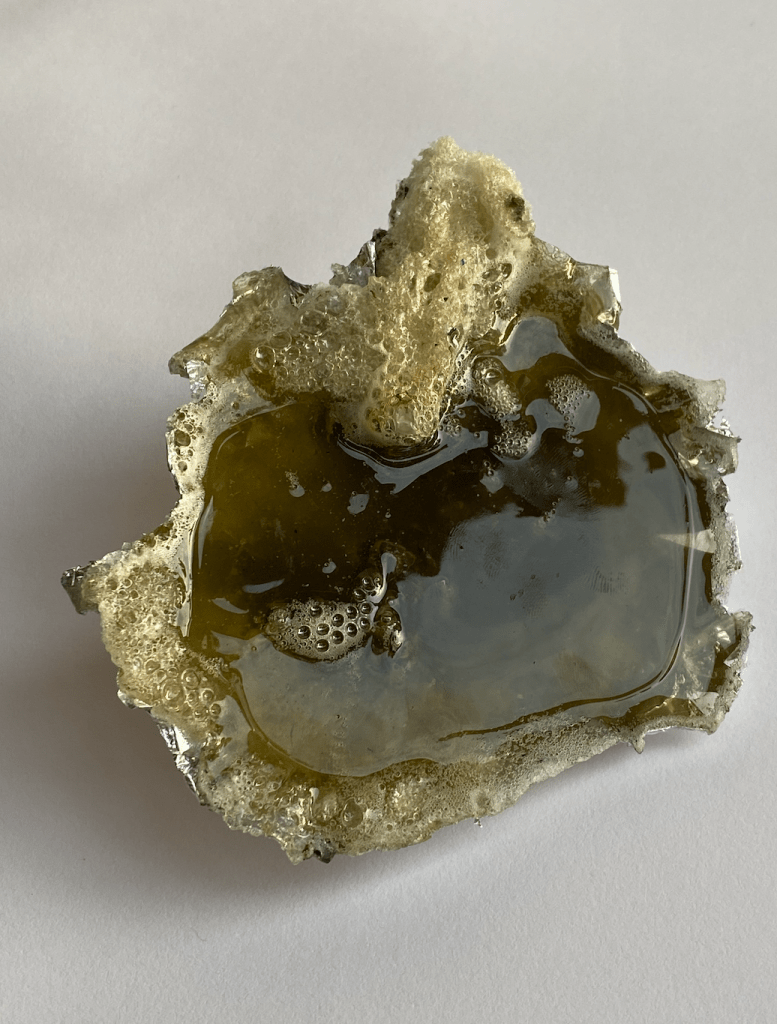
Resin Puddle
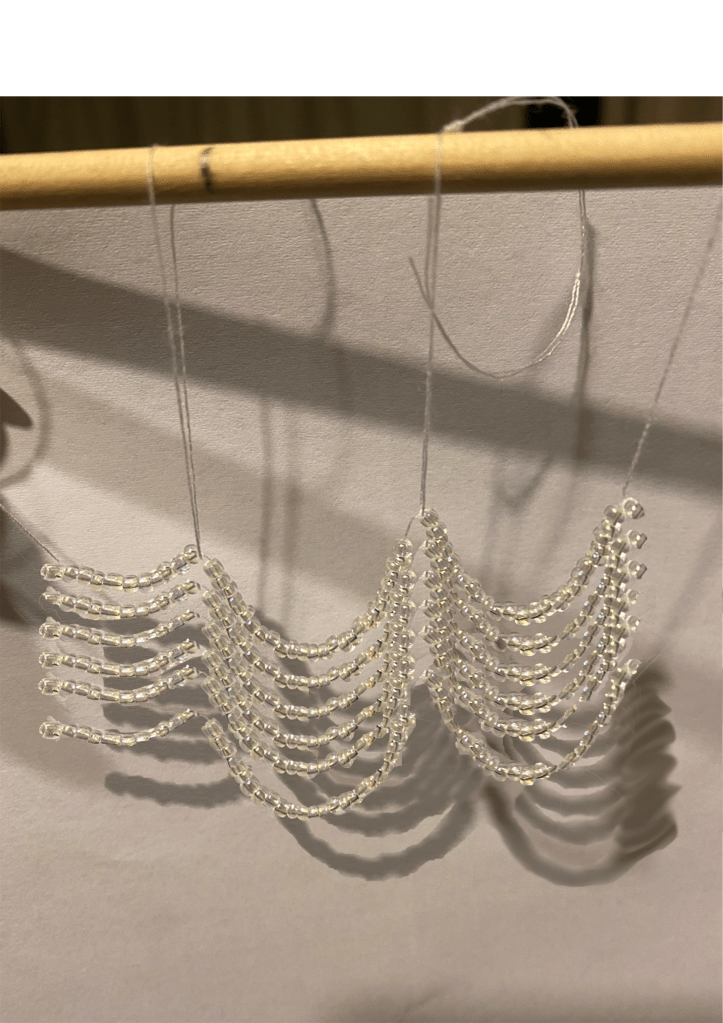
Beaded Curtain
Acrylic screen etched to create a focal point and then heating and extruding the focal point to catch the light and warp colour.
Resin pool filled with cement, dirt and brick reflecting the site and its elements whilst literally reflecting the surrounding environment off of its smooth face.
Beaded curtain bringing an old hollywood flair to a window, bouncing light and adding texture.
Wednesday:
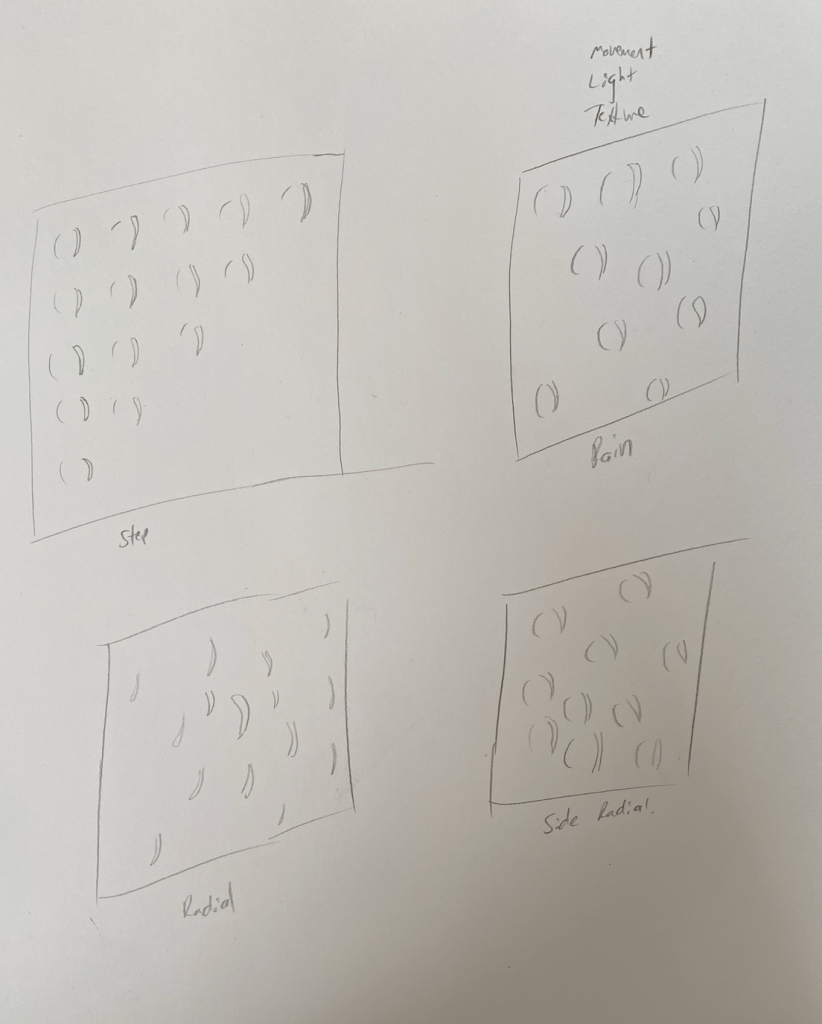
Produce a sketch design (drawing) for one surface design (or combination of designs). Consider how your surface design will be scaled up (pattern, repetition and difference, variations and permutations) Develop surface design through iterative design process. Consider materiality, assembly and detail. You may wish to work in studio or the 3D lab to develop your surface design samples.
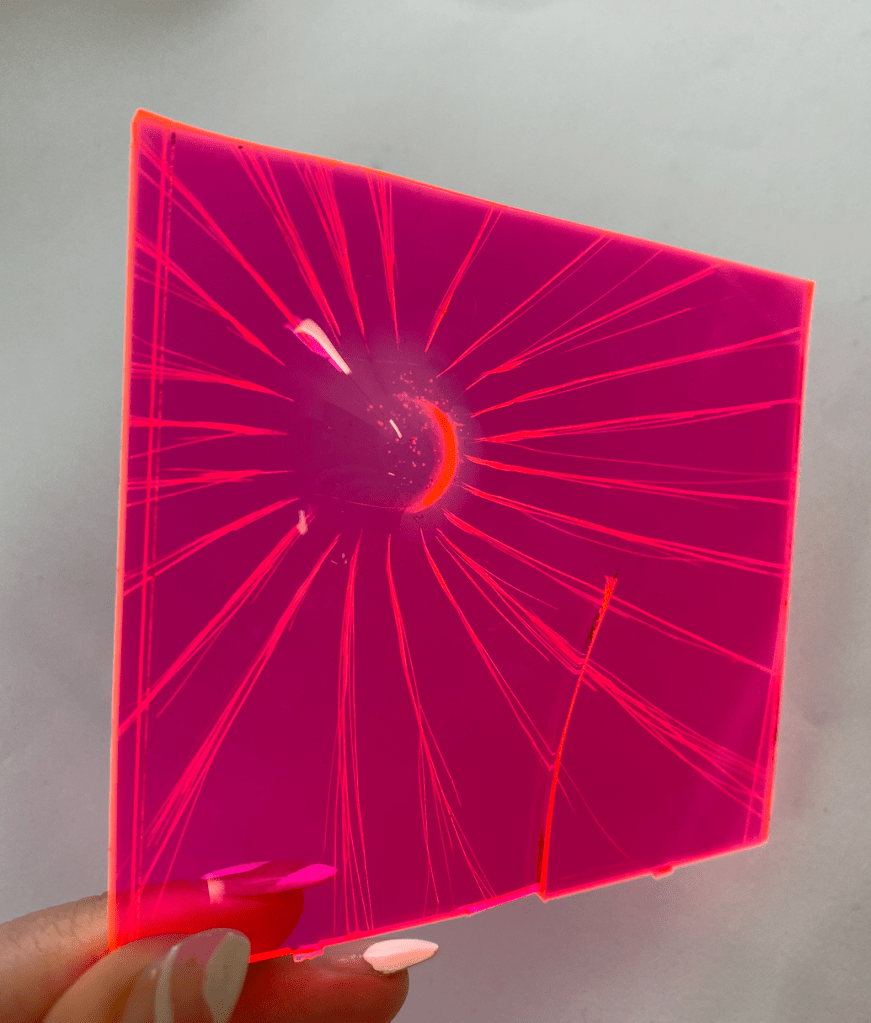
I really liked the tactile nature of my Acrylic screen and wanted to take it further. I explored a few different patterns of warping the acrylic and when I went to find some acrylic sheet I found a piece that had a laser engraving in it from a previous project which I thought would add an interesting dynamic. I would use these tiles in place of window panes drawing people close to touch it whilst also causing people to pause in their visual intake and observe the screen before venturing into the interior space that it shields.
Temporal span – I’m interested in the period of time when the day comes to an end and the night begins. To watch the transition in the atmosphere, how that changes how we interact with the world and the changes we undertake in that transitional period.
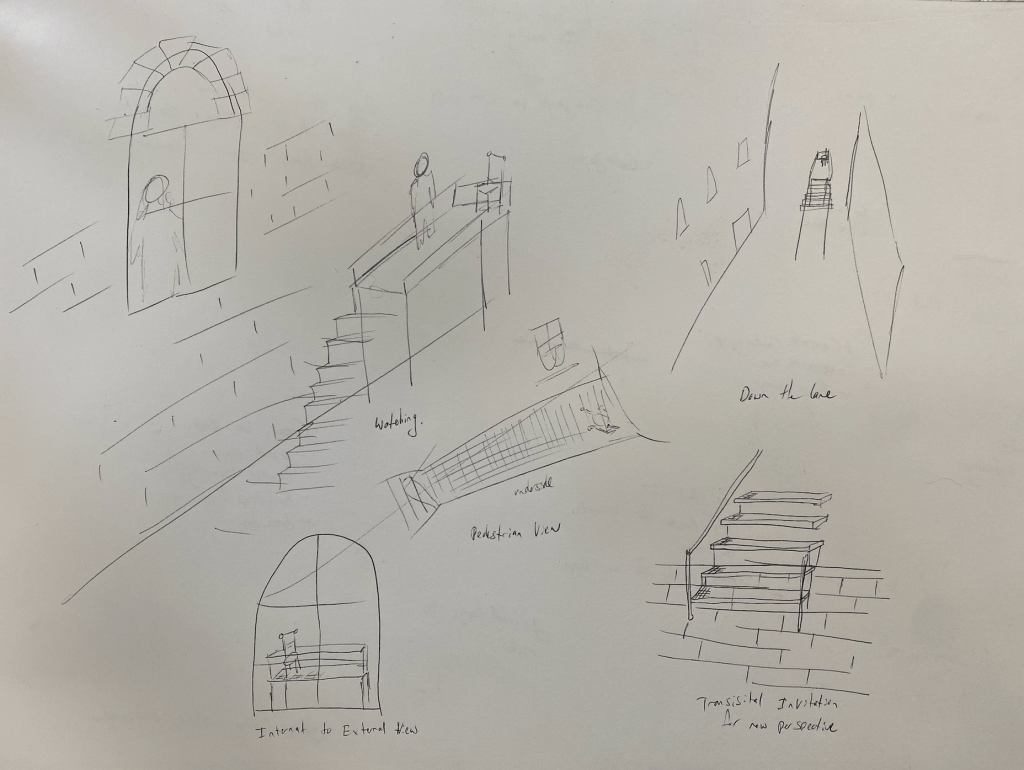
Site within a site I intend to work with – the balcony on the front of the Roxy club. Playing with the idea of entertainment coming from the windows. Nodding to roxys time of being a cinema and providing entertainment then. Im thinking of creating more balconys/ landings/ viewing platforms on the car park side to sit and watch the windows of the buildings.
5 key conceptual terms i’m working with:
reality entertainment – i personally love to people watch and i think everyone else does too which is why reality tv shows are such a hit. There’s something incredibly satisfying about being a fly on the wall in. However in these reality tv shows there is a level of control surrounding the narrative that gets communicated which could be fun to explore.
privacy – You can easily induce the feeling of privacy using the right lighting, arranging a space in a certain way and channelling people’s attention. Windows are an interesting element when exploring privacy. They allow people to look out from a controlled vantage point on unsuspecting subjects but also lets people look into an intimate environment especially at night when lights are on inside leaving the inside people none the wiser.
public – What does it mean for something to be public. How do we differentiate between a public encounter vs a private one? Does a public encounter just mean we’re allowed to see it or that it has been made for the viewer to see? If that’s the case most interactions we observe wouldn’t be for the public.
Control – i like the idea that you can control the narrative of what people see depending on how you frame a situation or environment. Things look a lot different through a small window especially if what’s in that small window is carefully curated for a certain story or narrative. Our imaginations can do us dirty when we have room for filling in the blanks.
Perception – similar to control, the way we perceive our environment is influenced by things like lighting, composition of forms, textures, sounds, smells. These influences can leave us with a very distinct impression weather we mean them to or not and ultimately affects how we have experienced a place. Its our instincts overriding our logic.
Idea:
a mirror ‘screen’ on the ground set at such an angle to watch a certain balcony or spot above the lane. “watching a show”, ‘reality tv’. Mirror or reflective surface? rose tinted?
Actively sitting down to watch reality. A stage and a grand stand?
An event? half get invited to get ready and go to a night out, half get invited to watch people live their life?
Tuesday:
Develop Temporal Vocab – min 3 terms define briefly
Transitioning – moving from one space to the next, or from moment to moment. The pause in the busy where we close a chapter and open a new one.
Periodically – having a program at regularly occurring intervals over a course of time.
Beginning – the official start to something new. In my opinion the beginning is the most exciting moment of any period of time.
Ending – The official close of a period of time. A clear marker to communicate that what has been taking place will no longer continue the way that it has.
Pace – the tempo or rhythm at which we move through time and take in information.
Invent series of 5 drawings that describe design idea moments, rough manner, thinking about fragments or moments:
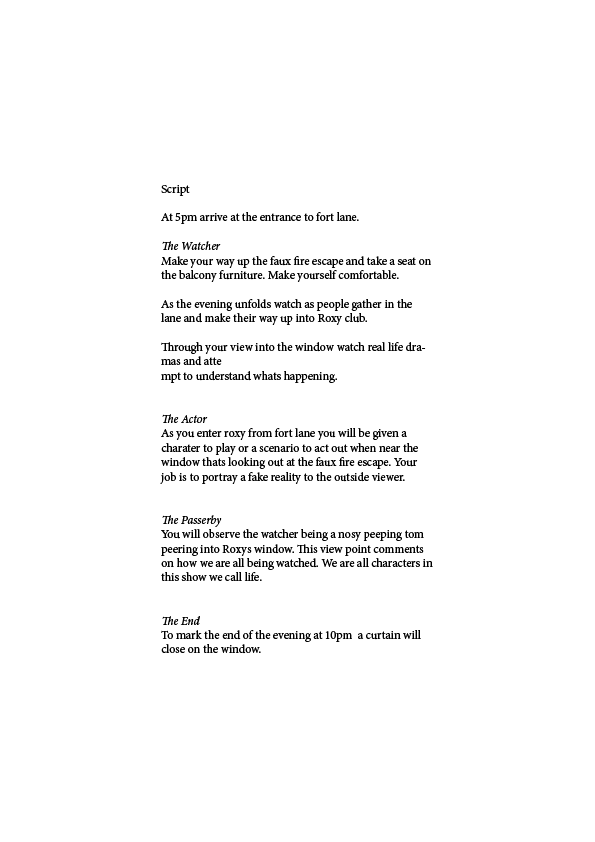
Write draft script (programe) for design intervention.
Annotate drawings:
what will take place? potential scenarios to take place.
The kinds of situations people love to poke their noses into – an affair, young love, a fight, a theft.
Who is it for? 18 years old and up. people who enjoy people watching, drama, reality tv.
How many times/ how often? Every friday night for a month.
Why is it important to me? I think its important to remember that we don’t always know whats going on behind the scenes in peoples lives. What you see of someones life through things like social media or from a short period of time with them isn’t the full story. Theres always more than meets the eye.
Wednesday:
On site with script:
Take detailed measurements, pics rubbings etc. materiality community context action, gesture, tonality, shadow. Develop considered design concept/intervention.
idea: balcony tea? the future of urban socialising. being neighbourly, living in community.
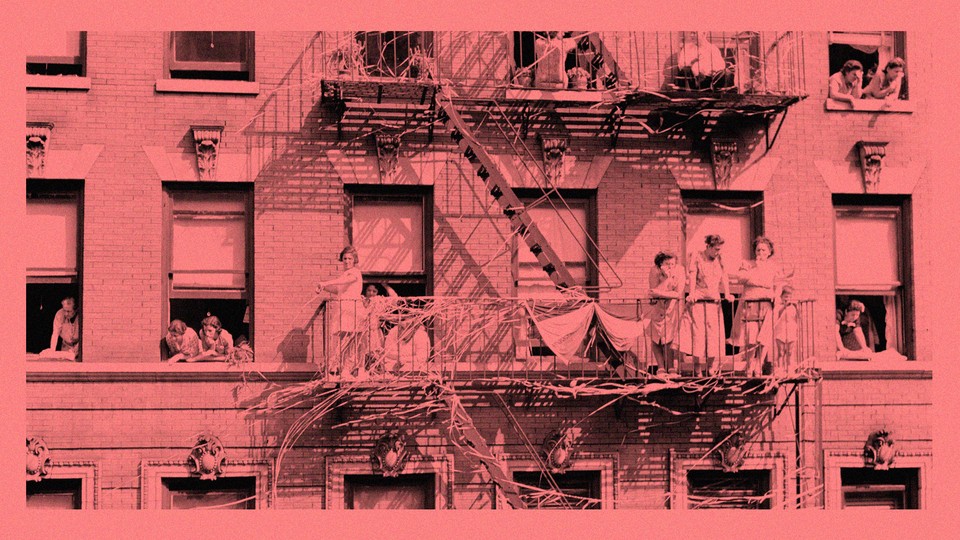
‘City dwellers reshaped the fire escape, and in so doing it changed urban life. Fire escapes became makeshift jungle gyms for kids and offered a place to catch a breeze while hanging the wash to dry. Today it’s uncommon to hear of people dying after rolling off of a fire escape in their sleep, but it’s normal (if still illegal) to see fire escapes turned into vegetable gardens, smoking patios, and makeshift bike racks.’
‘Most fire escapes have the sharp edges of utilitarian simplicity, but many are ornate works of decorative art designed to be functional jewelry, albeit for urban infrastructure.’
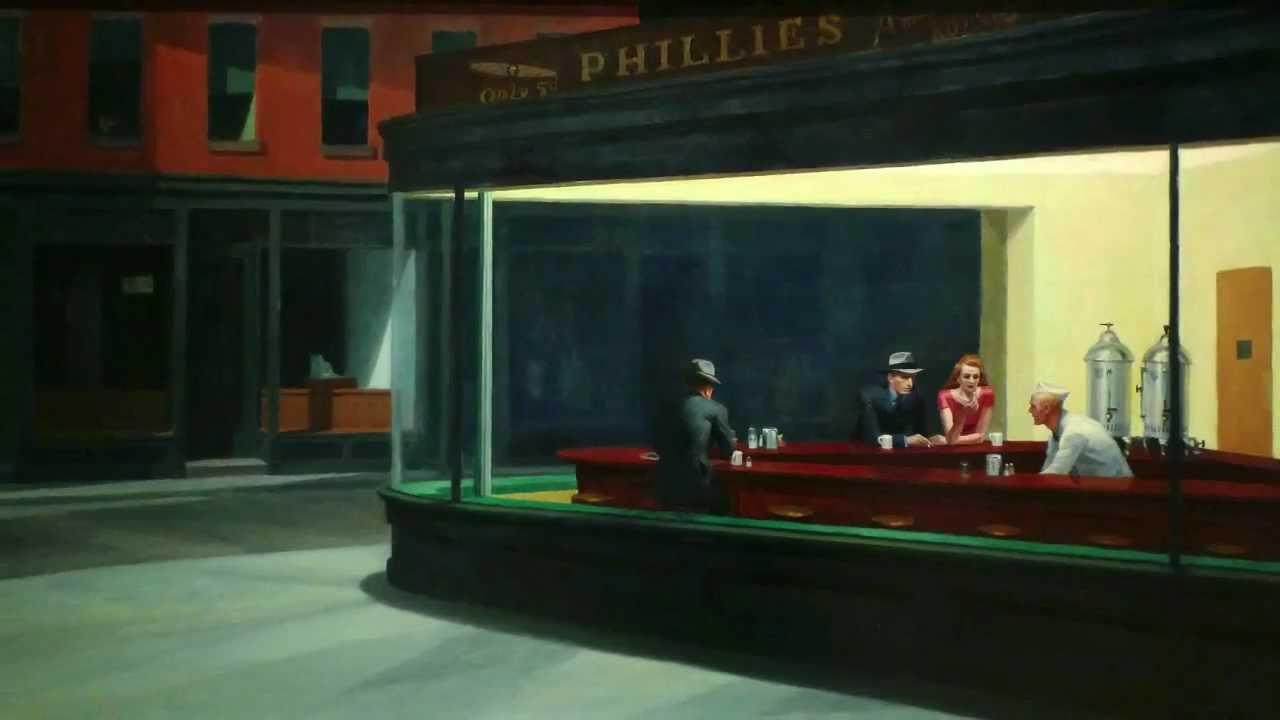
‘In 1942, the American painter Edward Hopper produced the signature image of urban loneliness. Nighthawks shows four people in a diner at night, cut off from the street outside by a curving glass window: a disquieting scene of disconnection and estrangement. In his art, Hopper was centrally concerned with how humans were handling the environment of the electric city: the way it crowded people together while enclosing them in increasingly small and exposing cells. His paintings establish an architecture of loneliness, reproducing the confining units of office blocks and studio apartments, in which unwitting exhibitionists reveal their private lives in cinematic stills, framed by panes of glass.’
‘The dissolution of the barrier between the public and the private, the sense of being surveilled and judged, extends far beyond human observers. We are also being watched by the very devices on which we make our broadcasts. As the artist and geographer Trevor Paglen recently said in the art magazine Frieze: “We are at the point (actually, probably long past) where the majority of the world’s images are made by machines for machines.” In this environment of enforced transparency, the equivalent of the Nighthawks diner, almost everything we do, from shopping in a supermarket to posting a photograph on Facebook, is mapped, and the gathered data used to predict, monetise, encourage or inhibit our future actions.’
Alternative structures for an elevated platform. Considering material, colour, finish and how it feels to touch as well as structural details and the way it relates to its surrounding structures.
Thinking of event space/ performance space:
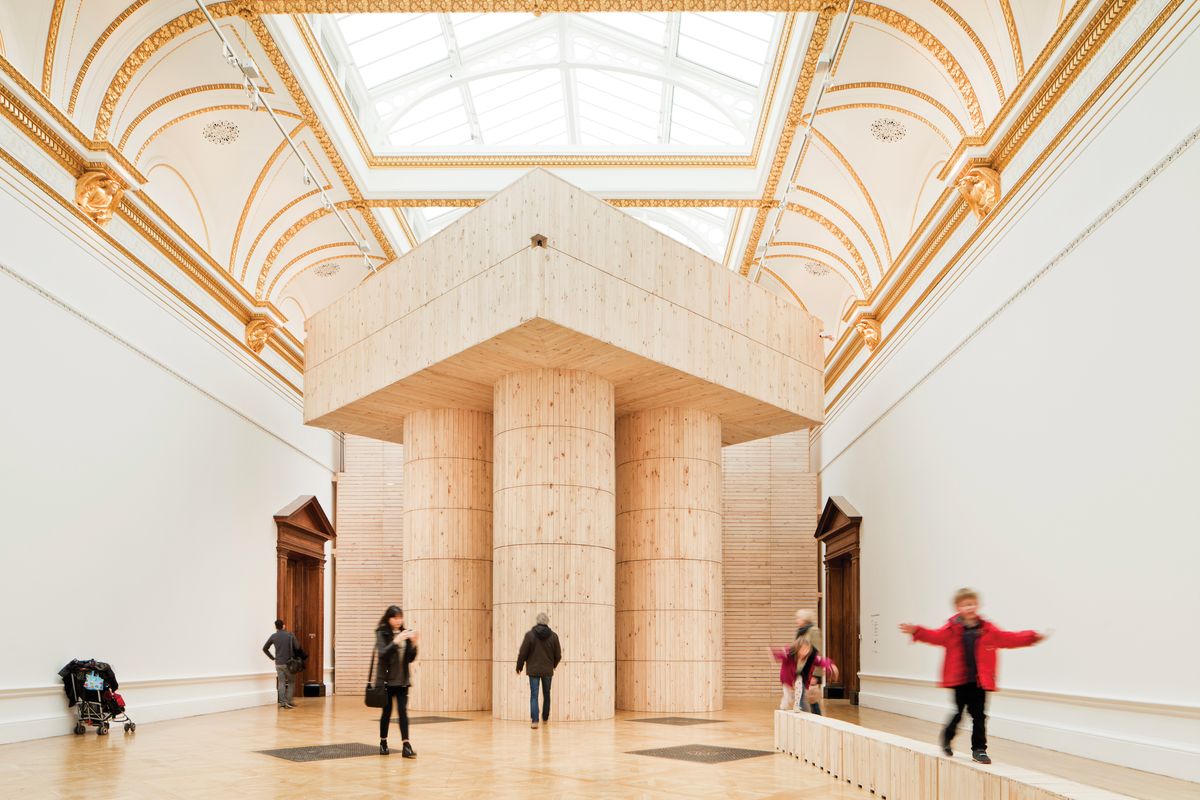
how you can utilise non traditional sites, materials and building methods to create a space to host entertainment.
Starting with the idea that how spaces are imagined is often as important as their physical characteristics in determining their use, the Folly reclaimed the future of the site by re-imagining its past. The new ‘fairy tale’ for the site described the Folly as the home of a stubborn landlord who refused to move to make way for the motorway, which was subsequently built around him, leaving him with his pitched roof stuck between the East and Westbound lanes.
Context talk about transitions in film and art/sculpture.
Tuesday:
Modelling
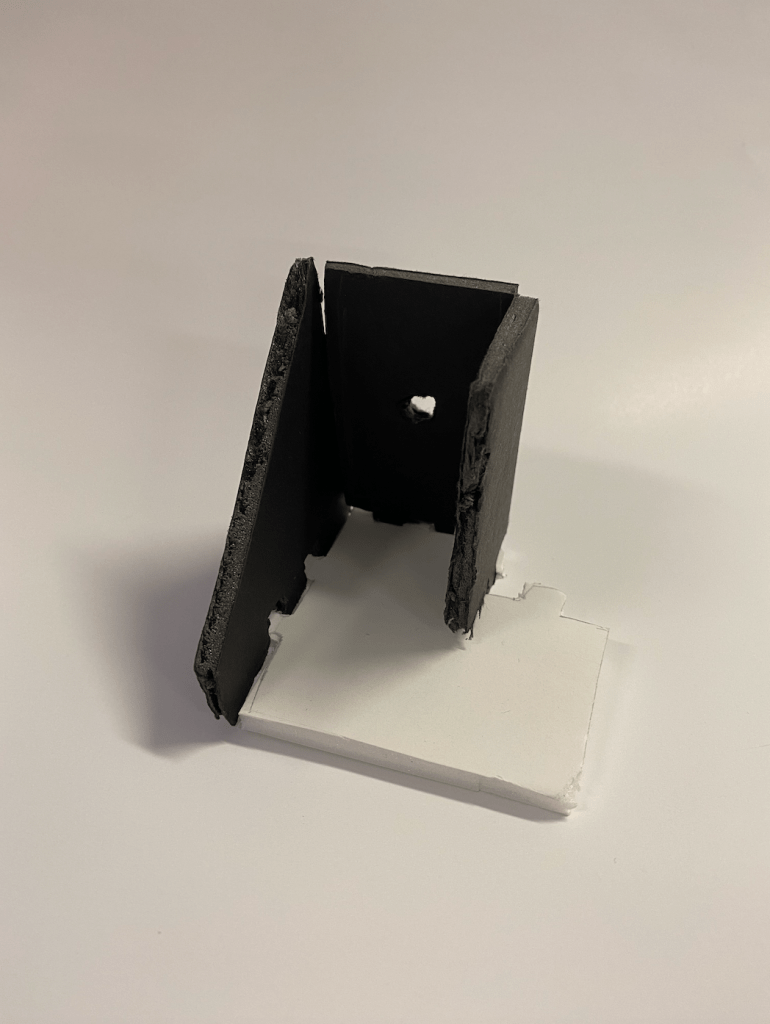
Quick fire design. Construct three models based on transitions from your site sequence. These will be fragments of spatial thresholds – spaces of movement and transition. Photograph the interior spaces of your models – consider light and shadow, colour and textures. Self-directed Print 3-4 A3 images of your models which reveal the scene transition
3 key words:
window
focus
control
manipulation
Model 2
Model 3
Model 4
Magic shows? They play with the audiences focus to portray a certain narrative.
Focus in film – James Bond opening scene. The whole screen is full but you only look at one spot in the frame.
Wednesday:
Inspo for cinematic moments around framing and focus –
Contrast – colour and light, channelling light.
Reflection – framing a window of our environment
If I was to play with light and shadow, putting an installation at the customs street end of fort lane would allow really long shadows to extend down the lane over the course of the day. Peak stretch will be morning and arvo
Search light/ spot light?
Window into a building…warp whats being seen? Channel whats being seen.
Brainstorming ideas for one final scene transition model:
Turn the whole street into a ‘bar’ enter through light gate? tron esk.
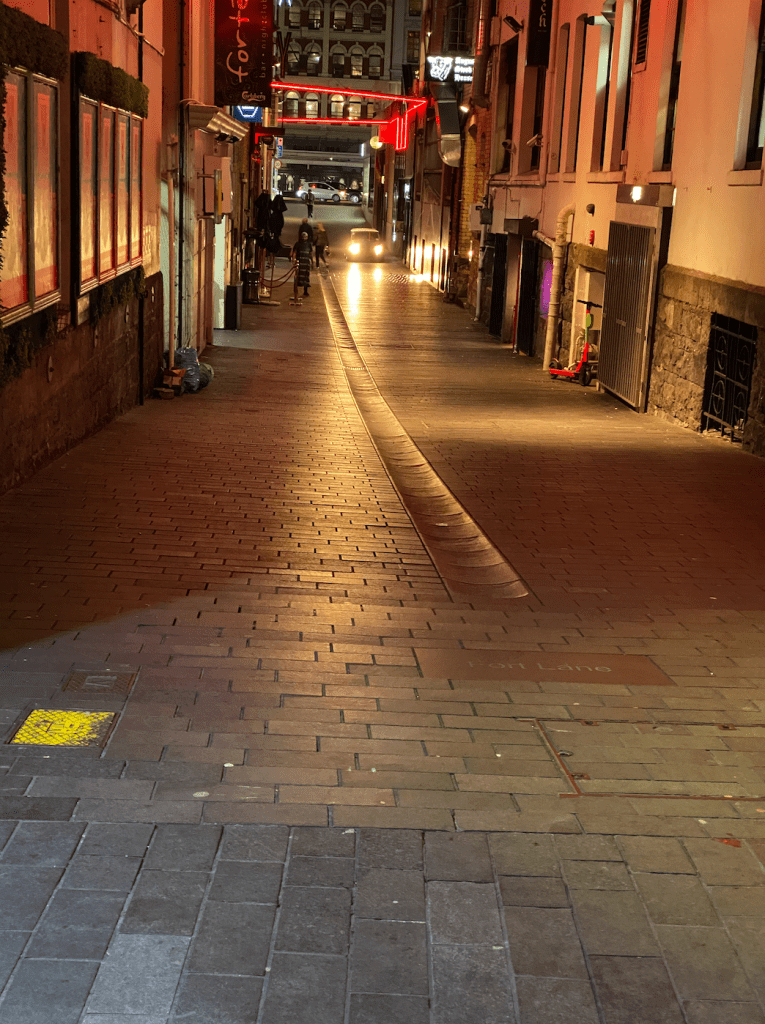
Fort Lane at night:
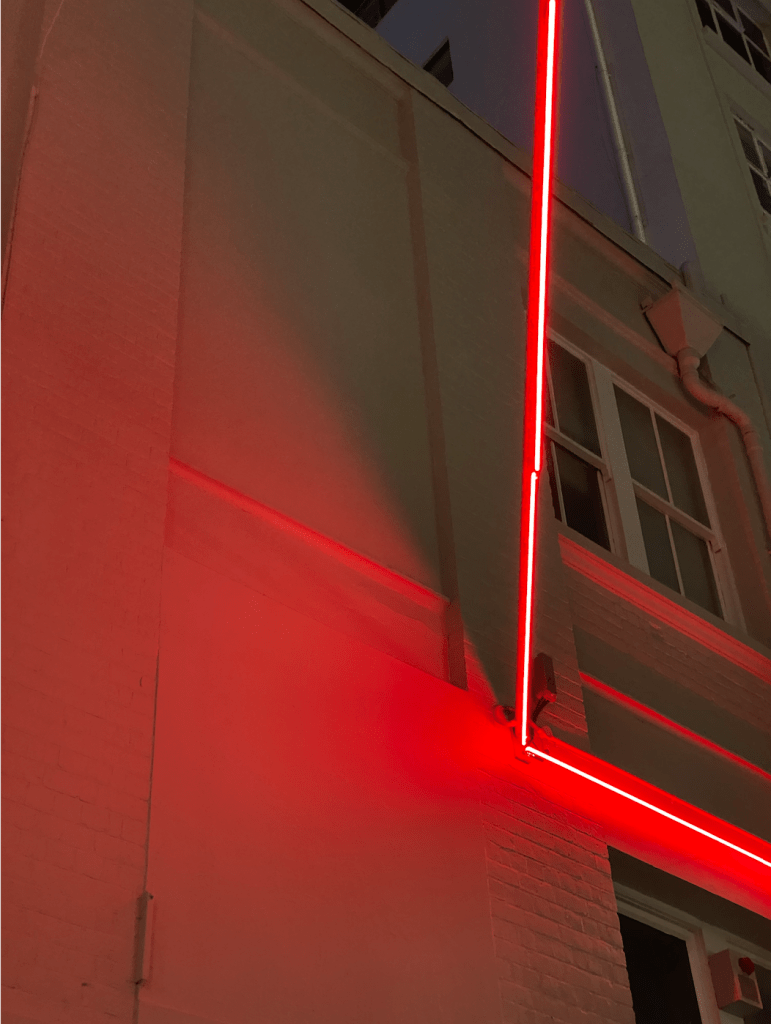
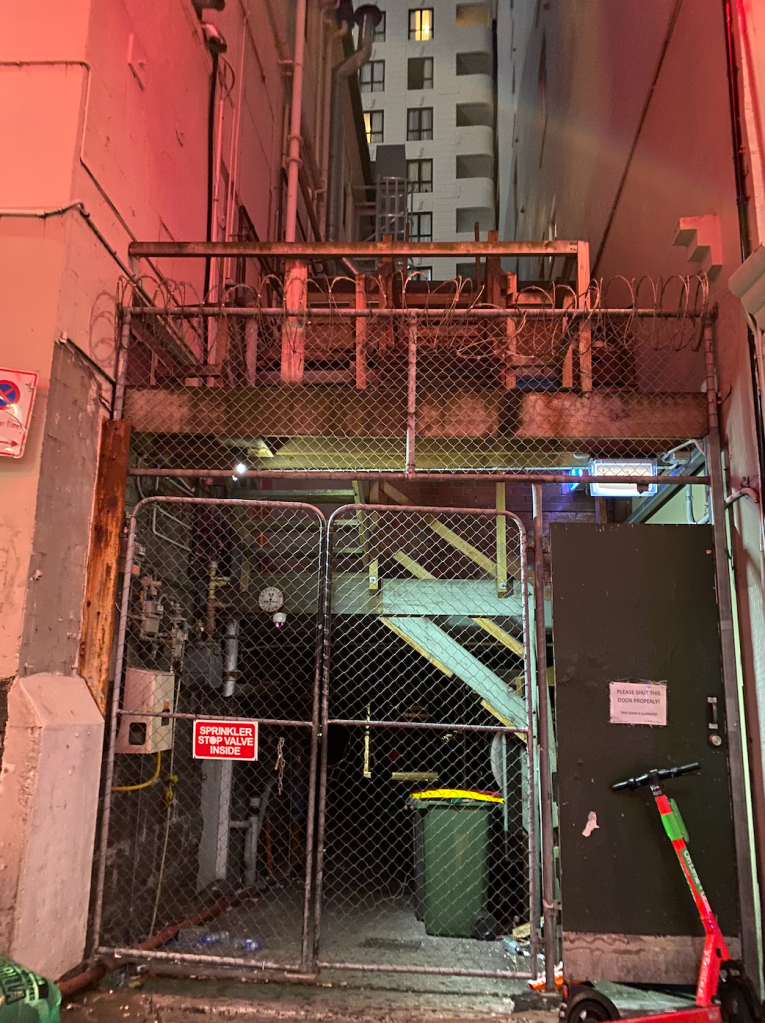
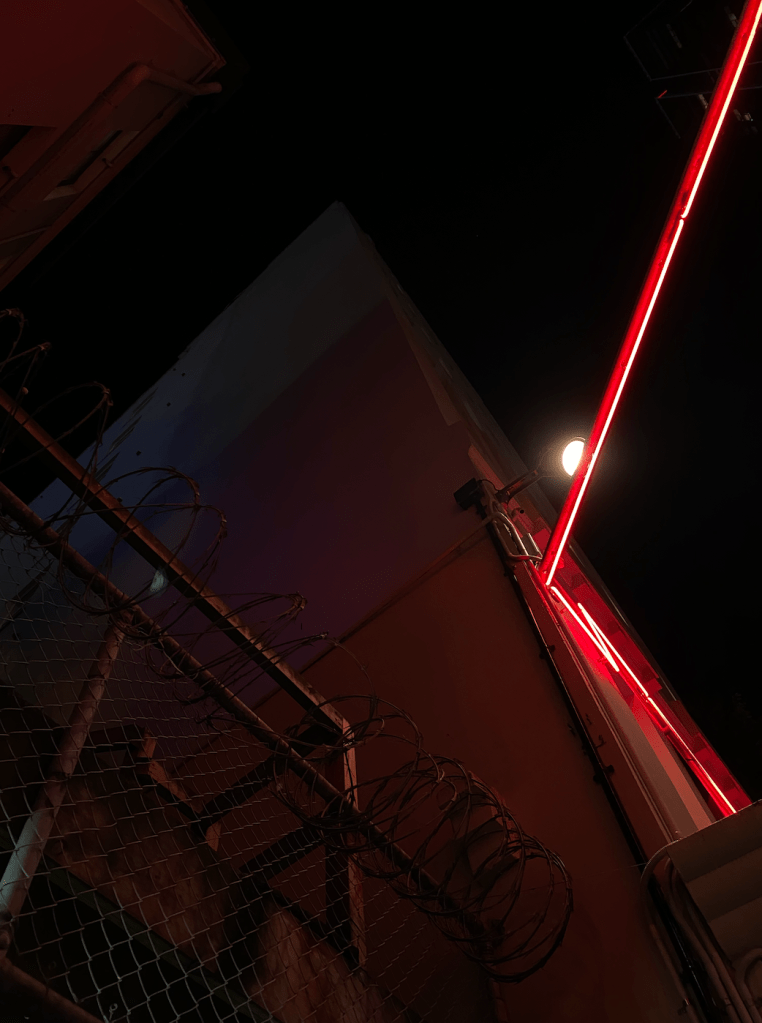
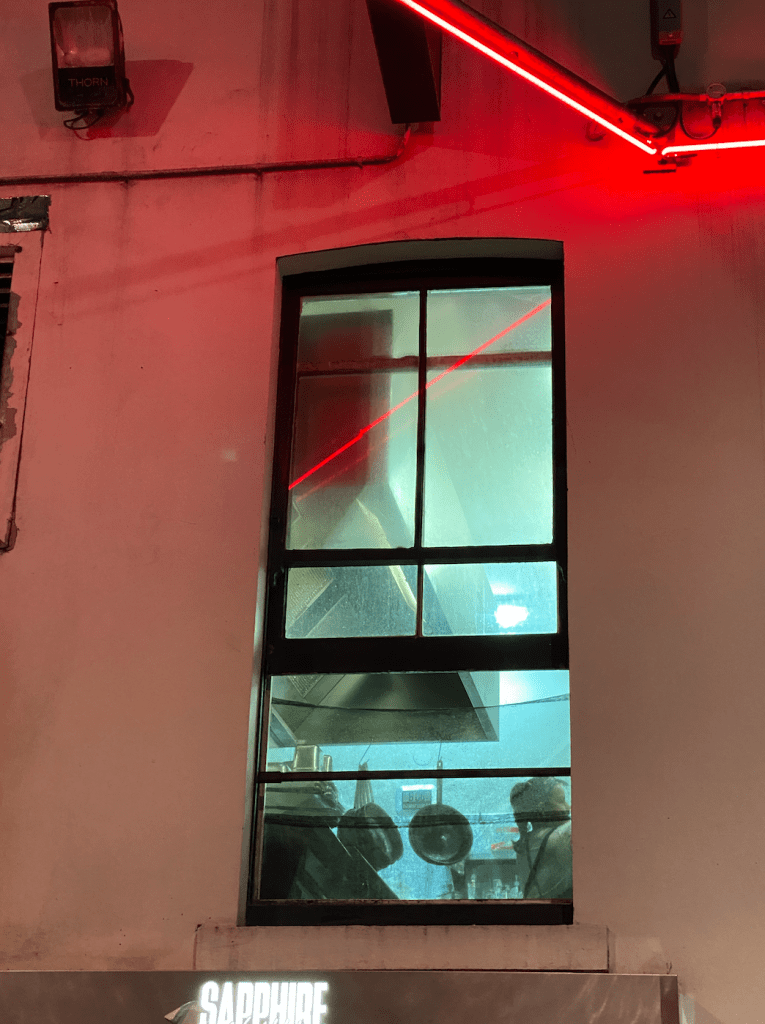
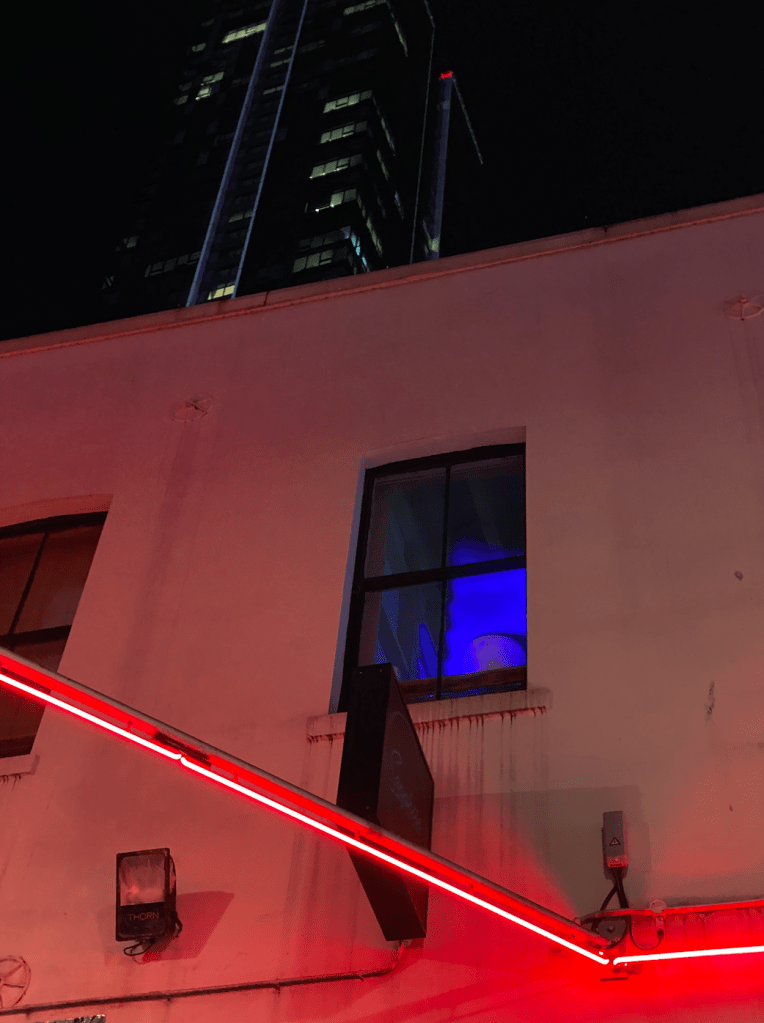
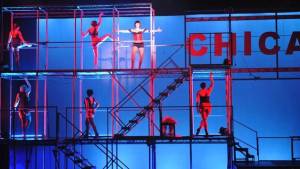
Viewing the lane at night gave me Chicago (the show) vibes or reminded me of the red light district in Amsterdam.
The use of levels, lighting, window framing of the women, theme of putting on a show, being watched.
‘The challenge of this studio brief is for you to imagine the laneway differently and to propose a design for one of the existing buildings, or spaces between or on top of buildings which enhances the public life of Fort Lane. You might also consider designing a temporary event which creates a temporary public.
In this design studio you will need to be inquisitive and curious, and to identify an aspect of the site that resonates with you. We want you to observe your responses to the site. What do you notice? What stands out? What do you overlook? What is hidden, forgotten, covered over? What is problematic, missing, or unseen?
Your design project will explore the Fort Lane site (including the existing buildings) in relation to a cinematic concept &/or process, such as 2 Giuliana Bruno, Atlas of Emotion: Journeys in Art, Architecture, and Film (New York, NY: Verso, 2007), p165. 3 frame, projection, sequence, movement and transition.’
Read Giuliana Bruno’s Public Intimacy pages 17-21 as a starting point for your design inquiry
Tuesday:
Research cinematic devices and their long histories
The first important aspect is the distance between the camera and the person(s)/ object(s) that is (are) going to be filmed. There are three broad categories: the long shot, the medium shot and the close-up. . Within these three categories there is a variety of subdivisions. The two most important ones are the extreme long shot (Panoramaeinstellung), e.g. a tiny group of riders in a gigantic landscape in a Western, and the extreme close-up (Detailaufnahme) where only e.g. an eye or the mouth is seen.
Another important element of visual composition is the angle (Blickwinkel) of the camera. When the camera adopts the perspective of a character the terms point-of-view (or POV-) shot or subjective camera are used. Voice-over means that a character speaks but is not shown while speaking or that a voice tells or comments on the story.
Focus – the human eye is drawn to what it can see best.
Kinetoscope – The Kinetoscope is an early motion picture exhibition device. The Kinetoscope was designed for films to be viewed by one individual at a time through a peephole viewer window at the top of the device. The Kinetoscope was not a movie projector, but introduced the basic approach that would become the standard for all cinematic projection before the advent of video, by creating the illusion of movement by conveying a strip of perforated film bearing sequential images over a light source with a high-speed shutter.
Print out three images of cinematic device
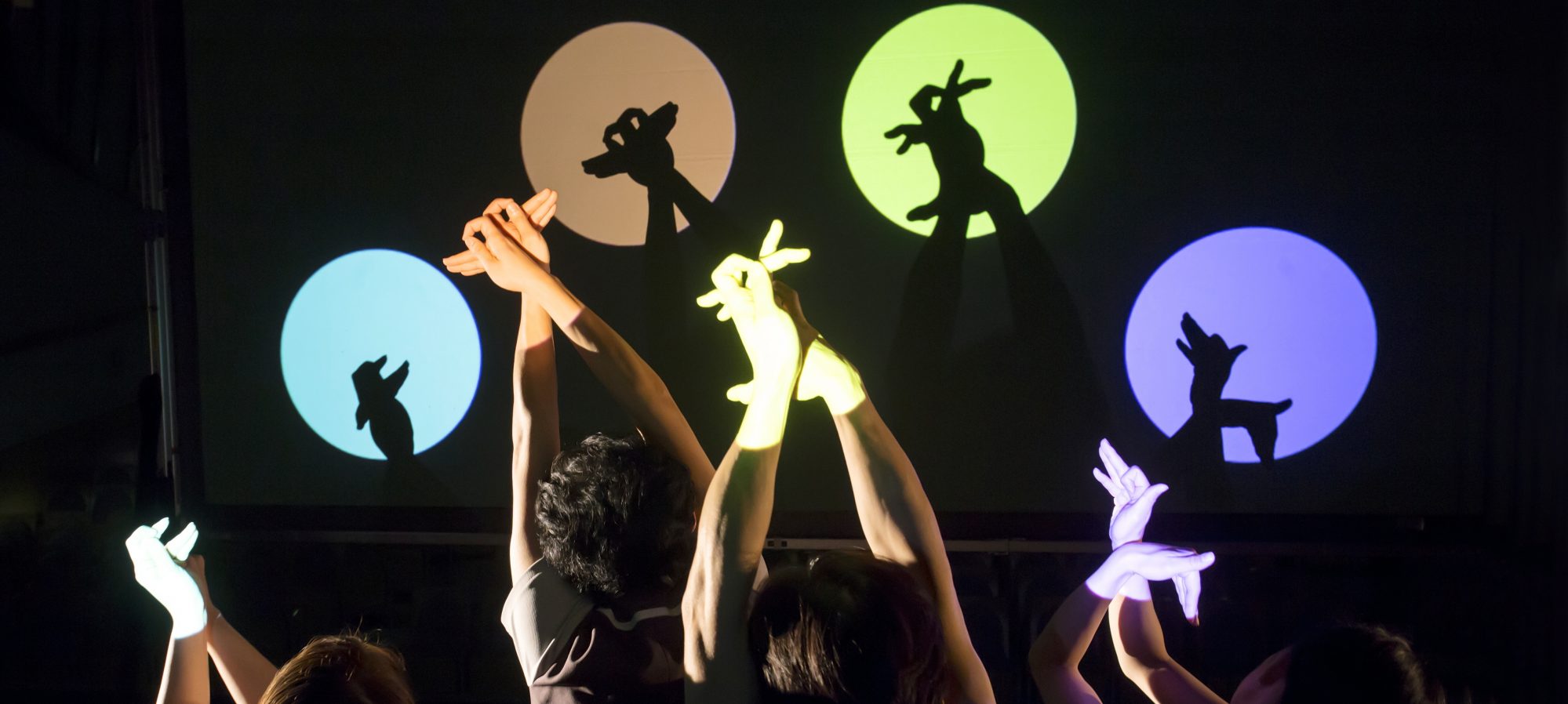
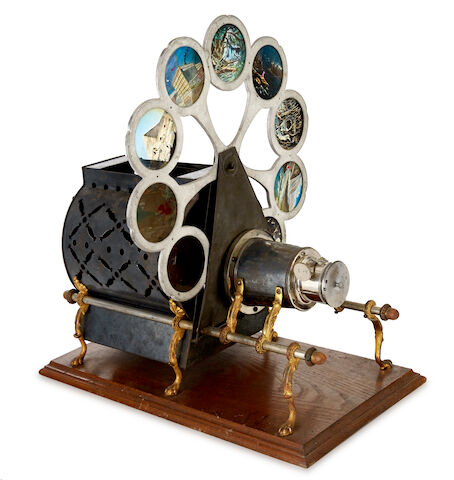
Flip BookShadow PlayMagic Lantern
Sketch design of your cinematic device
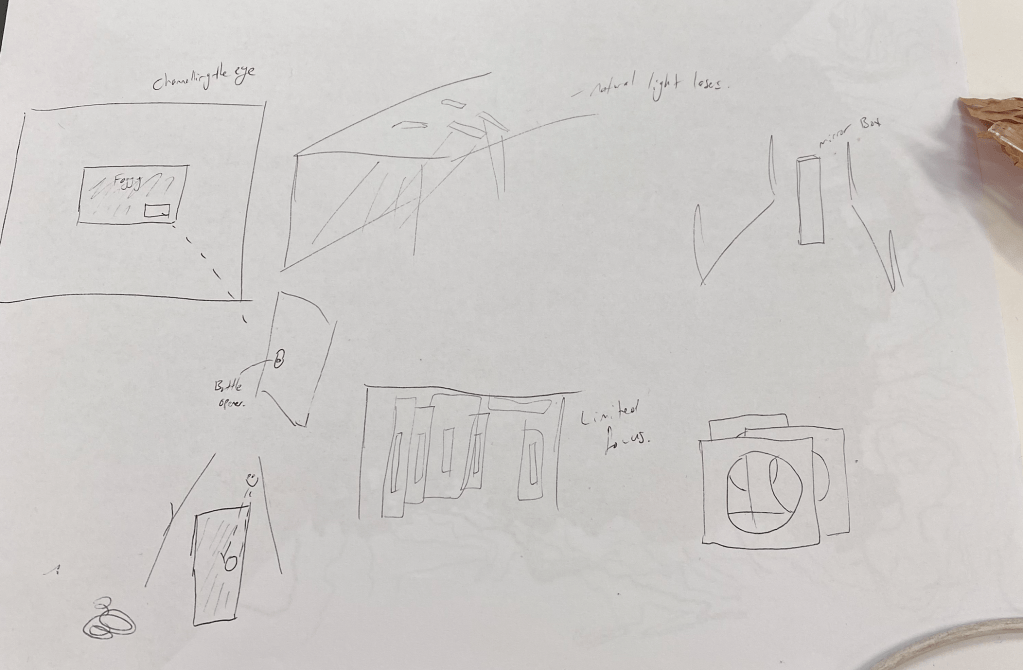
Initial sketch ideas exploring different concepts:
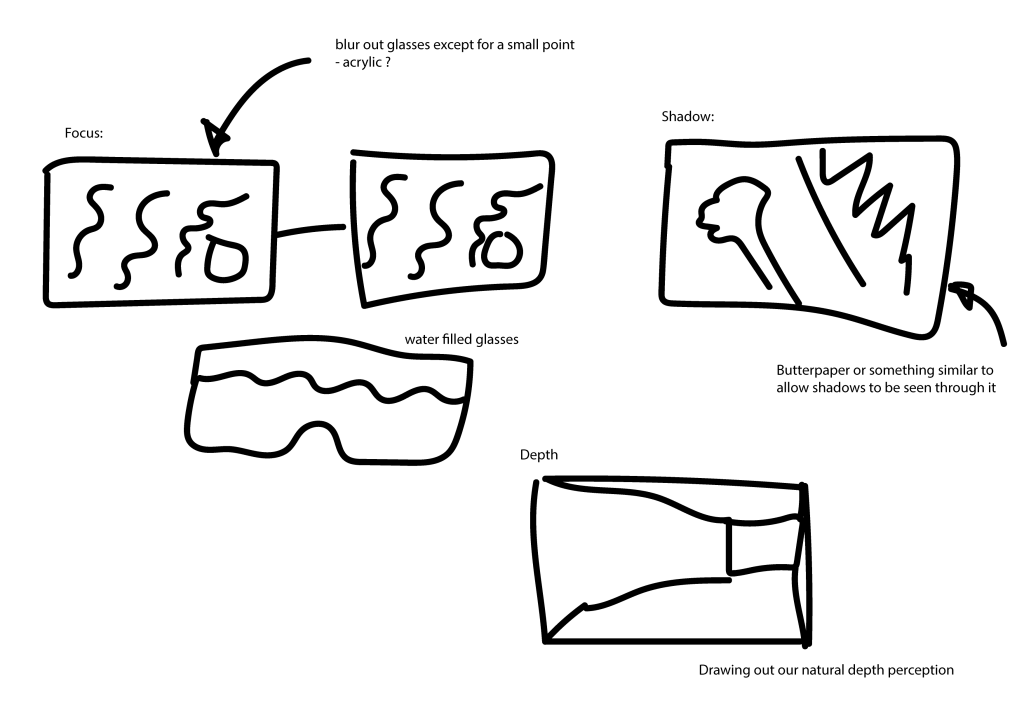
Developing first concept of focus and exploring design:
Fav movies – why are they your favs. Break down the cinematic elements
La la land
Grand Budapest Hotel
(tv show) Ratchet
Wednesday:
Site visit with cinematic device –
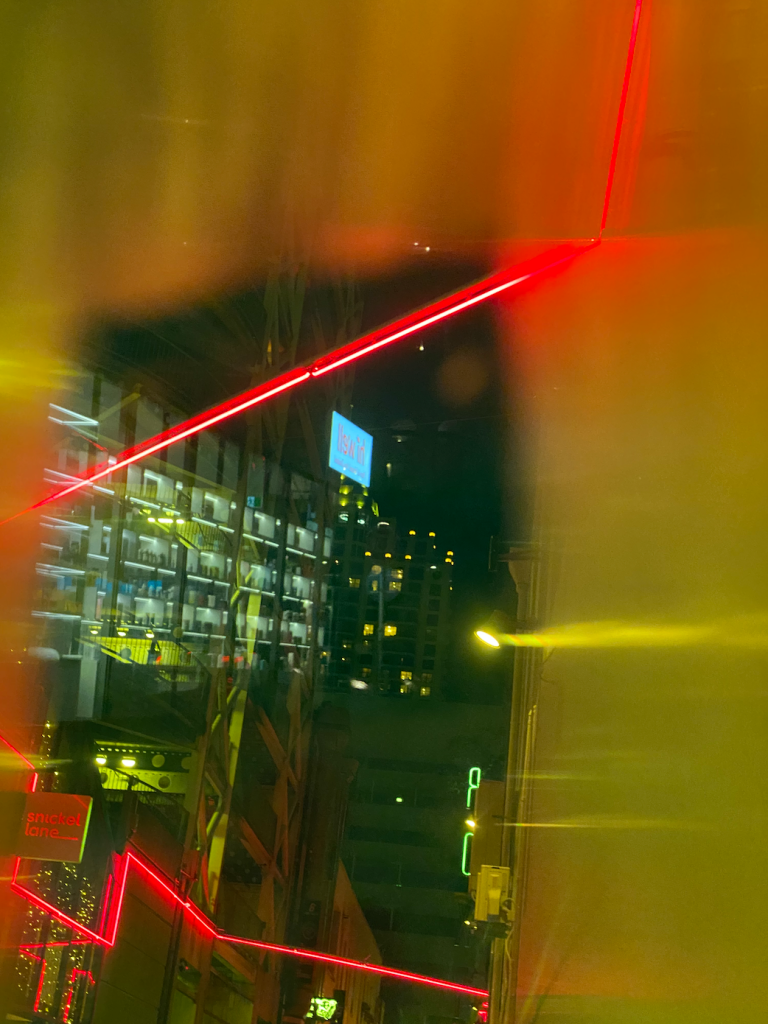
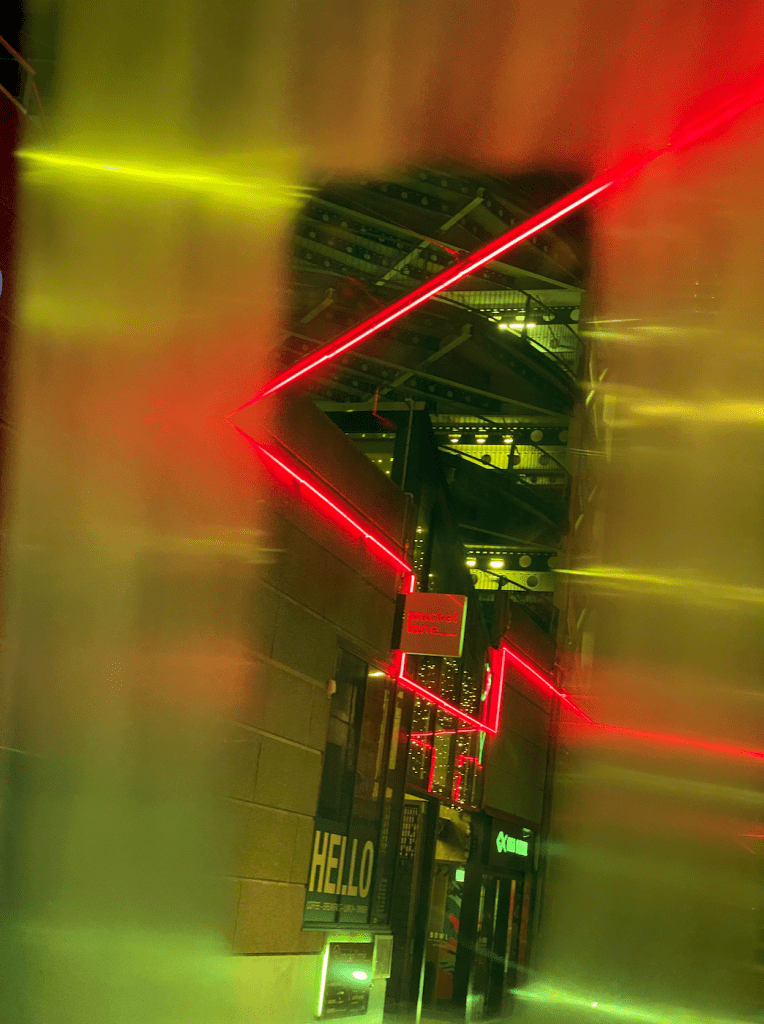
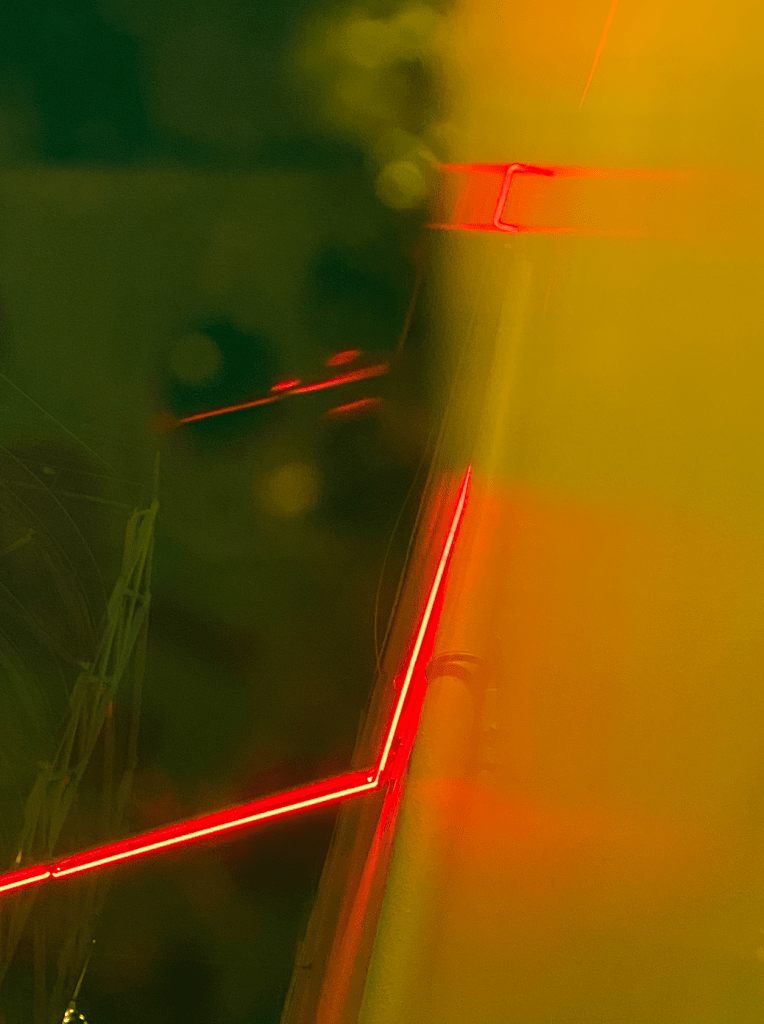
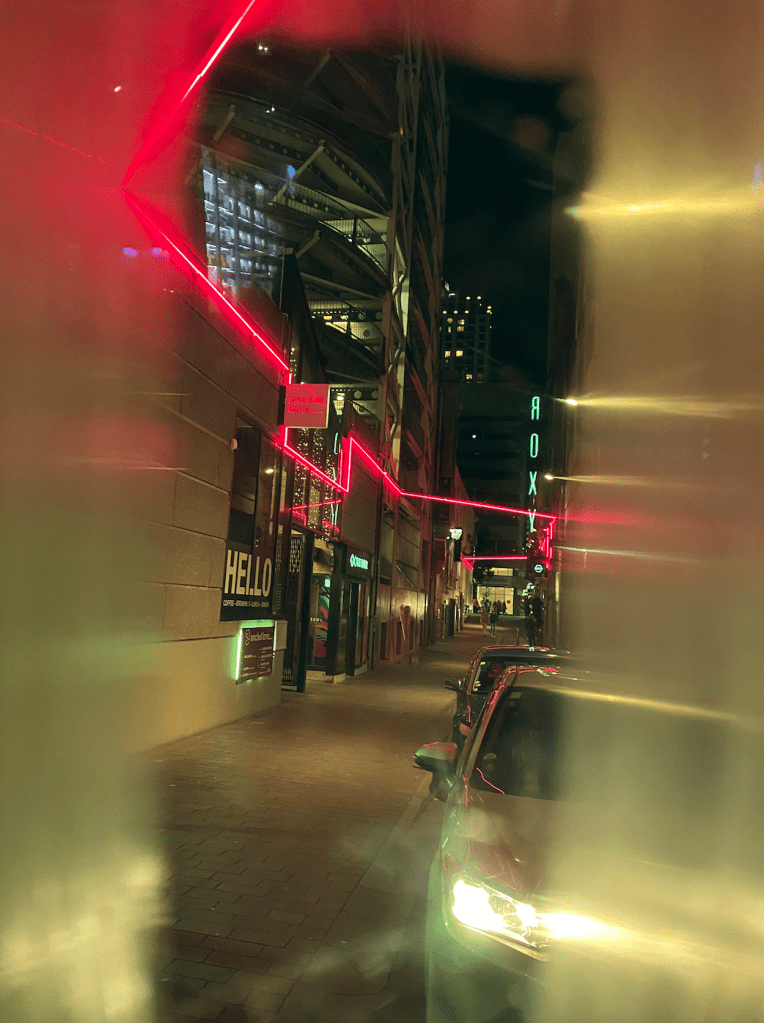
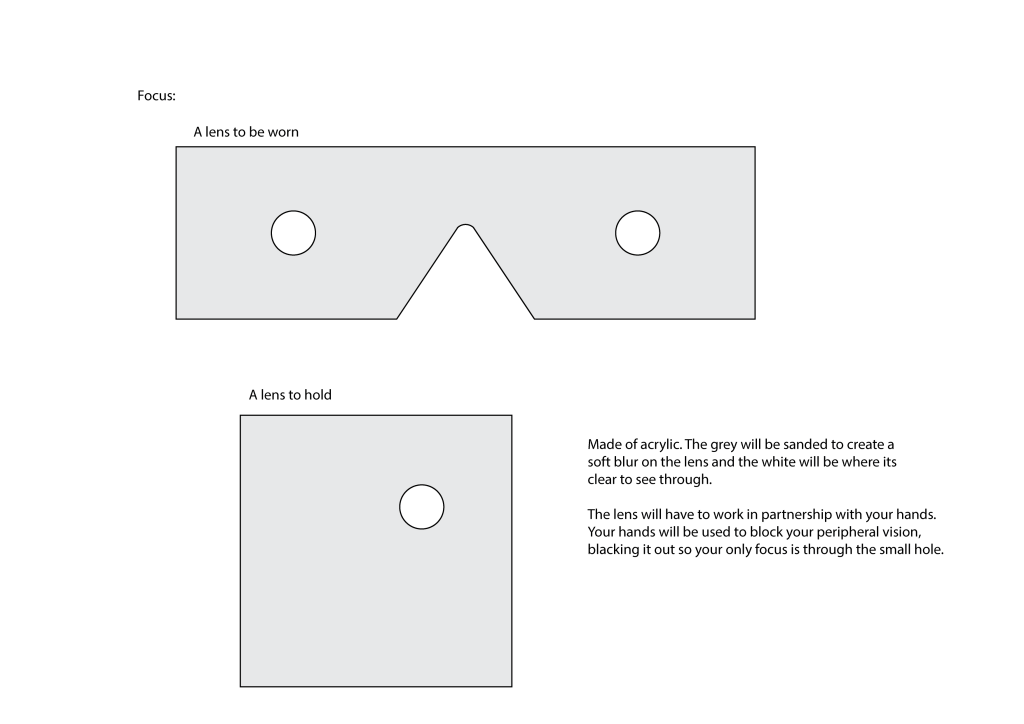
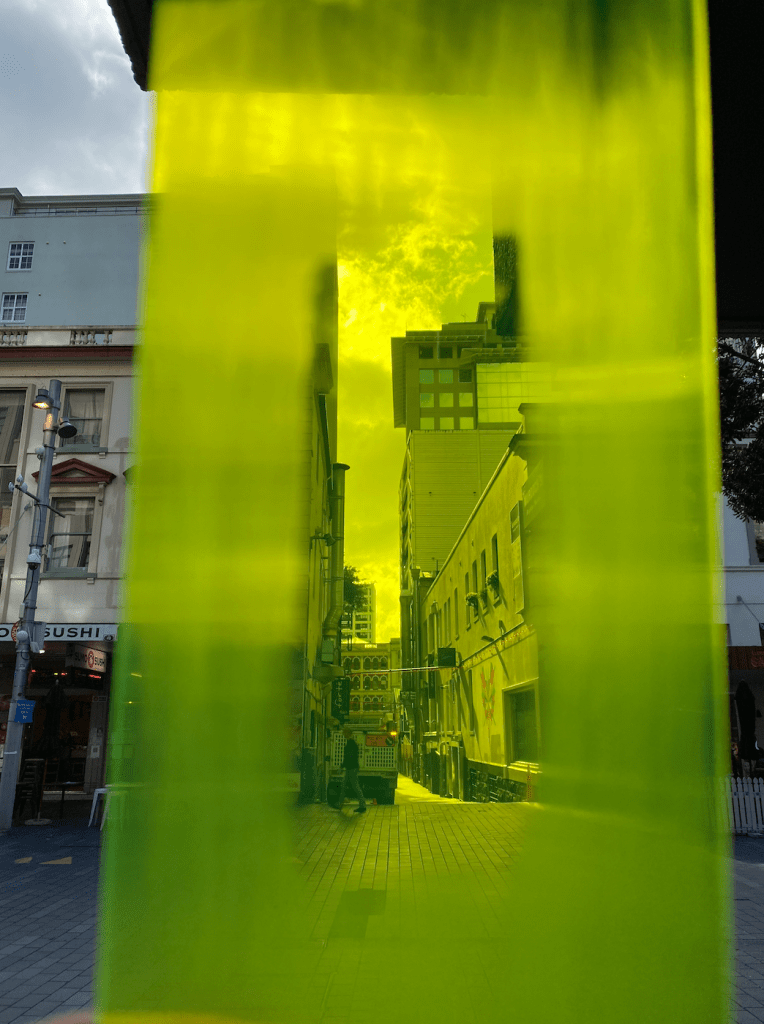
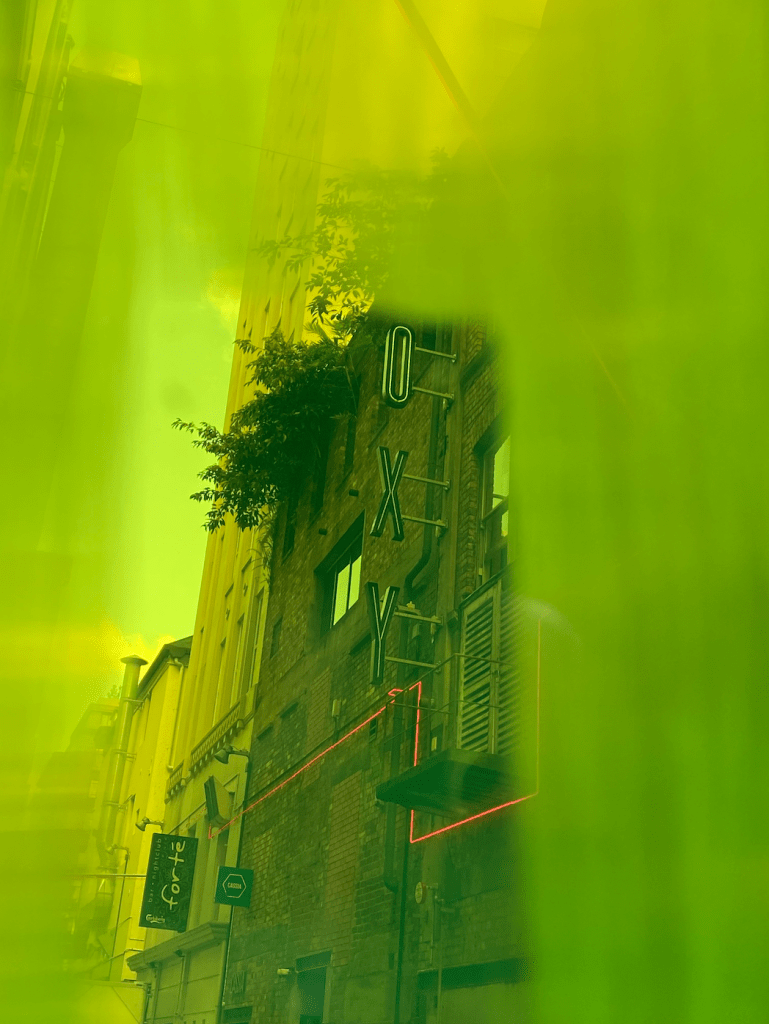
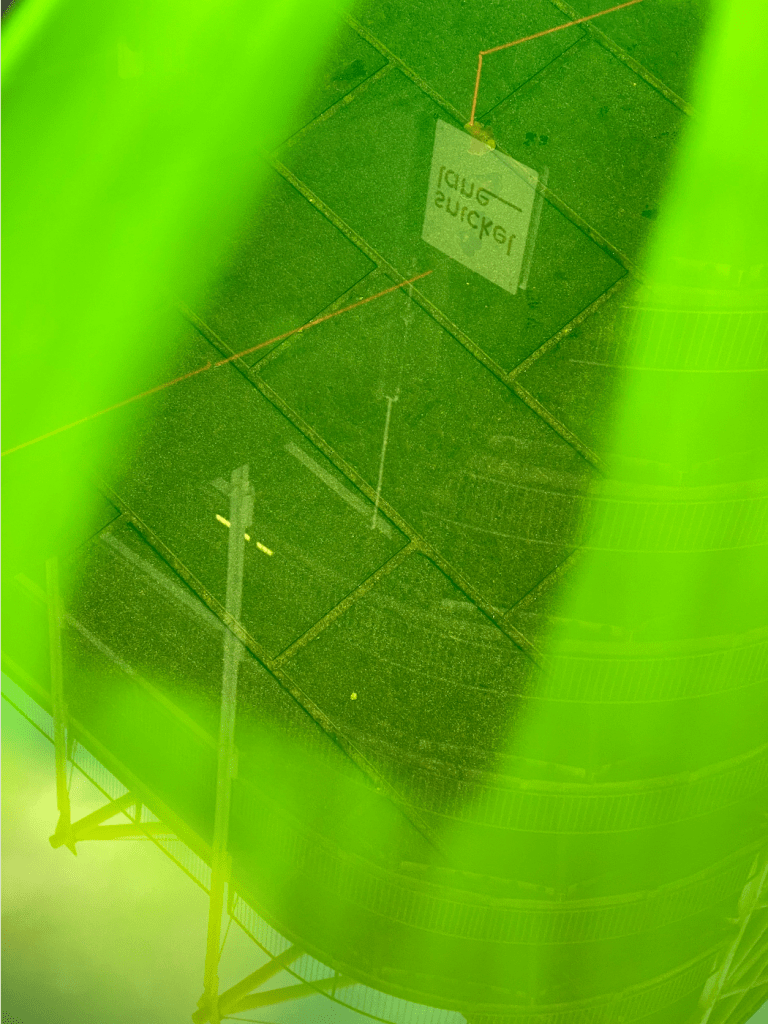
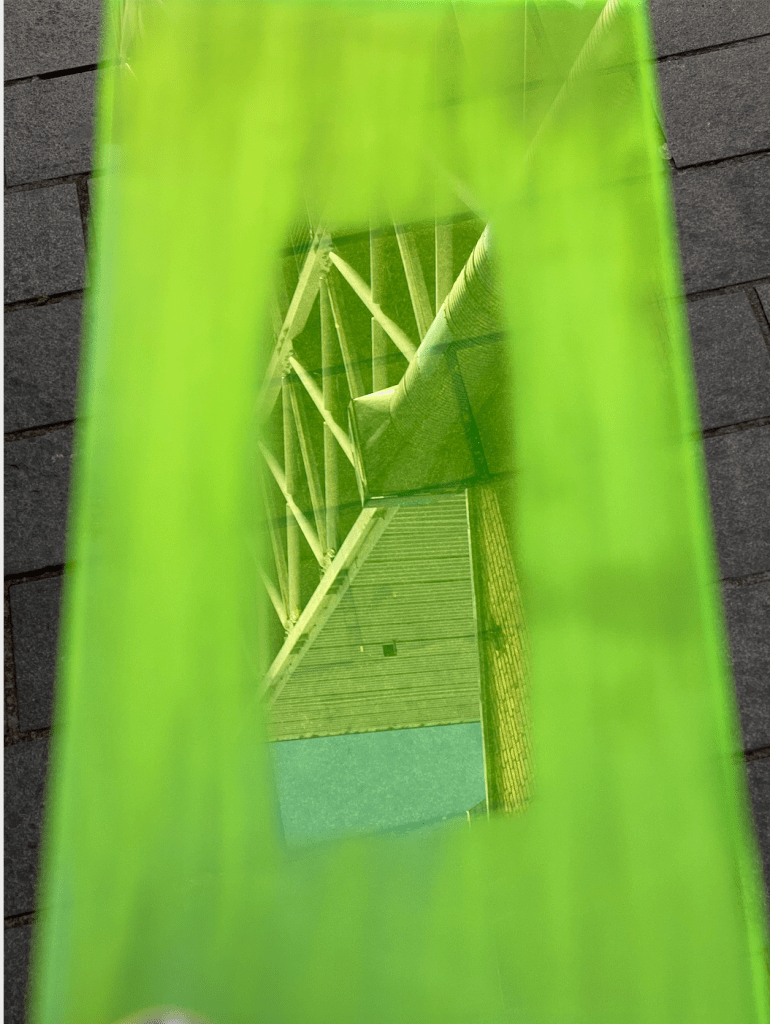
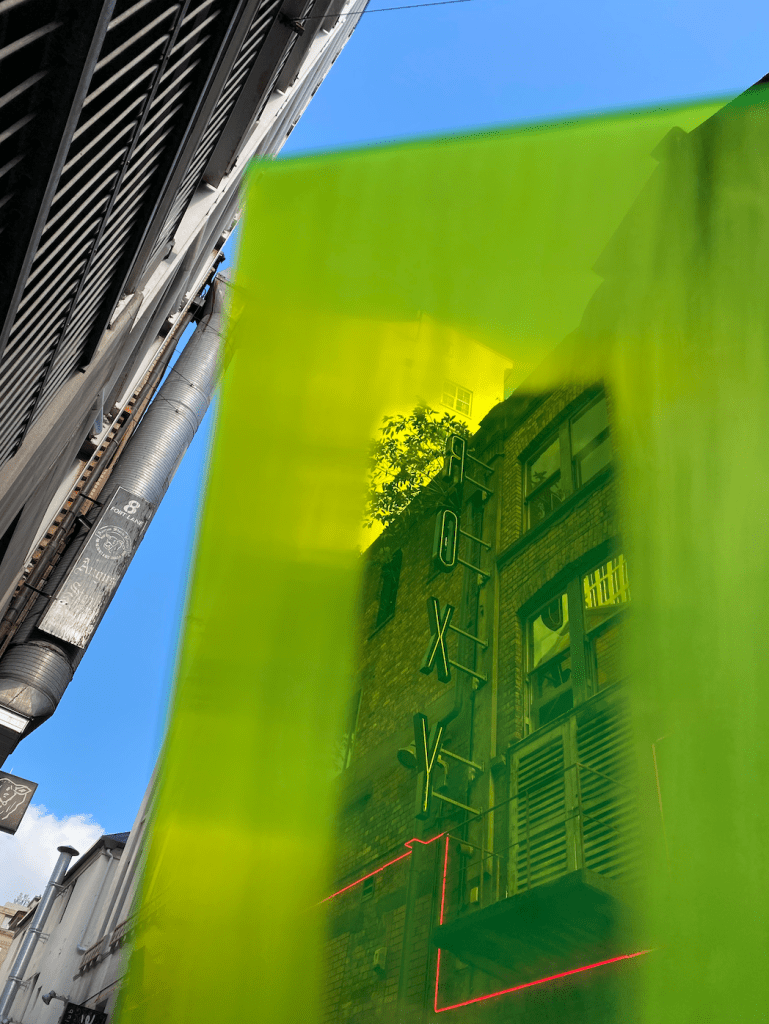
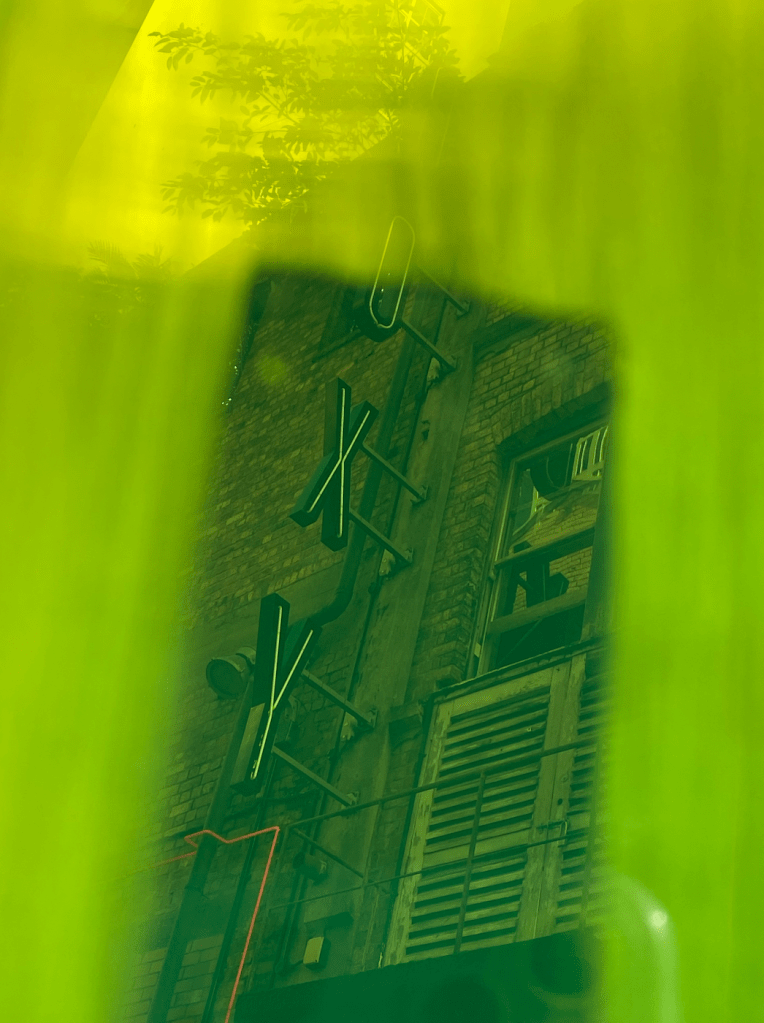
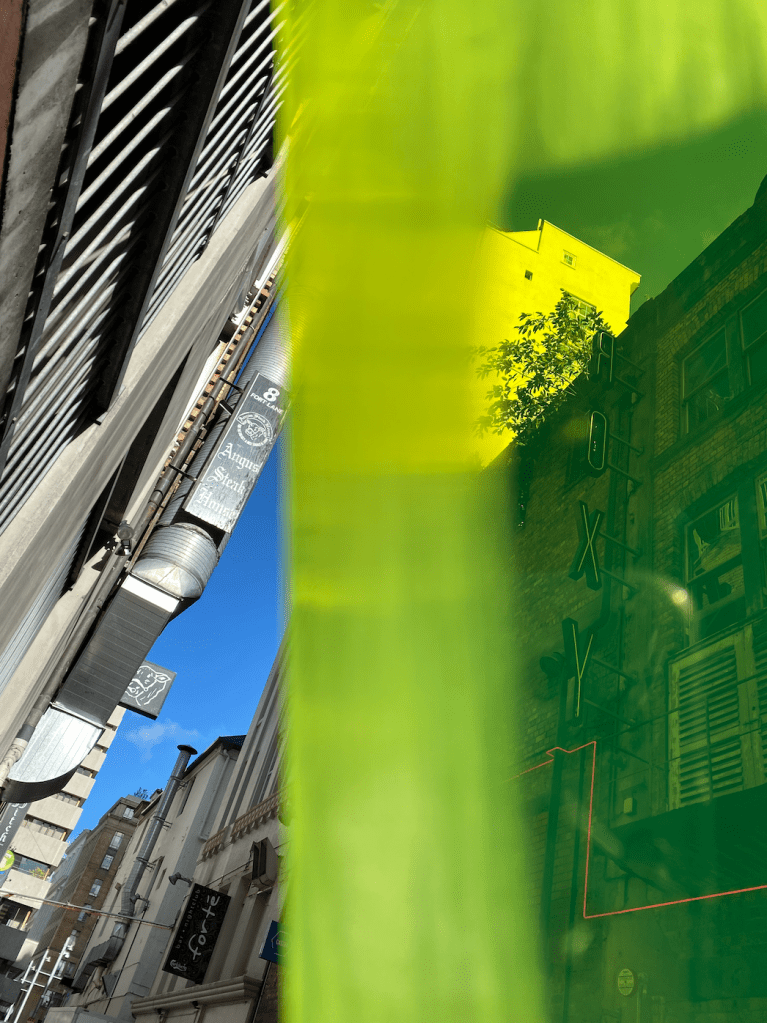
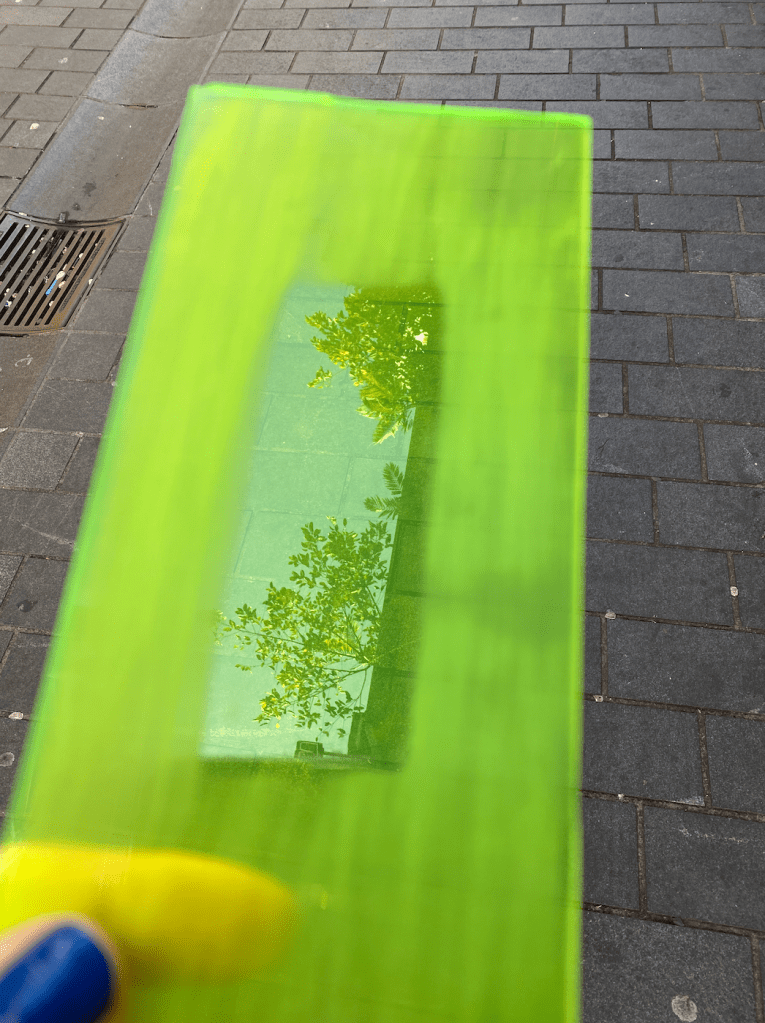
My device was a neon green piece of acrylic, sanded on one side to obscure the transparency. Leaving a small window in the centre I used this device to bring focus to the site.
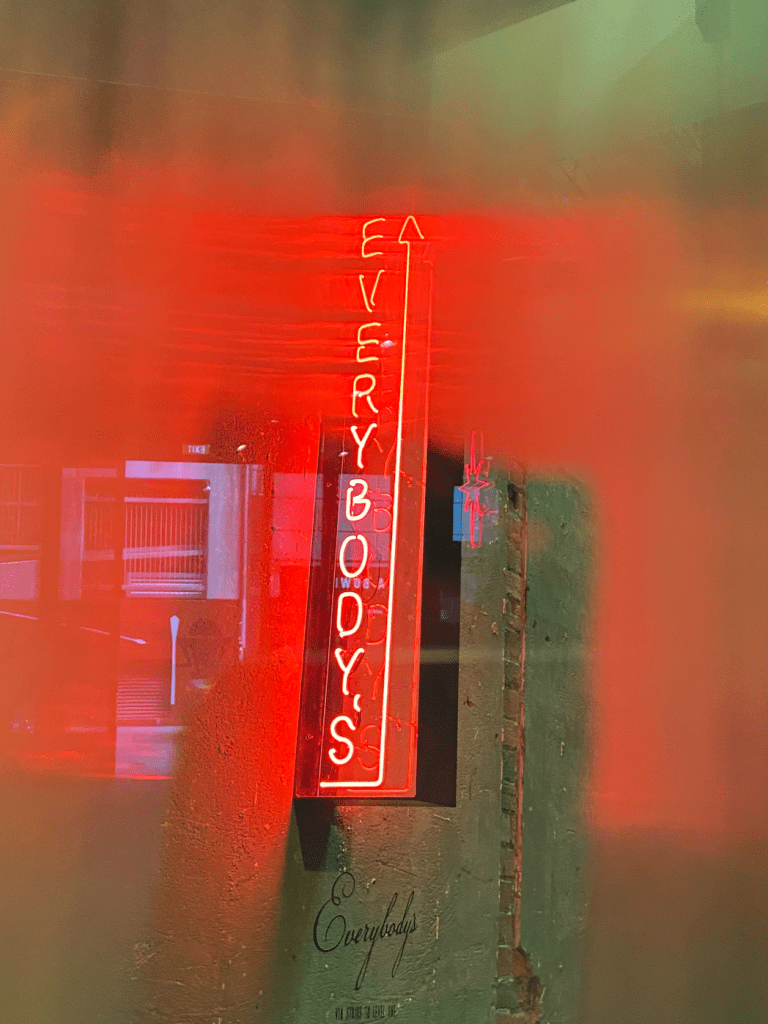
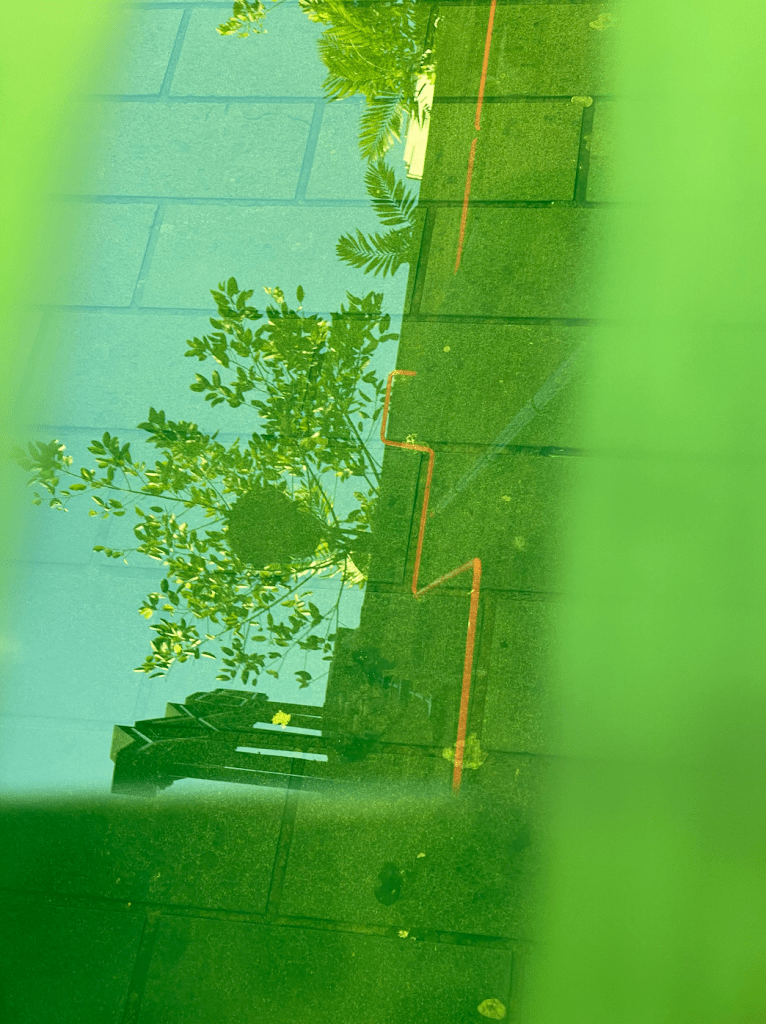
As I began to observe the site through my device I noticed I could play with the smooth side of the acrylic and the sanded side to get different results of what i was photographing. You can see this in the pics of the ‘Everybody’s’ sign.
I was originally going to just use clear acrylic but I had some of the green lying around the house and i’m really glad I used that instead. It created a lovely cinematic filter in itself.
Shiny side facing the camera.
Matte side facing the camera
I was able to use my device to look through as well as to reflect off of to create some really interesting views.
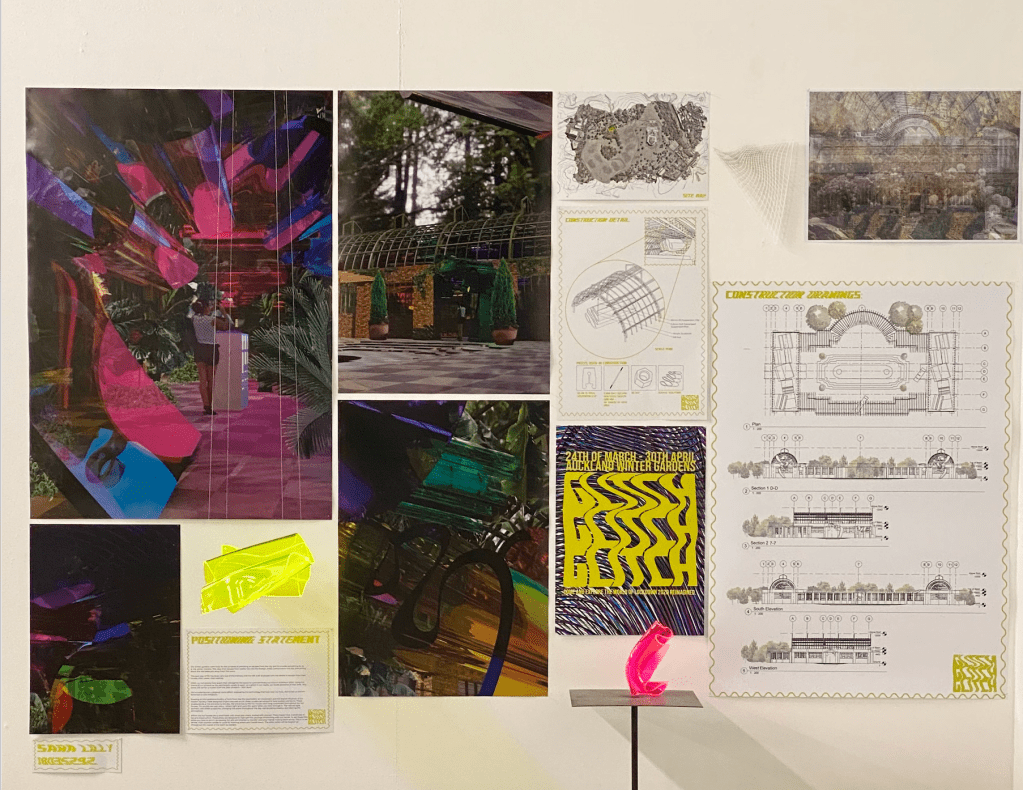
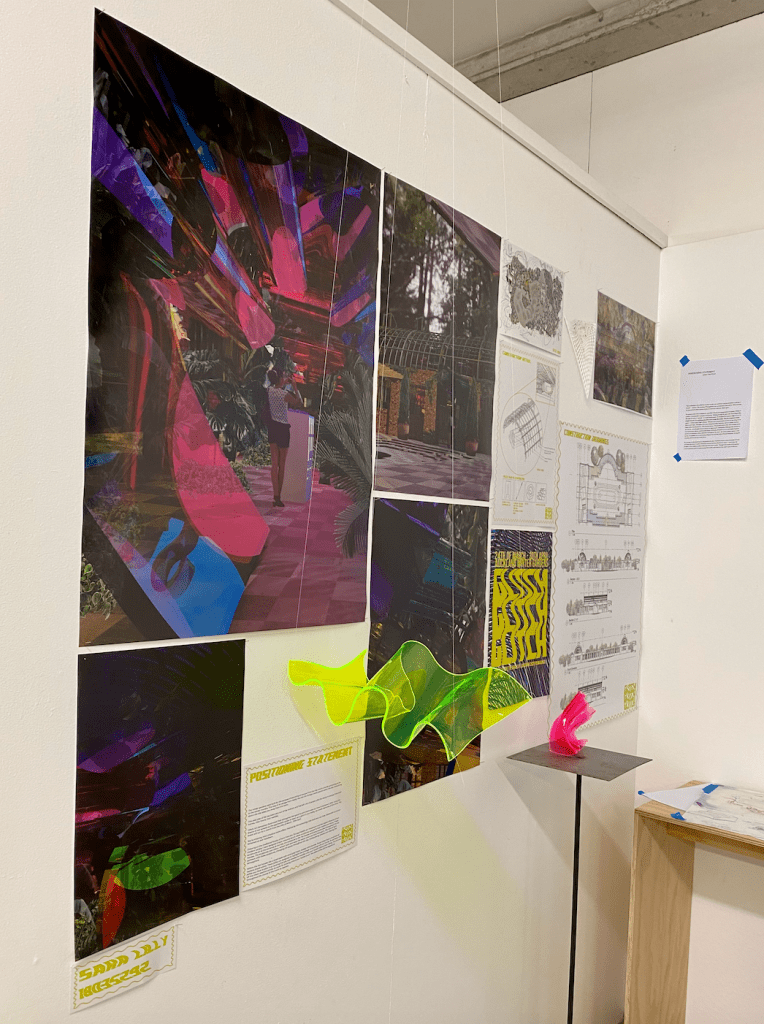
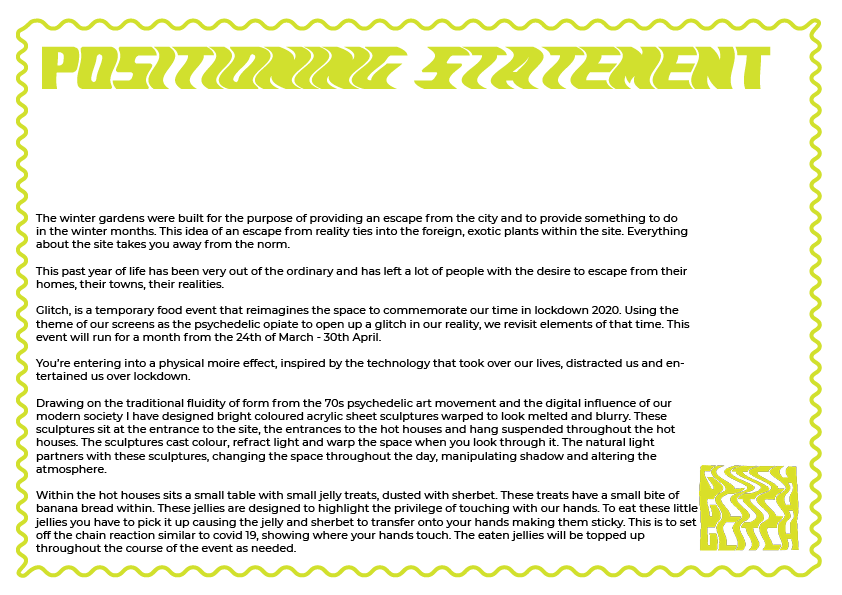
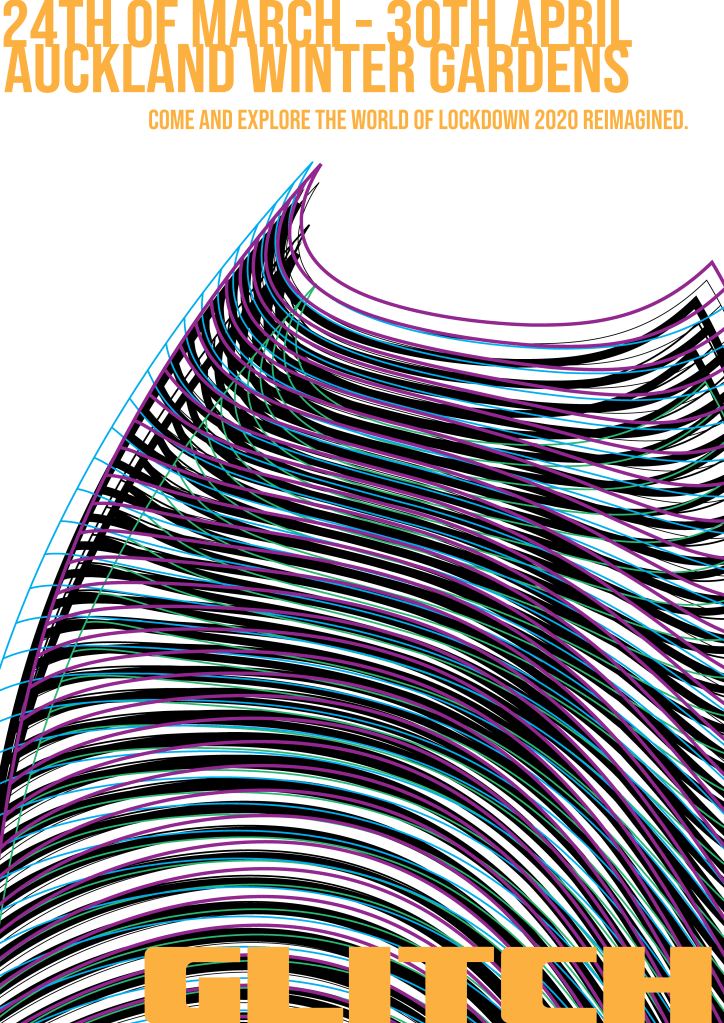
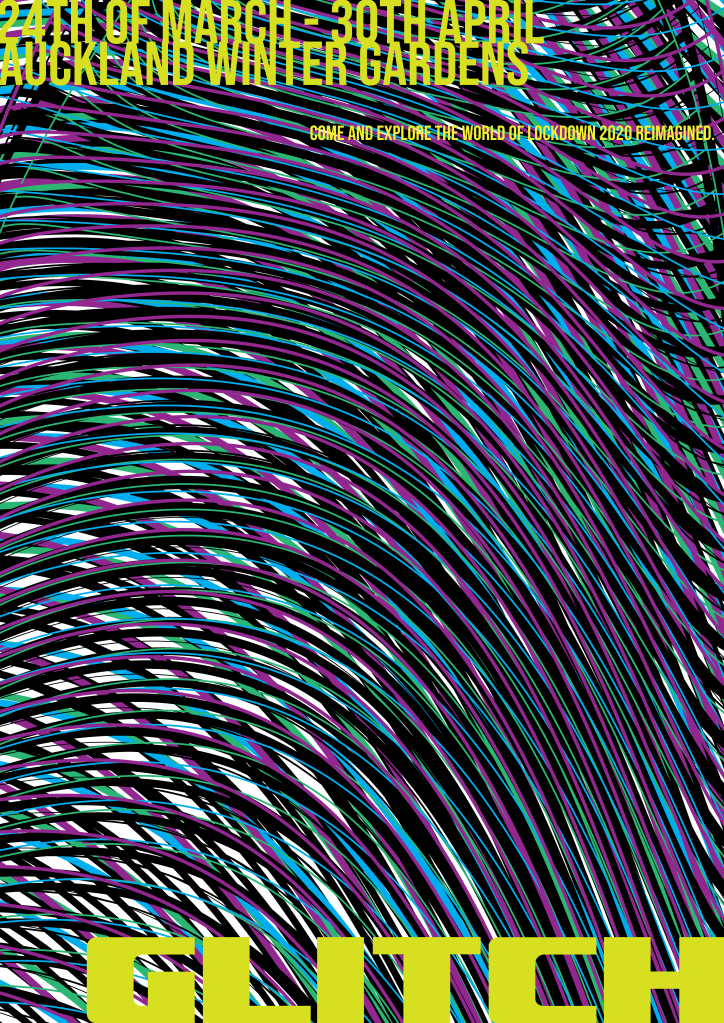
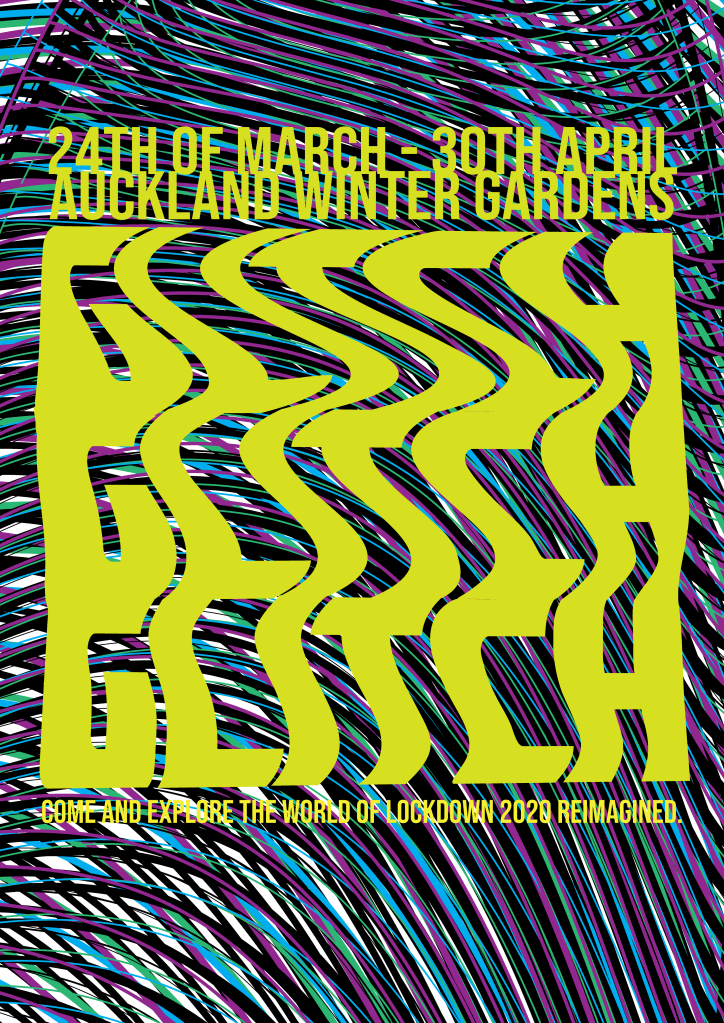
I wanted to make a poster that showcased the psychedelic nature of the event. I attempted to create a moire effect with the lines in the background which I think was successful. Because the line work makes the poster so busy, I kept the main information very clear whilst drawing inso from 1970s posters. These two elements are themes that I have used in the event space making the transition from poster to event, streamlined.
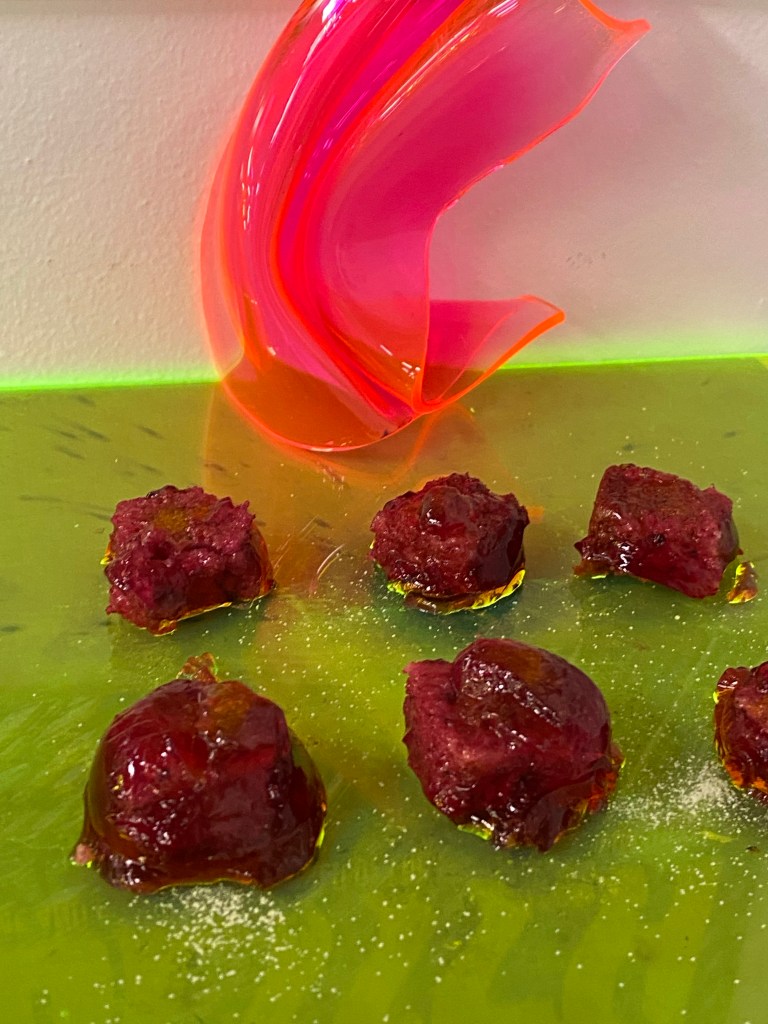
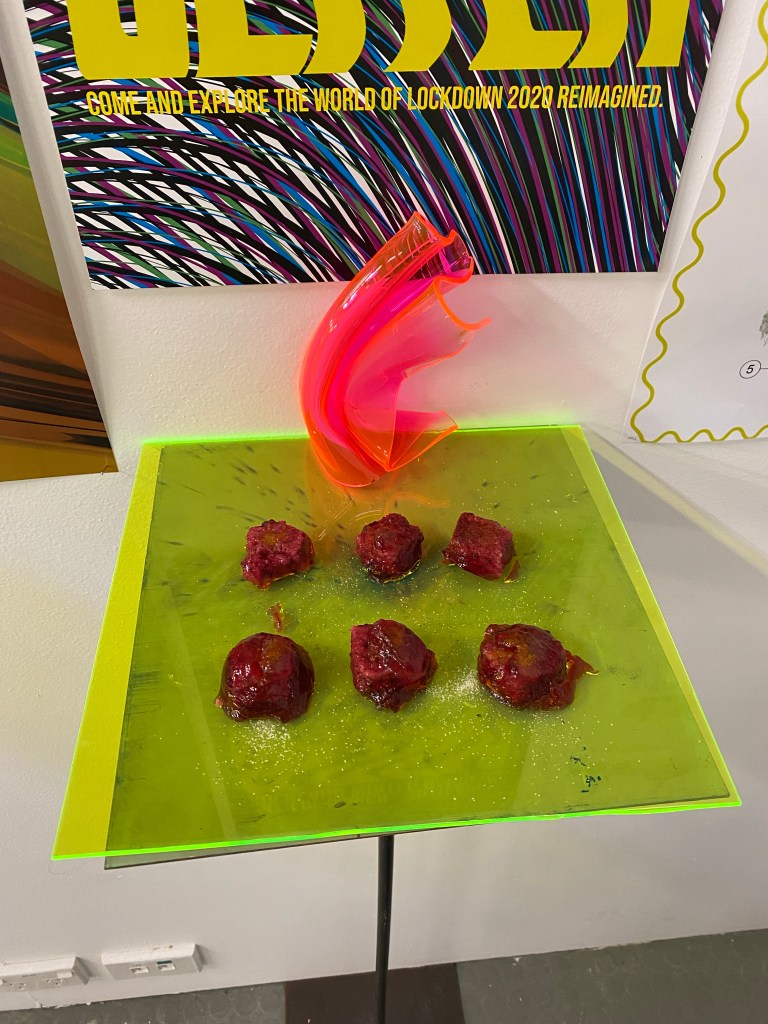
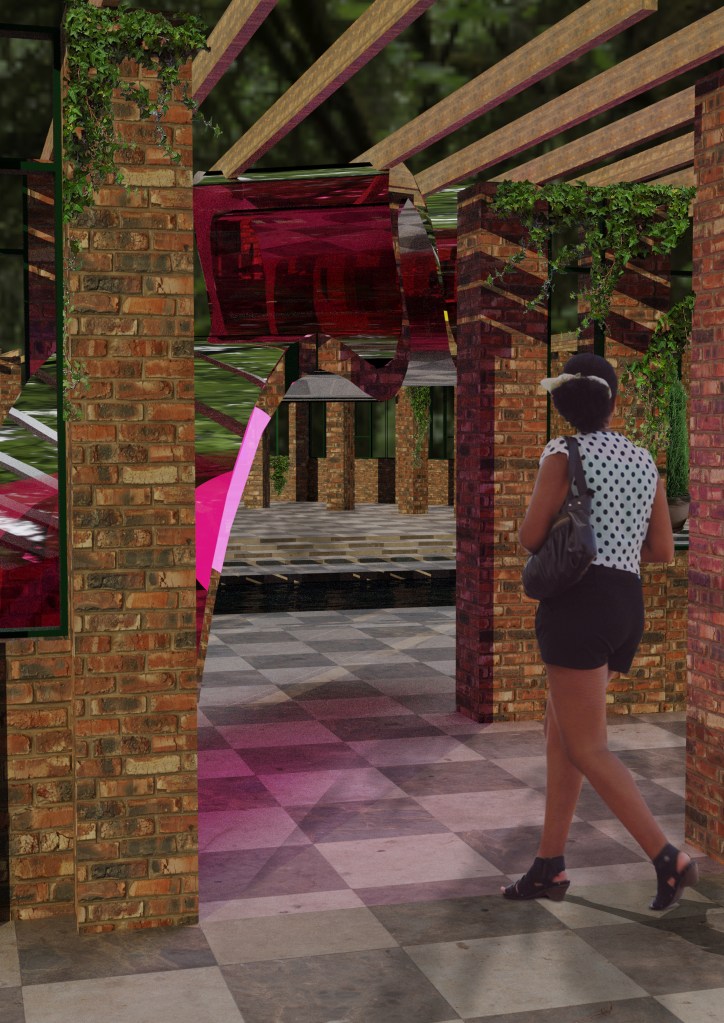
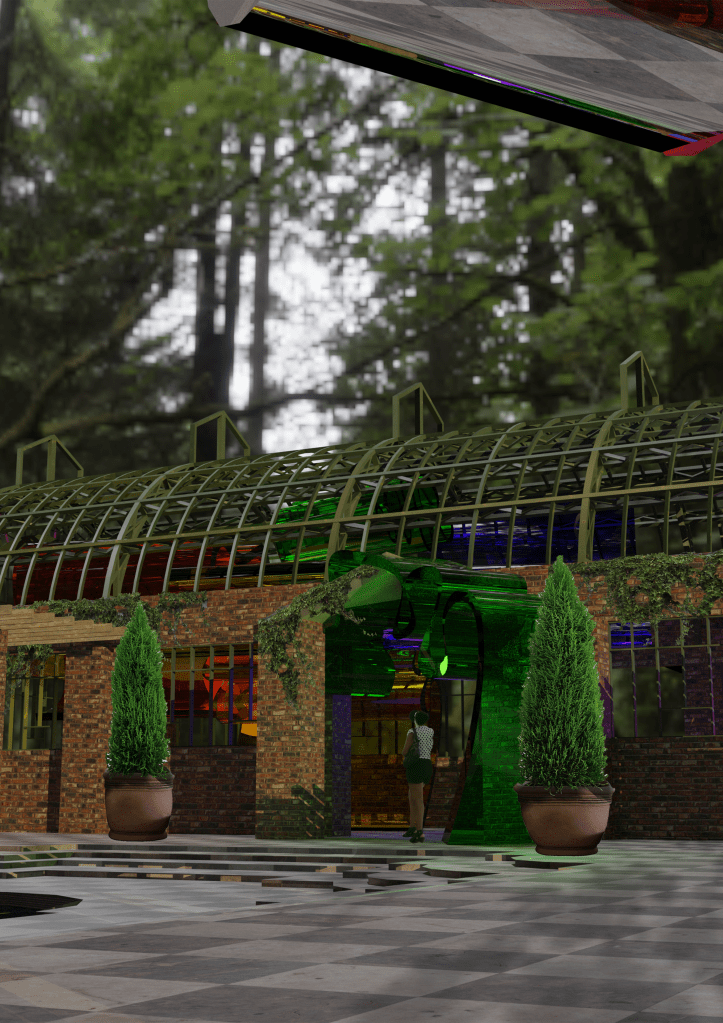
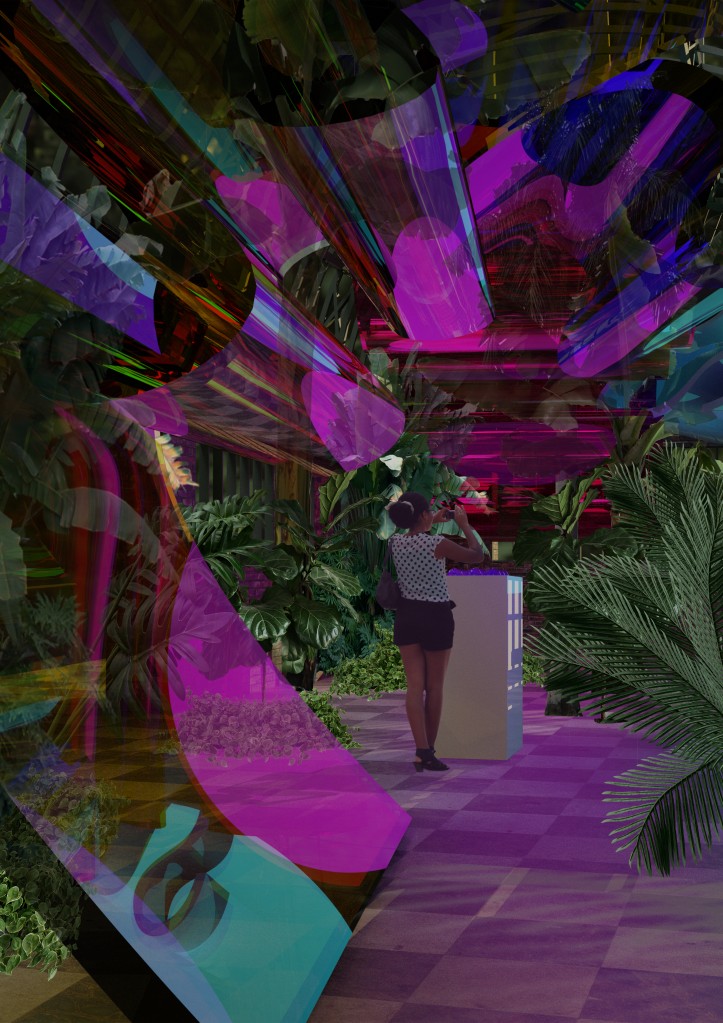
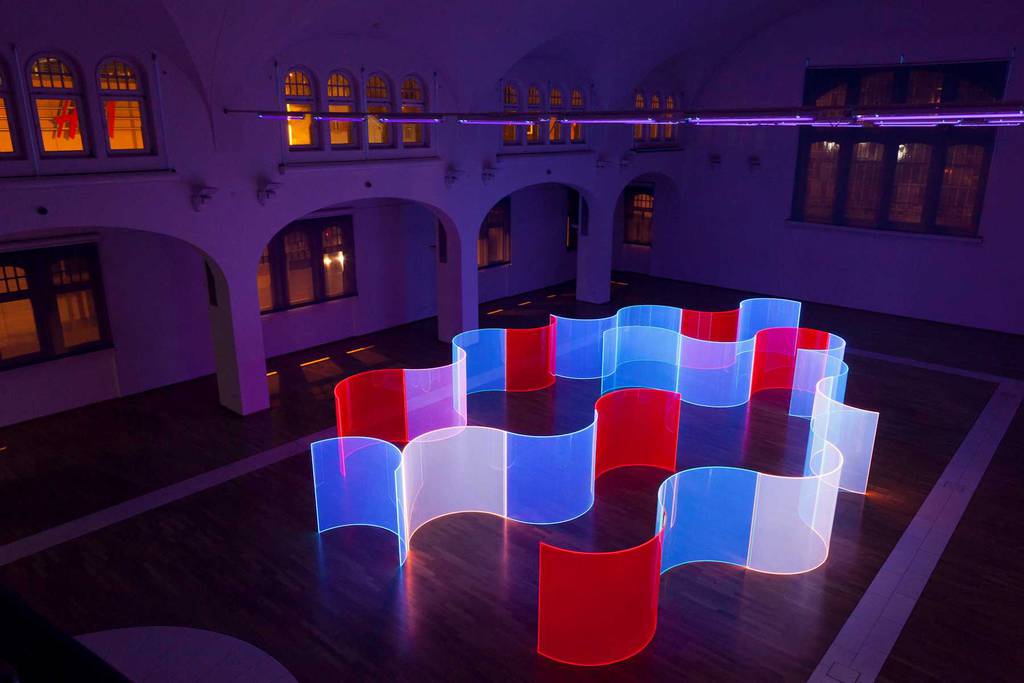
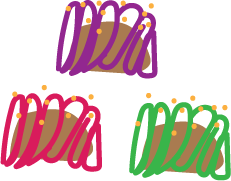
I’ve simplified the amount of acrylic pieces in the space to create more suspense and a climax when walking into the hot house. I would have 1 acrylic piece at the entrance to the winter gardens then one at each entrance into the hot houses and then inside the hot houses have 6 large pieces suspended from the ceiling. I’ll have little jelly domes with banana bread inside.
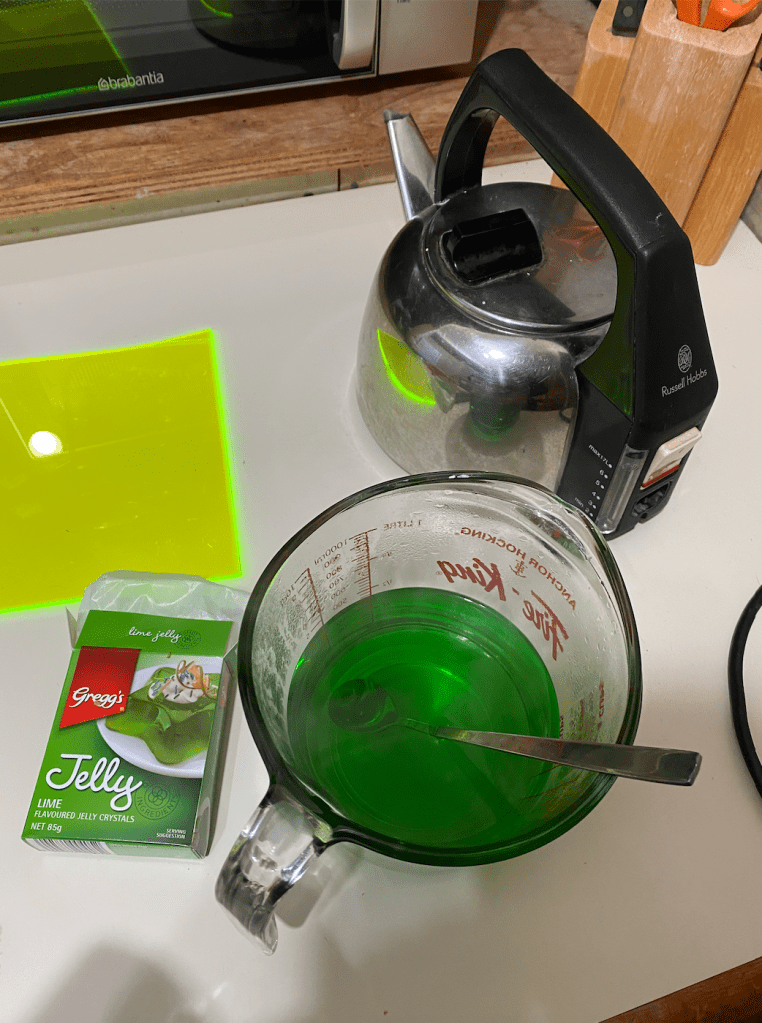
Jelly Treat Method:
Ingredients:
A loaf of banana bread (I bought one from the supermarket)
Jelly Crystals
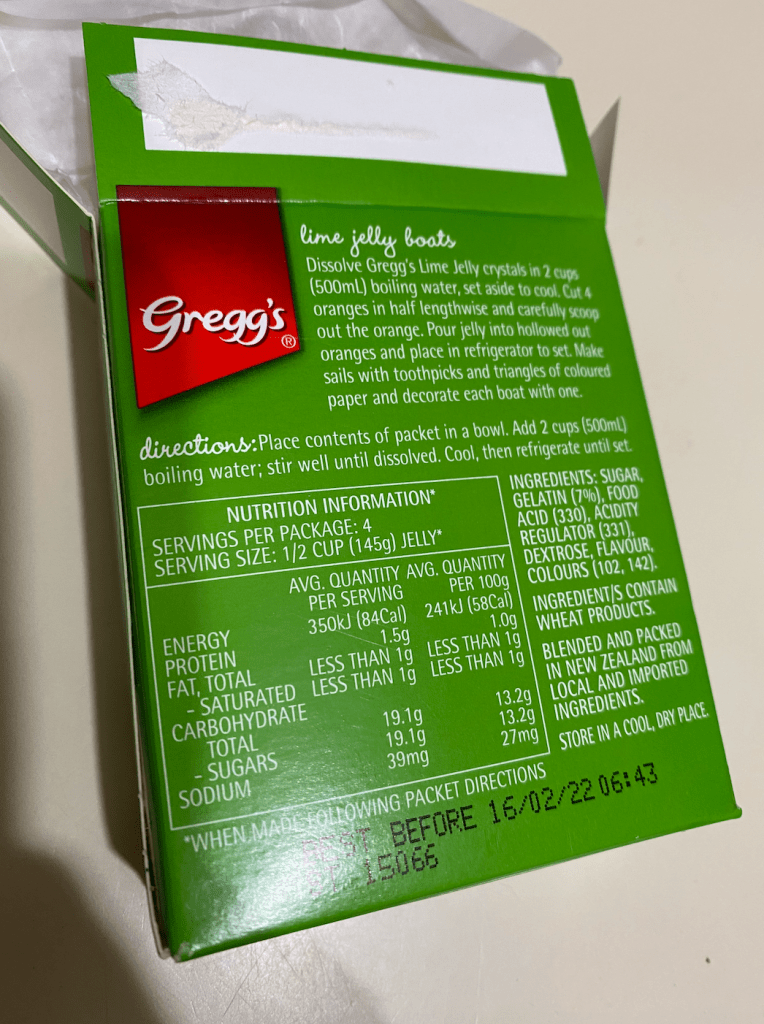
Follow the instructions on the packet of jelly crystals to prep the jelly.
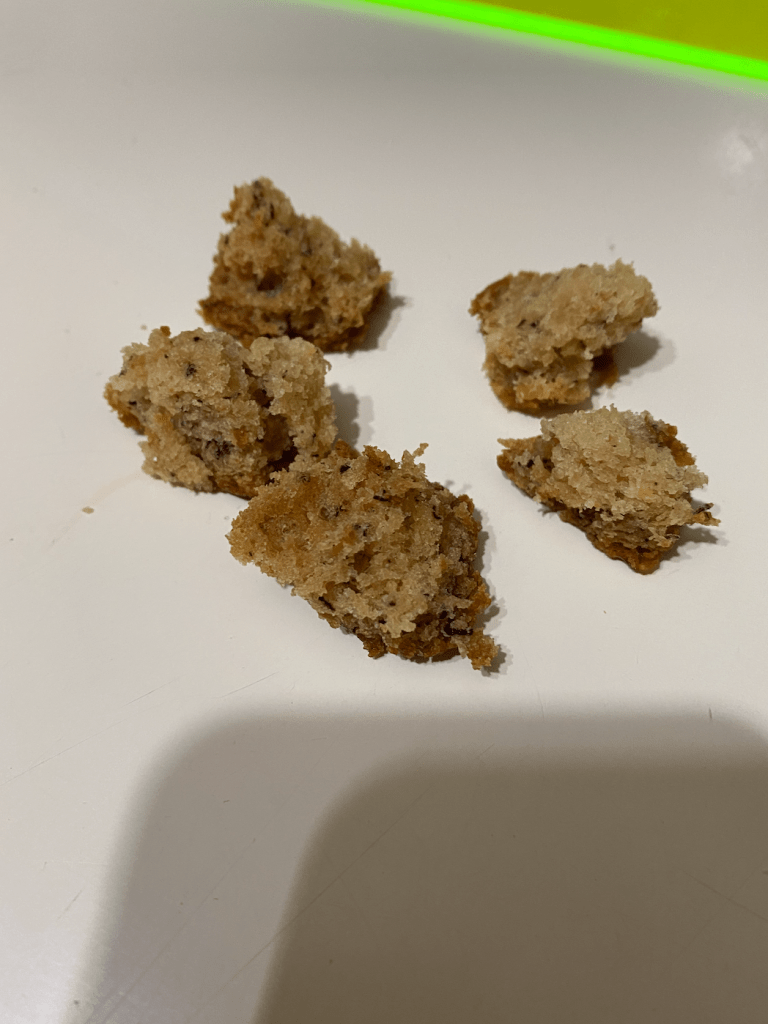
Carve out little bites of banana bread.
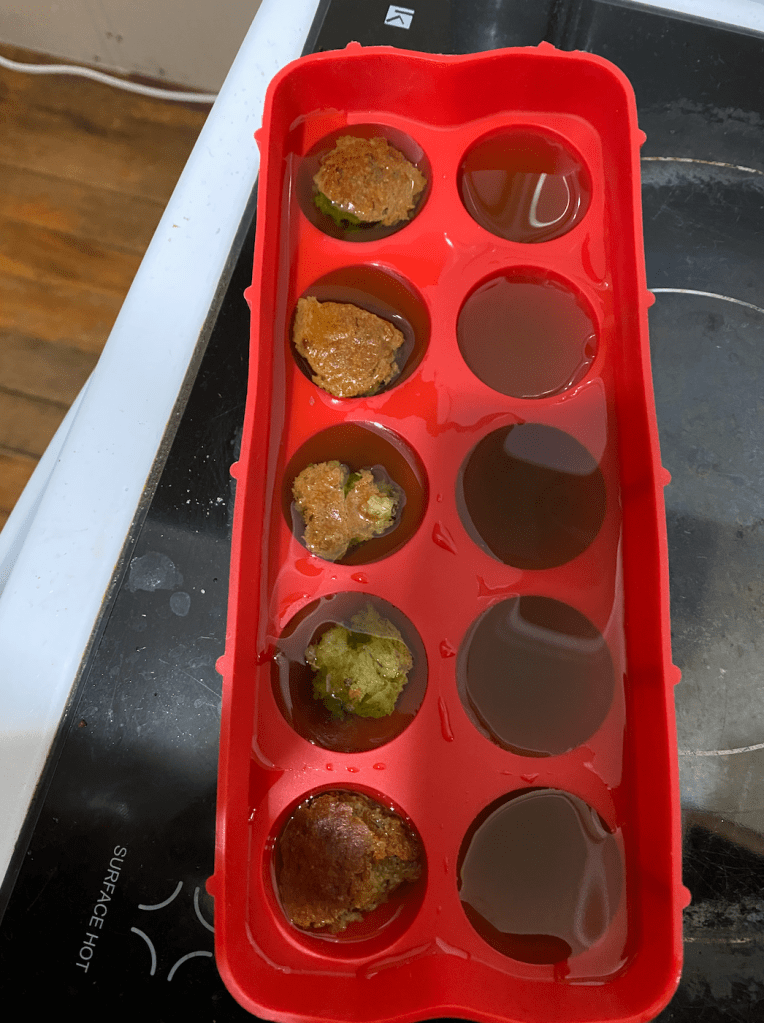
Once the jelly crystal mixture has cooled down, pour into a dome shaped mould and place the banana bread into the jelly.
Place in the fridge to set overnight.
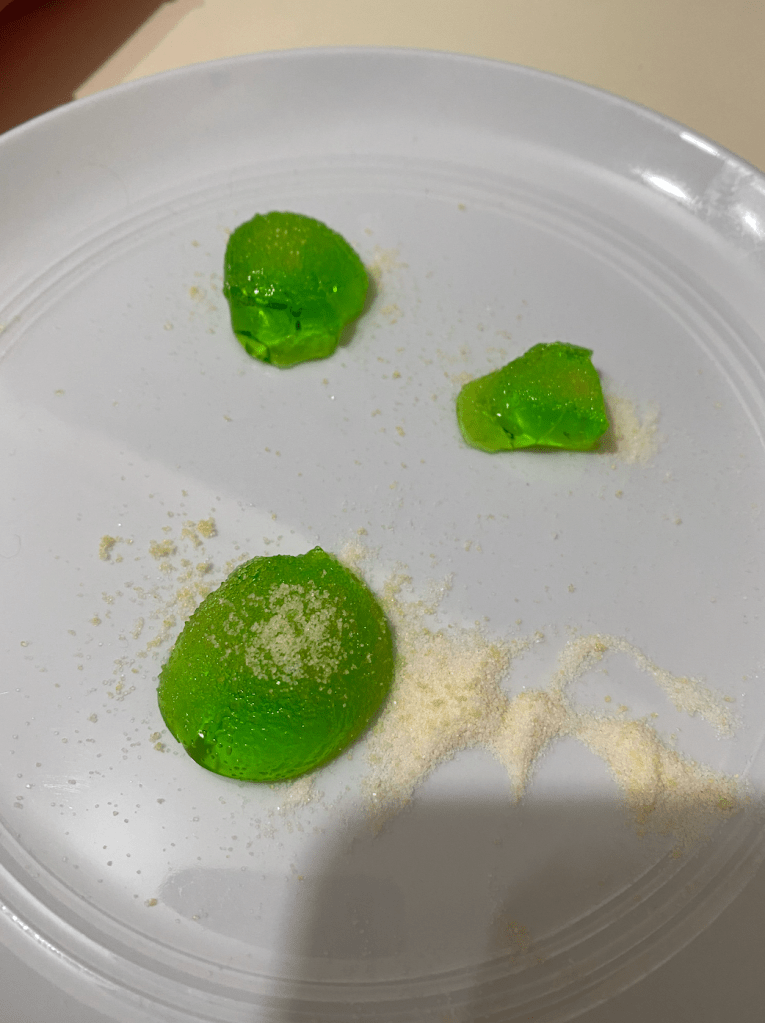
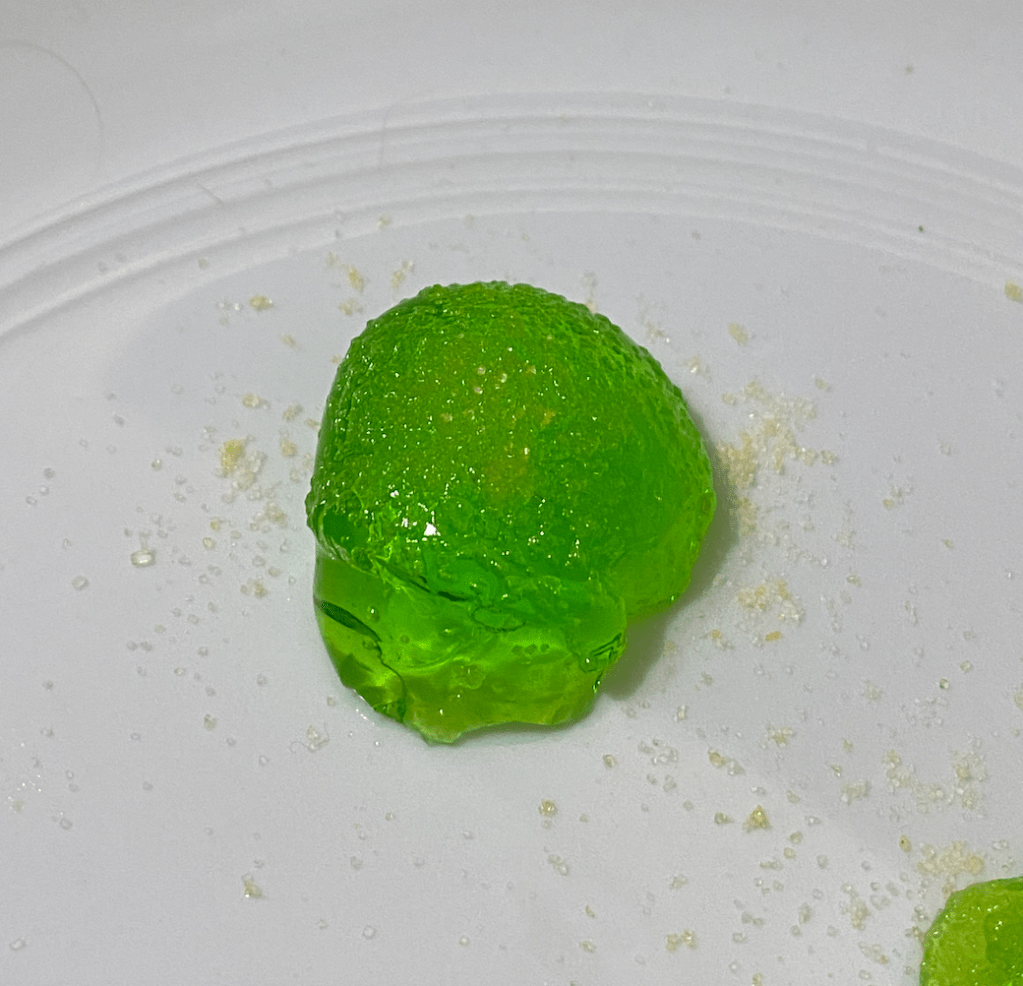
Once set, pop the jelly out of the mould and dust with sherbet.
Eat and enjoy your sticky fingers.
I got my flat mates to try my jellies and was delighted at how they reacted to peoples touch. They flopped around and got the sherbet on their fingers. The pure jellies didn’t hold their form very well but the jellies with the banana bread held really well. The sherbet creates a really interesting combo in your mouth. Overall i’m very pleased with how they turned out. The only issue I had was they were tricky to get out of the moulds so weren’t as perfect as I would have liked.
The texture of the banana bread jellies with the sherbet on top created a really interesting sensation in the mouth. The texture is somewhat off putting but the taste is sweet as you taste the granules of sherbet.
To display my jellies I will place them on an acrylic sheet in neon green to create glowing platform.
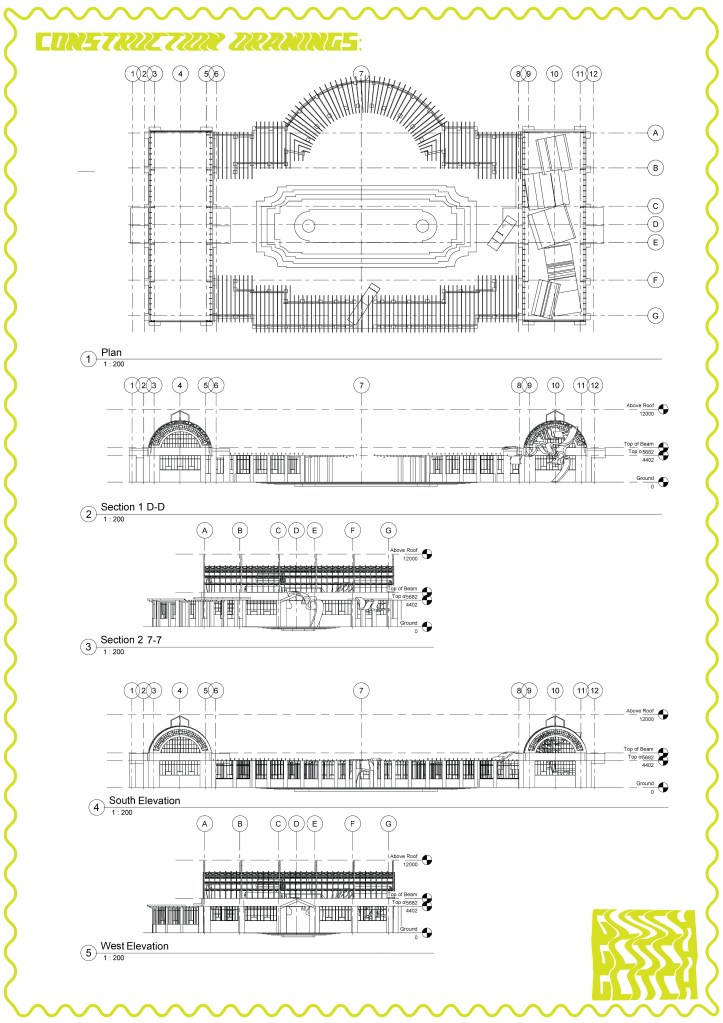
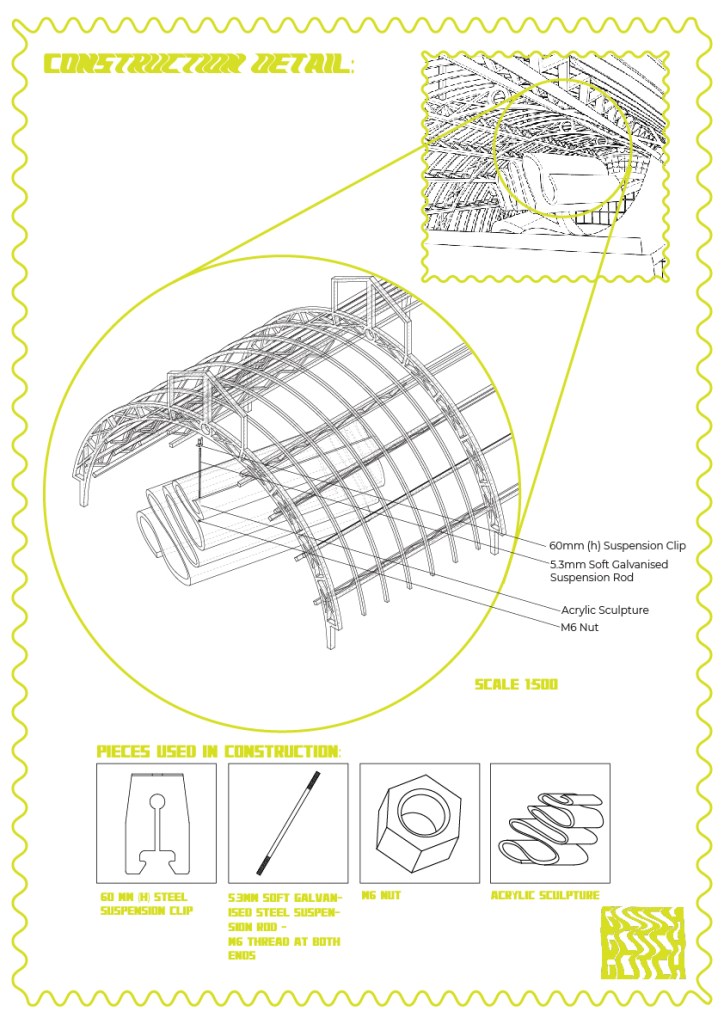
To install the acrylic sculptures I will use a suspended ceiling system using a suspension clip to clip onto the arches and trusses of the winter gardens, allowing a steel rod to be secured to it and then threaded through some small holes on each corner of the acrylic sheets and secured in place with a nut.
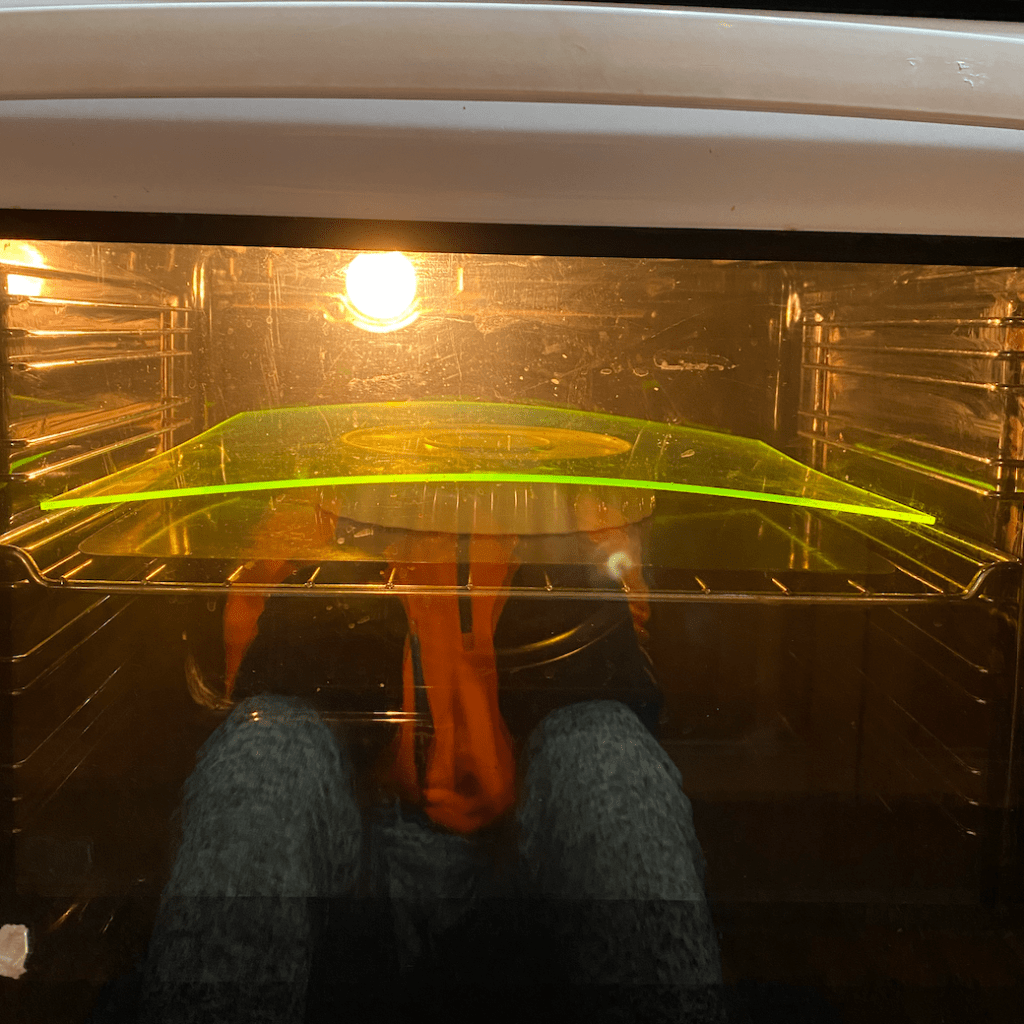
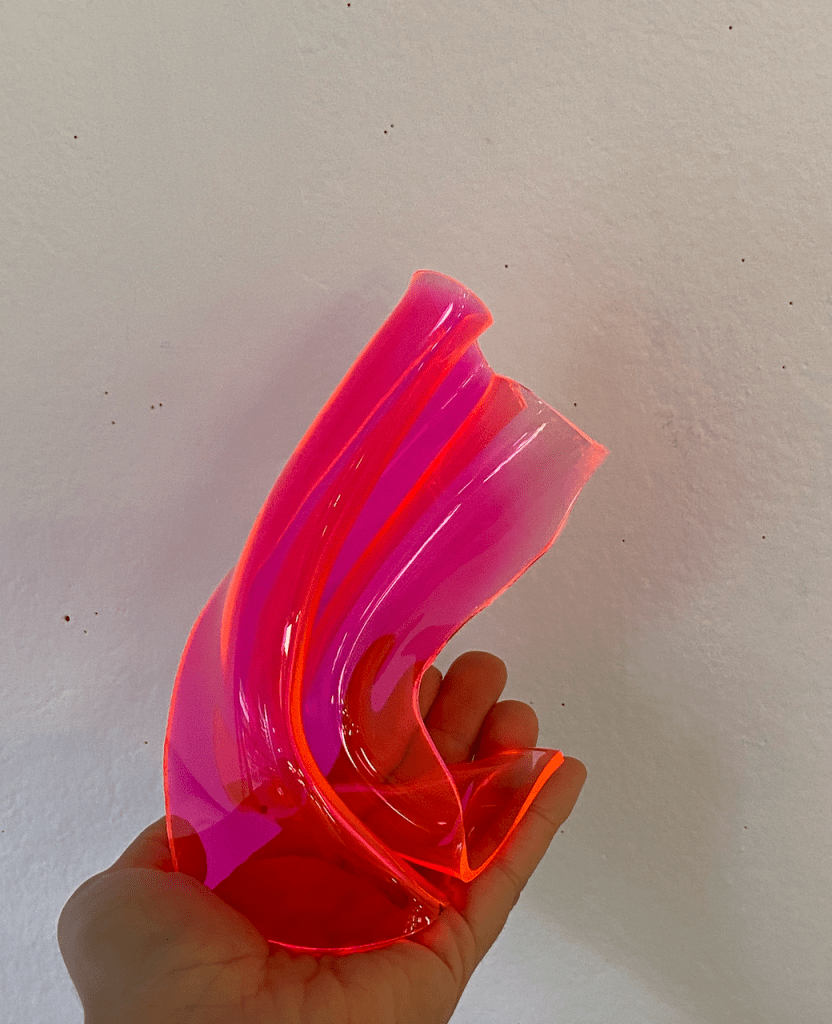
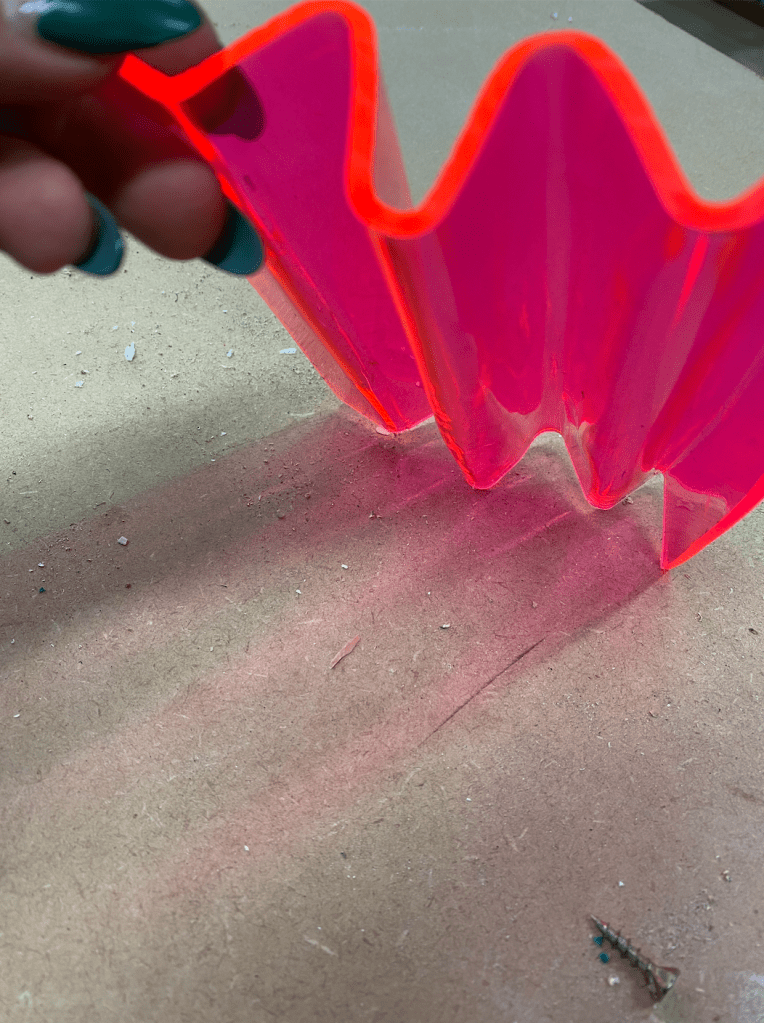
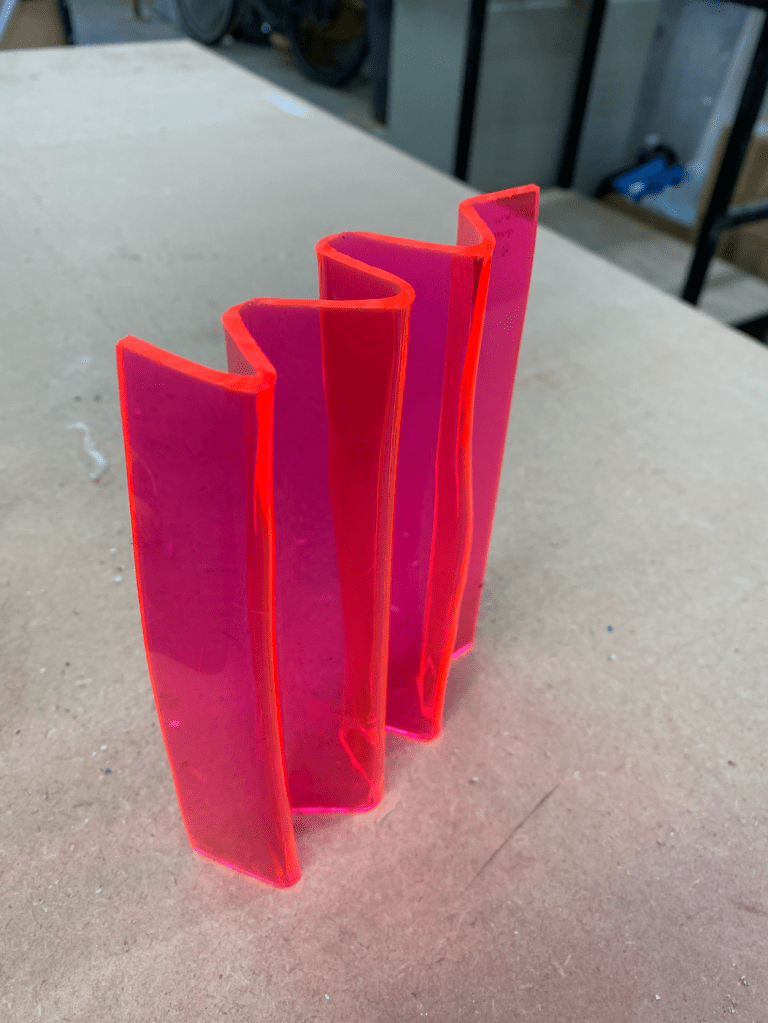
To create the acrylic sculptures the acrylic sheets will have to be heated up and moulded into an interesting fluid form. To make my trial models, I placed the acrylic into my home oven and once it was heated through used heatproof gloves to mould it into interesting shapes.
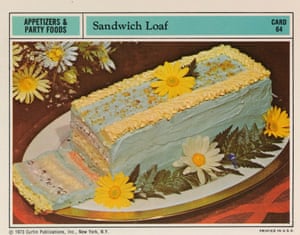
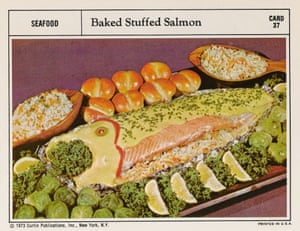
These dishes are a sight to behold. The effort put into the presentation is incredible. The meal becomes a whole experience.
I’m drawn to using food inspired by the 70s because thats the era of psychedelics and new age thinking which is where some of my other themes for my intervention come from so it would tie together with the rest of the space.
I love the idea of using jelly because you can get such great colours that would tie nicely to the candy coloured acrylic sheets in my intervention. Jelly also exudes weird and wonderful. The way it moves, looks, feels is all very enticing and out of the ordinary.
Perfect Salad
I liked the sherbet element that Heston used in his 70s themed dish and the way it transferred on to peoples hands and gets everything sticky. I want to find a way to create a similar situation where peoples hands get sticky so you can see how many places they touch and to draw attention to our hands like how covid did in 2020. I want to re create that dynamic of being nervous and overly aware of using your hands.
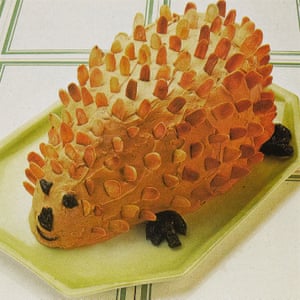
My first idea was to create a large jelly cake and somehow dice it up whilst still holding itself together. Each cube of jelly would have a toothpick coming out of it so the look of the jelly cake would be that of a hedgehog. I would then dust the jelly in sherbet so that when you picked up the jelly cube the sherbet would fall onto your hand making it sticky and tempting you to lick your hand.
Hedgehog Jelly Concept Sketch
I realised that form probably wouldn’t actually hold together nicely.
My next idea was to not cut it up and make people just pinch a piece off but didn’t think that would be very enticing and people would probably not engage with it because its too messy.
I then thought of doing little individual jellies that you pop straight in your mouth like little lollies covered in sherbet. its inviting, somewhat hygienic, gets people using their hands and gets them sticky.
Mini Jelly Concept Sketch
Another idea, if i was to take it further, was to copy the 70s and put food that shouldn’t be in jelly into the jelly. Banana bread was a common theme of lockdown so if I go down this route I would add bits of banana bread into the bite sized jellies and dust them with sherbet.
I have a strong idea but i need to do more modelling and developing my design in sufficient detail. I need to move into the rendering phase, creating clear images to convey my ideas.
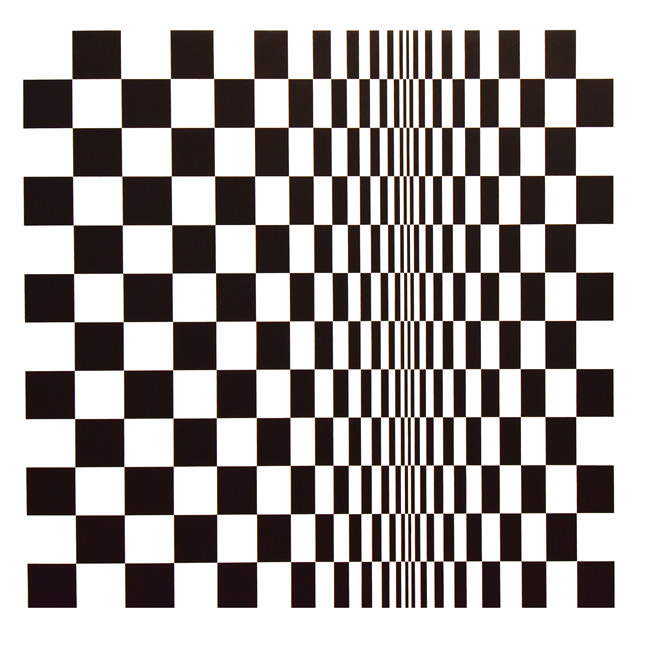
Moire Effect:
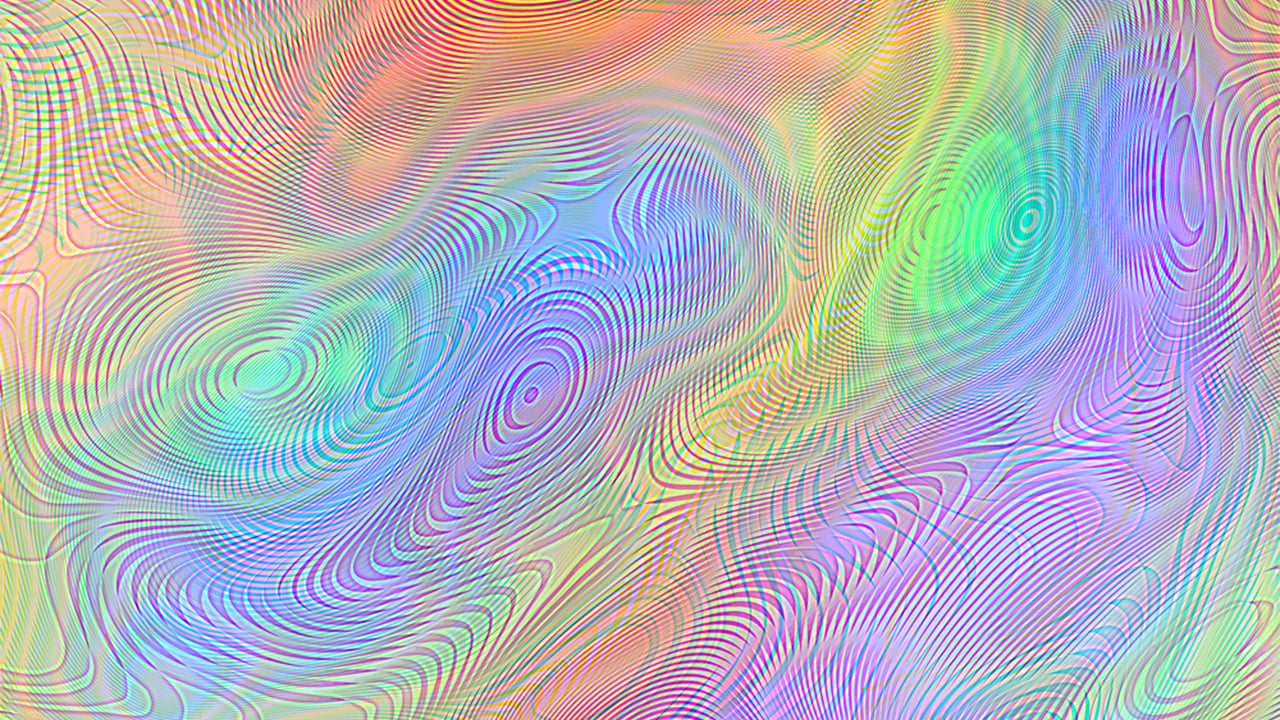
‘Moiré effect is a visual perception that occurs when viewing a set of lines or dots that is superimposed on another set of lines or dots, where the sets differ in relative size, angle, or spacing. The moiré effect can be seen when looking through ordinary window screens at another screen or background. It can also be generated by a photographic or electronic reproduction, either deliberately or accidentally.’ Its this effect that I am trying to create with in the site. Drawing inspiration from a electronic moire effect.
The below images show the colours that come from this effect from a digital environment.
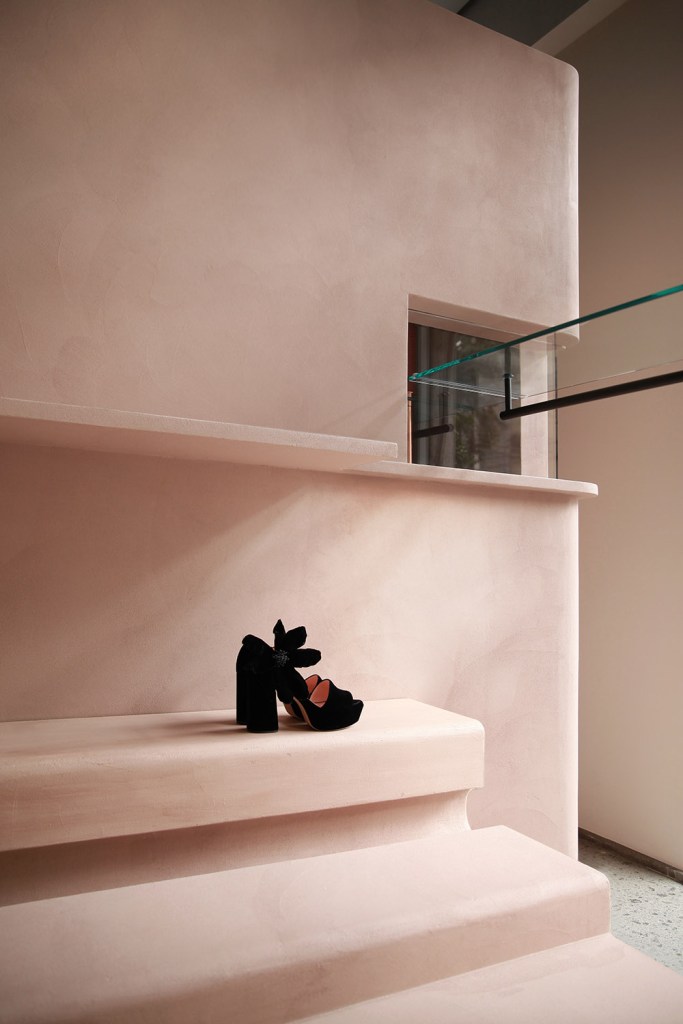
Mercante tasta is a design studio in Italy that does interesting designs that play with colours, unique modern forms whilst nodding to a retro style of design. They very cleverly marry materials, textures and odd shapes to construct their spaces.
A project that I really like is their Restoration and enlargement of boutique in Milan:
The attention to detail in the little moments are what gives this space its wow factor.
I will start doing more digital modelling to flesh out my ideas and create clear design drawings and assembly.
I will also develop my food element of the design exploring the nature of touch and transfer of food on our hands.
Create more of a wow moment. Create suspense, climax within the space rather than filling the whole space with my intervention.
The theme that I need to develop is that the screen is the psychedelic opiate for this space.
Explore systems for warping vision/ warping perception. The menu looks like something but tastes like something else?
How would I invite people to participate? flyers? age demographic?
Artists i’m looking at –
Bridget Riley – Moire effect
Riley was born at Norwood, London. She studied at Goldsmiths’ College from 1949 to 1952, and at the Royal College of Art from 1952 to 1955. She began painting figure subjects in a semi-impressionist manner, then changed to pointillism around 1958, mainly producing landscapes. In 1960 she evolved a style in which she explored the dynamic potentialities of optical phenomena. These so-called ‘Op-art’ pieces, such as Fall, 1963, produce a disorienting physical effect on the eye.
Heston’s feasts follows Blumenthal as he conceptualises and prepares unique feasts for the entertainment of celebrity guests. The dining room, food, and presentation are themed around a period of history.
I’m wanting to create a food intervention that affects the hands in some way and I really liked the response that Hestons desert got from this episode, in regards to the sherbet and how it made peoples hands and faces sticky. I would love for the food to mark a persons hand and i just thought of my childhood when i’d eat raro and my hands would turn yellow. It would be good to trial some things to see how i can get peoples hands sticky.
I really like how the guests are transported in the Charlie and the chocolate factory episode of Hestons Feast. Playing with the perception of what is edible and what isn’t, a theme that was significant in the original story and something i want to bring into my intervention.
I definitely need to do more iterations of my design ideas to flesh them out and explore my ideas further. I need to do more artist research to see how other people have explored similar ideas and to get inspired to push my project further or to just see a different perspective and observe new ideas.
Going forward i will develop my two main elements through more iterations. The food element of my design and the psychedelic environment it sits in.
I will research designers who have explored unique ideas surrounding food, covid space and psychedlic exhibitions or environments.
To do:
Develop food element of design.
Designer research to do with food.
designer research to do with covid
Designer research to do with psychedelic space
Experimenting with materials:
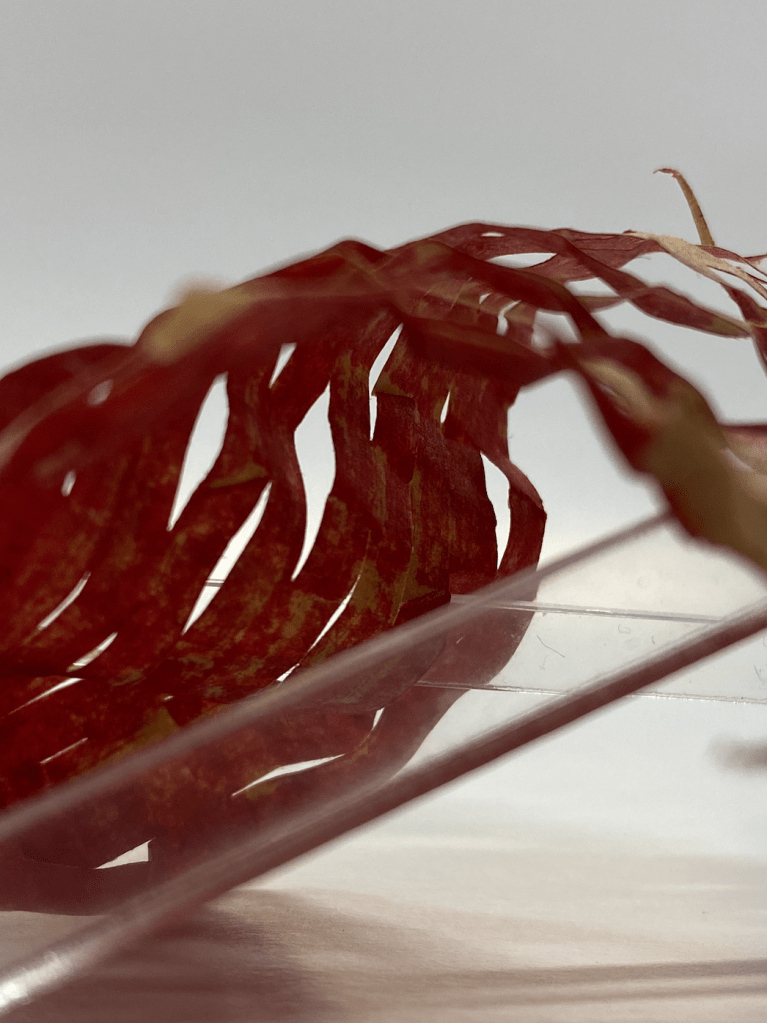
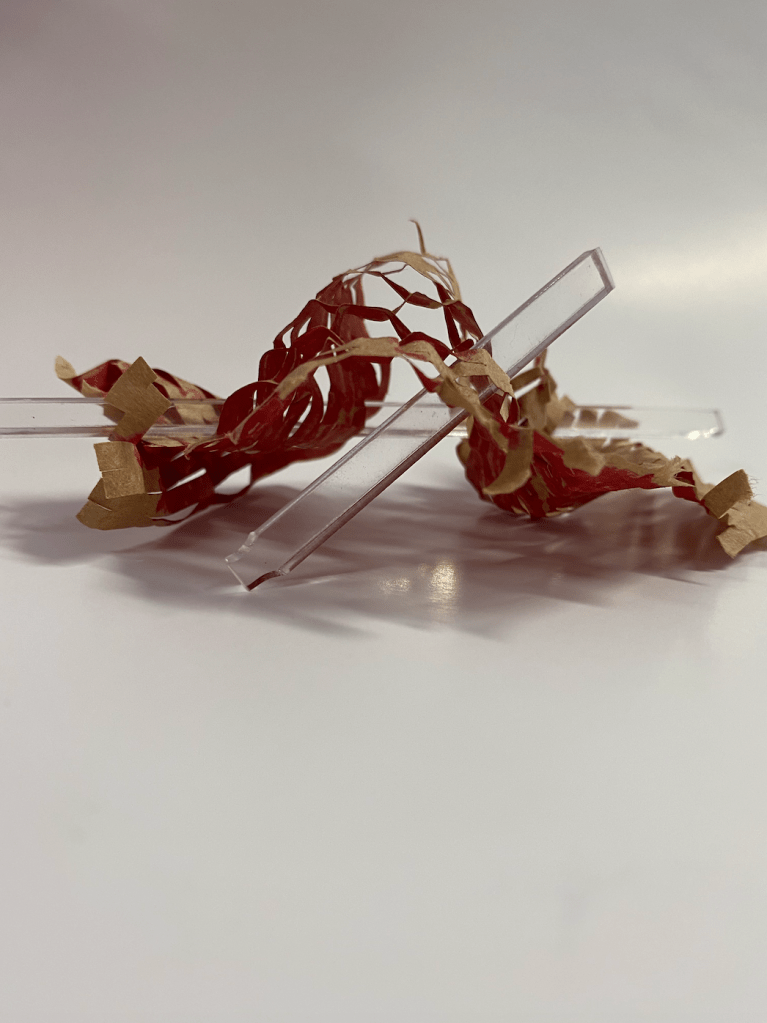
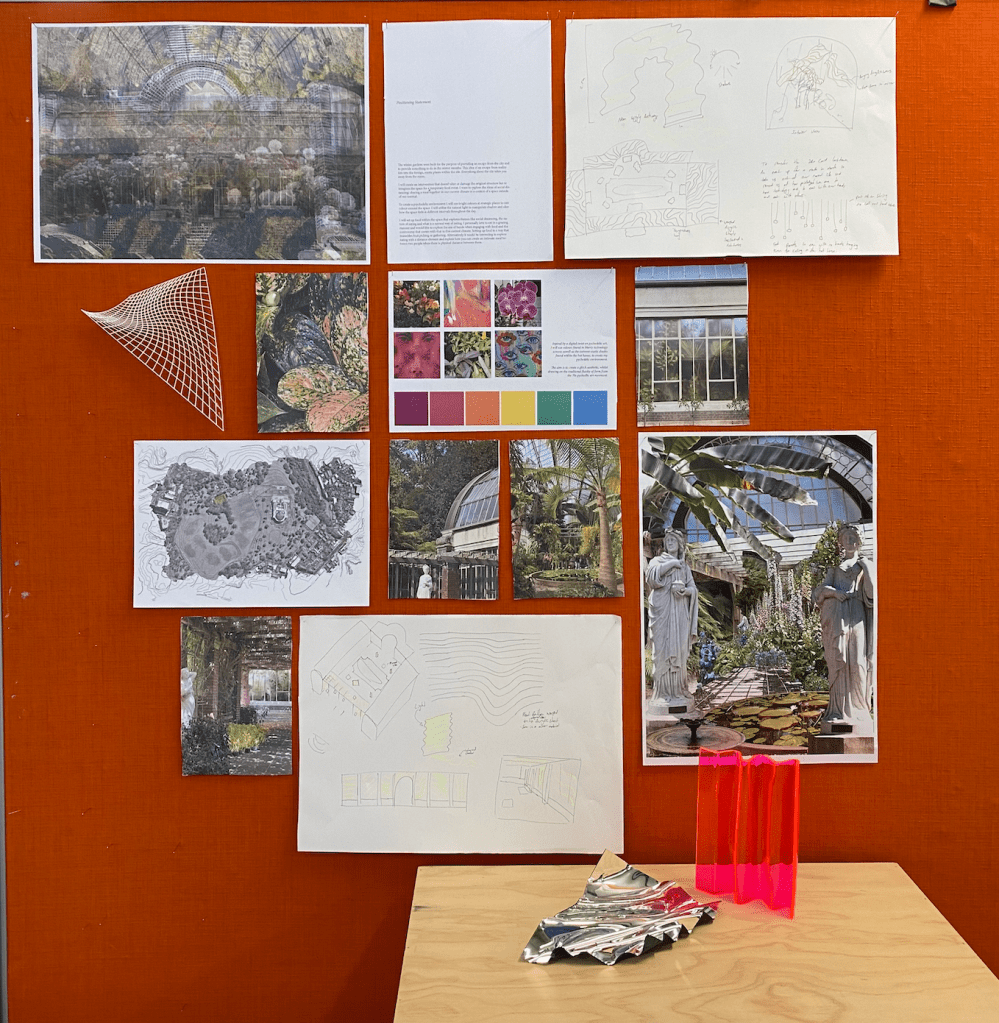
Pleating patterns applied to acrylic sheet to distort light and add colour to a space. The way the pink acrylic plays with colour when looking through it, creates purples, oranges and pinks. Very psychedelic. When the light travels through it the shadow takes on an awesome pink broken up by the pleating. A very cool shadow.
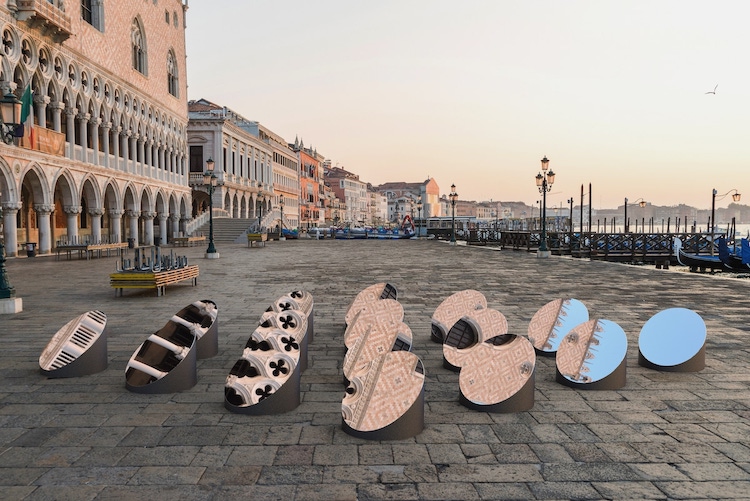
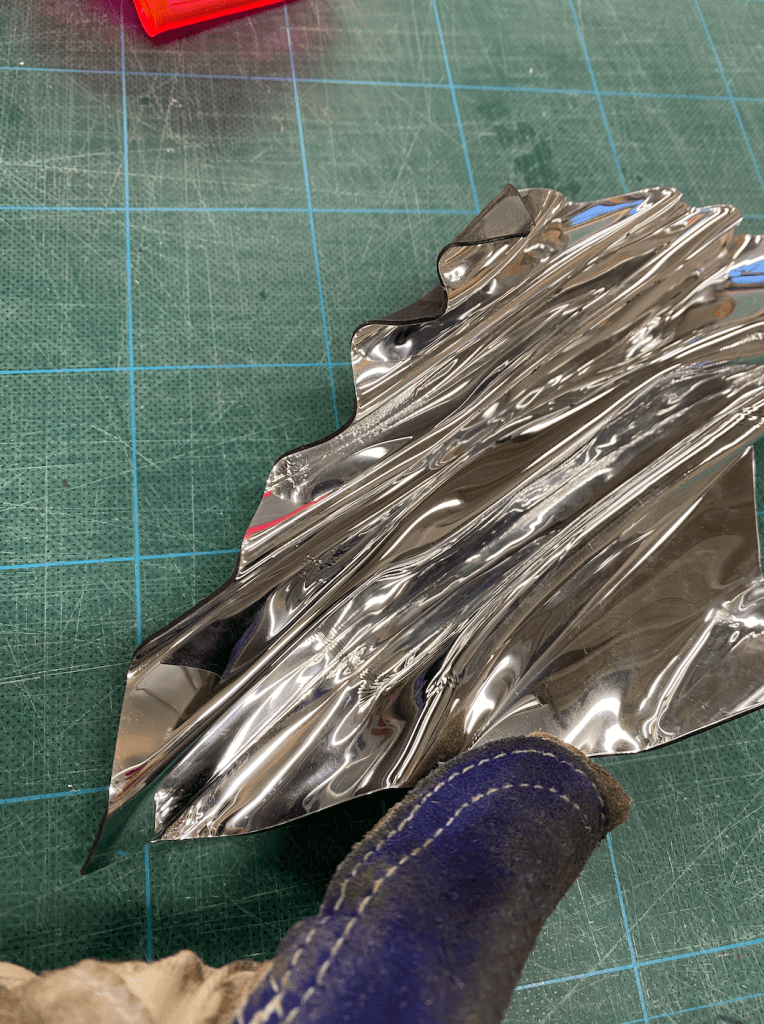
I pleated in a diagonal pattern with the mirror board and loved the result. The way the reflective surface catches the light in the folds is incredibly eye catching. The reflective nature also helps to create the illusion of it being a soft material and distorts the reflection. I like the idea that looking into these objects, you get to see a different, warped reality that lives within the reflection and the shadow of these objects.













/cloudfront-ap-southeast-2.images.arcpublishing.com/nzme/KI3RCP7A7CED2POXNXTEHOAOJY.jpg)





















 Spatial Fabrication