Week 10 Studio: Manifesto Development

Uncategorized, Year 2 Semester 2

Next three manifestos:
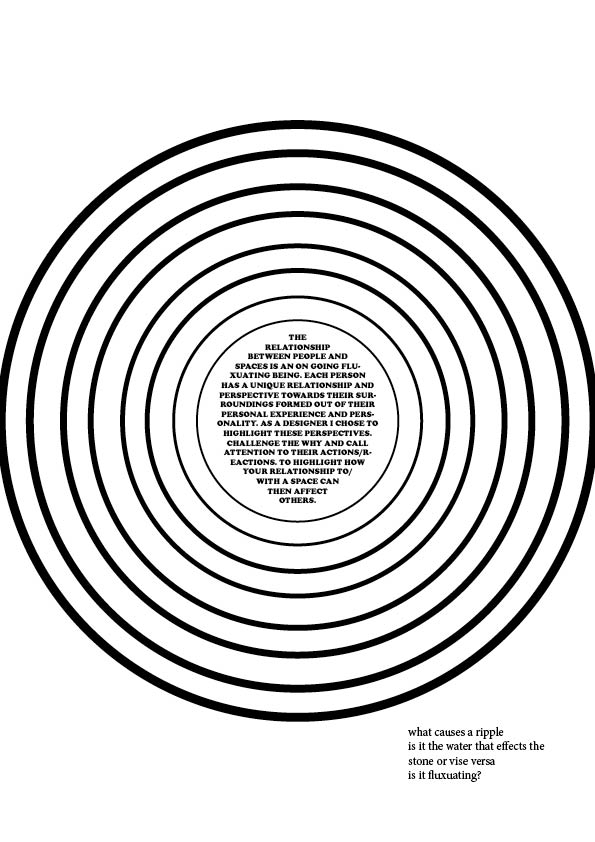
In manifesto 4 I was trying to convey the ripple effect with the manifesto at the centre being the initial ‘drop’ to cause the ripple.

The feedback I got for this one was that Lucy thought it looked more like a target than a ripple. She also posed the question of what causes a ripple. Is it the water that effects the stone or visa versa.

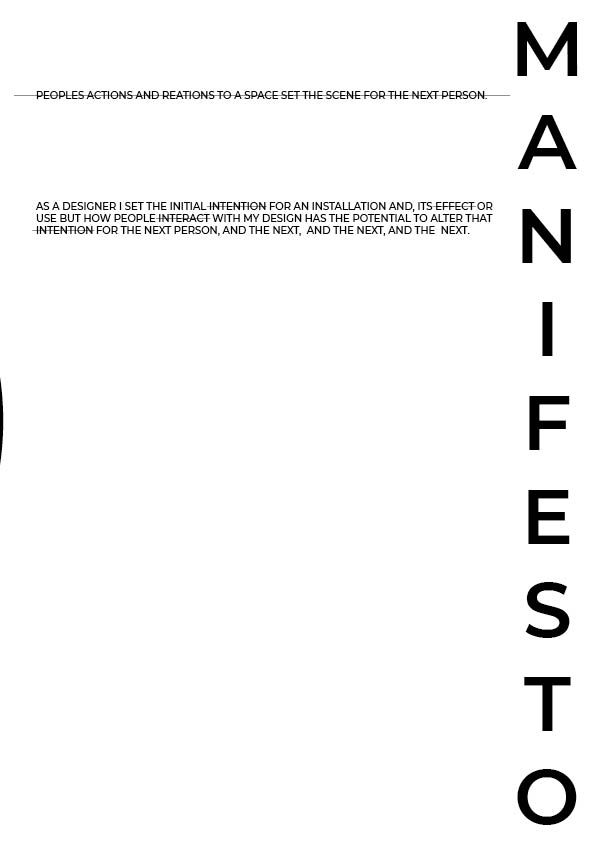
In manifesto 5 I don’t really know why I put lines through some of the words. I think I was trying to highlight key words in the manifesto but I didn’t have a strong reason as to why or why those words. I quite like the text going in the two different directions. They relate quite well together.

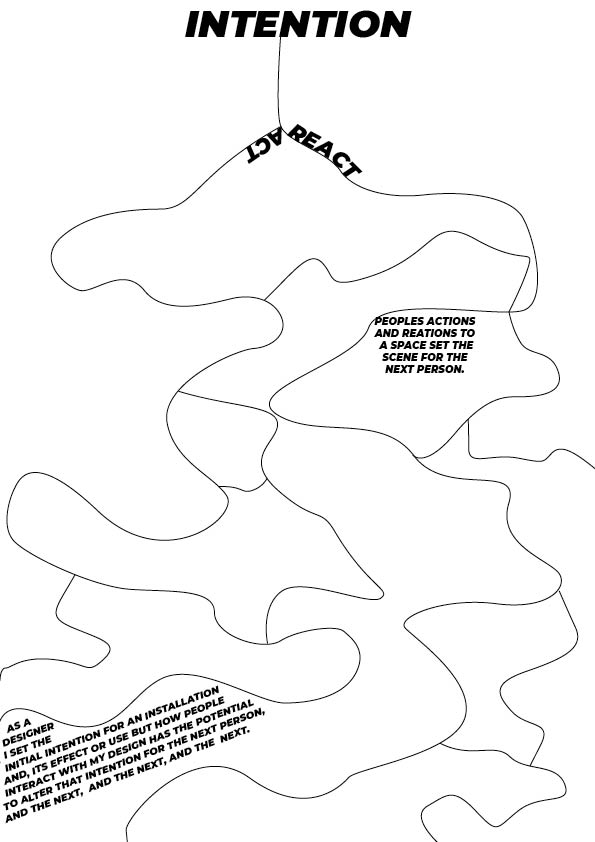
Manifesto 6 was a reworking of manifesto one. I was drawing on the format of a ‘Yes/No’ quiz map in the flow of the documents. I was also drawing on the idea of meandering rivers with the lay out of the lines.

More analysis of manifestos:

I Am for an Art: Claes Oldenburg on His 1961 “Ode to Possibilities”

https://walkerart.org/magazine/claes-oldenburg-i-am-for-an-art-1961

Oldenburgs ode is very poetic with the rhythm of starting each line with ‘i am’. It creates a powerful flow and makes you engage with whats being said. I like that it also opens your eyes to the broadness of what art can be. That art isn’t just the classic painting hung up in museums but in the intricate details of modern life.

The Why Cheap Art manifesto:

https://d2w9rnfcy7mm78.cloudfront.net/5261790/original_b7600c6069f37431494f74af5c0770db.jpg?1571236831?bc=0

The use of different fonts and capital letters brings variety to the page emphasising the idea that art comes in many forms. This also brings emphasis to different words in the manifesto.

The use of explanation marks in the second half of the text ramps up the pace combined with the slow increase of the size of the text as we move down the page. The urgency increases.

The use of strong statements, then similies, then the key statement ‘Art is Cheap’ acts as a finale for the manifesto and frames that key statement nicely.

A 38-Point Design Manifesto :

https://nodesignonstolen.land/

I really like this manifesto. Its orderly and concise which I think is a testament to the list format. Its very simple in its presentation not letting anything take away from the main point. The language used is very self assured and inspires action from people. Each point starts off with a brief statement which is then expanded on a little. this creates the tone of this call to action. Its an instruction.
Week 9: Manifestos

Uncategorized, Year 2 Semester 2

Manifesto Definition:

noun, plural man·i·fes·toes.

a public declaration of intentions, opinions, objectives, or motives, as one issued by a government, sovereign, or organization.

Formats:

  1. List
  2. Poem
  3. Graphic Poster
  4. Report/article

This manifesto is very poetic in writing and uses abstract ideas to communicate the main point. The use of Font, text size and layout slowly draws you in as you focus in on the smaller texts creating a playful tone.

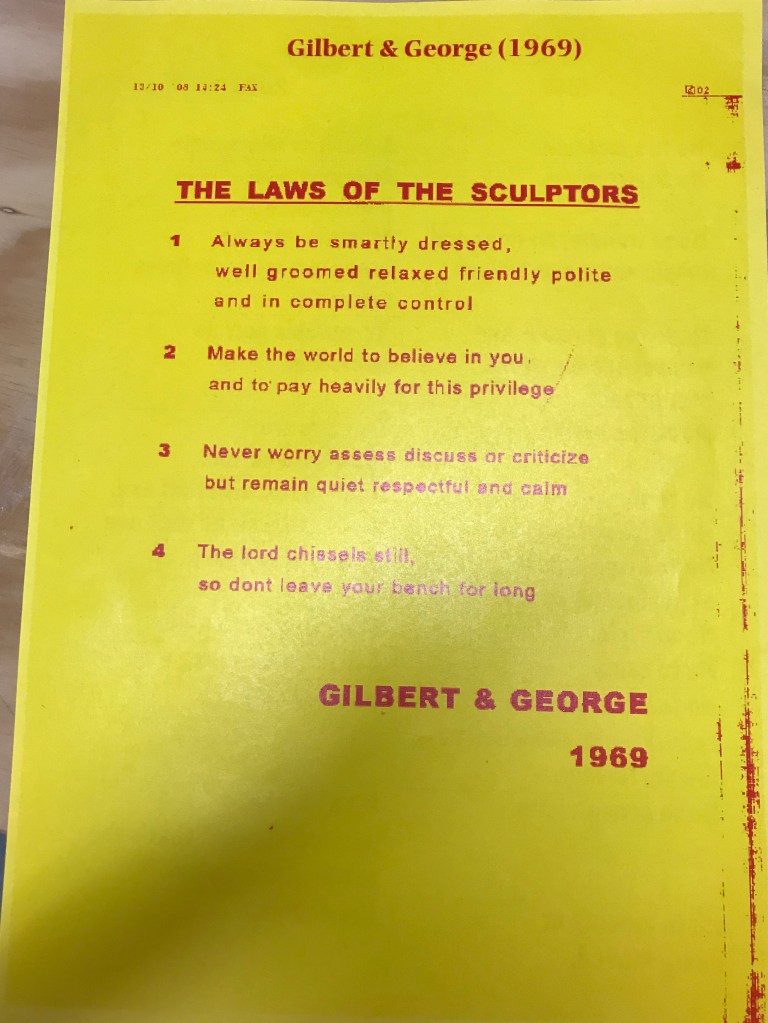
This manifesto is very direct and clear as it breaks down their process in a list with a clear font. No nonsense document.

This manifesto grabs your attention with the graphics used which then leads you to the message of the text focusing on our relationship with objects. The bold ‘Nice, very nice, nice’ captures your attention straight away.

The use of font and layout are very clean and orderly. The text itself plays a game of tug of war with each statement leaving you perplexed as to how ‘worth it’ it is to be a sculptor.

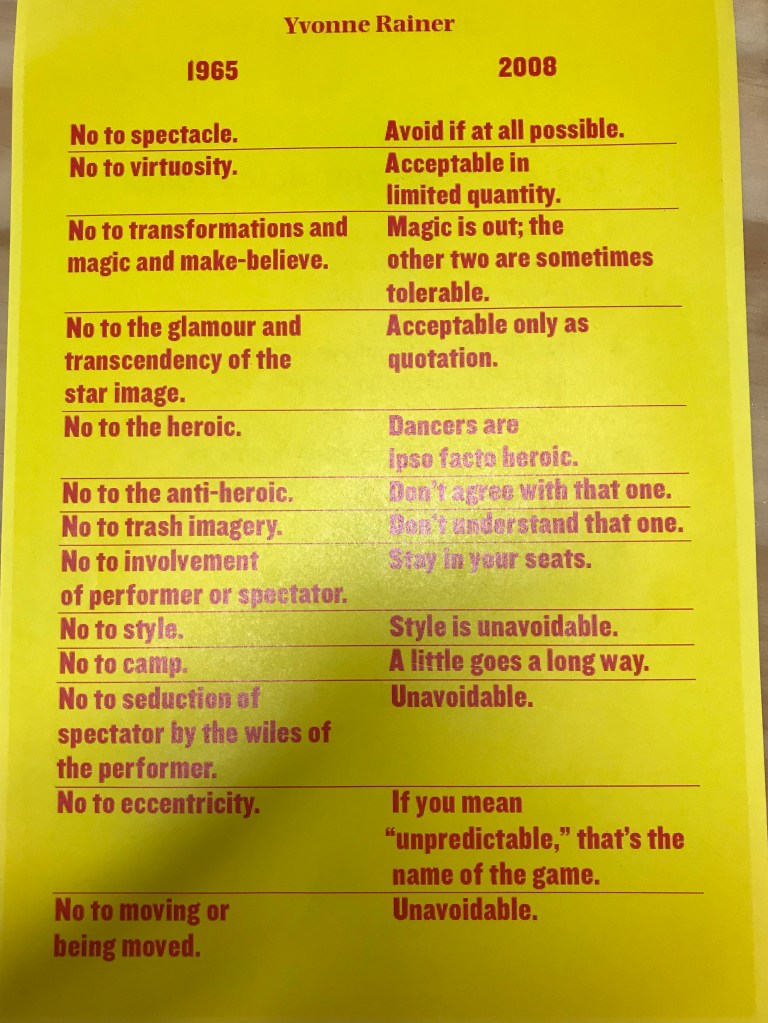
Yvonne Rainer is an American Dancer who’s reconsidered manifesto is a personal reflection on her past views. It’s very clear to understand and interesting how her perspective has evolved. It almost feels like a conversation.

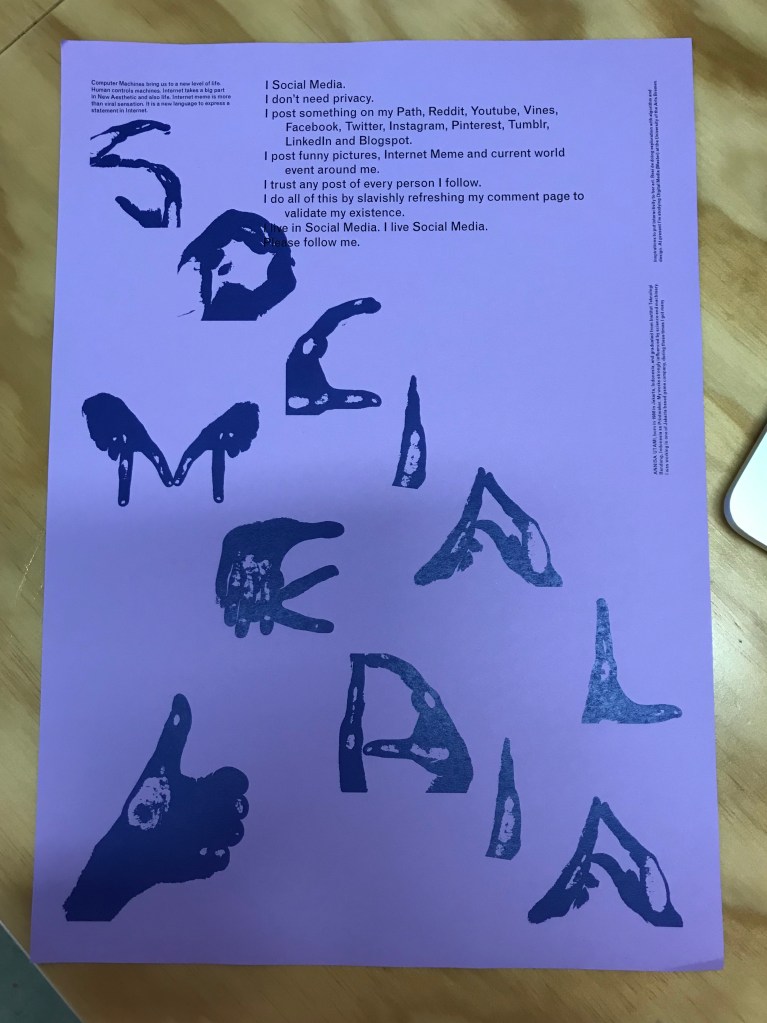
The use of the hands on this manifesto ties into the message of a thumbs up ‘like’ referred to in the text. Its taking the thumbs up symbol and extrapolating it to open the space for discussion.

Things to consider when analysing a manifesto –

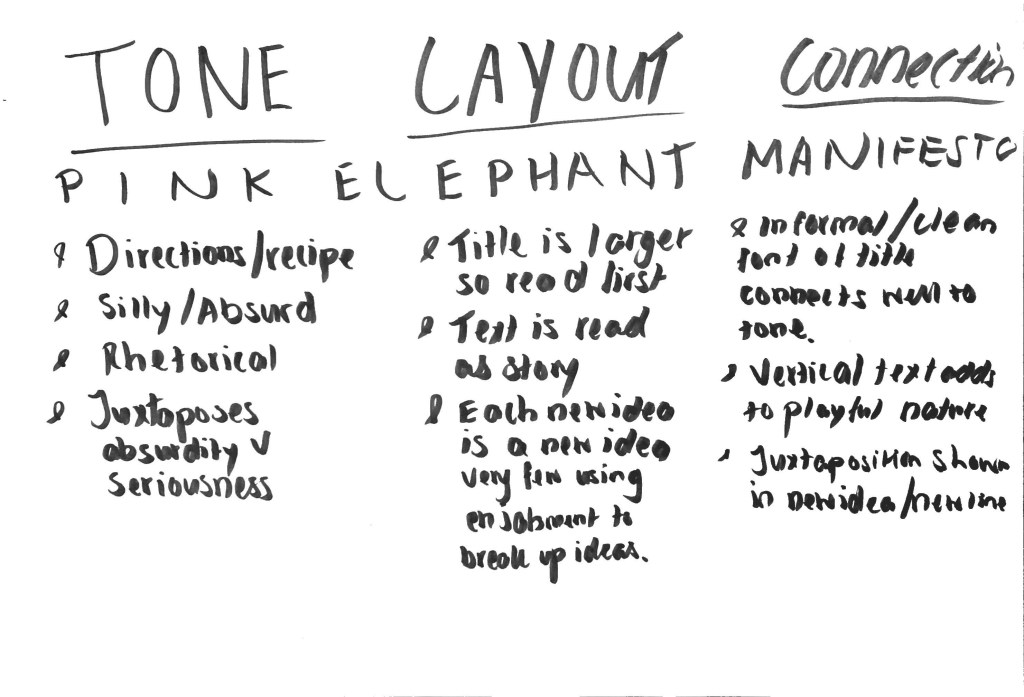
Tone

Layout

Connection between tone and layout

Concepts applied through the layout, text format and content of writing e.g. the title is missing its top half, does the text then cut out certain things like adfectives or is very to the point? no waffle?

who wrote it?

what was their context?

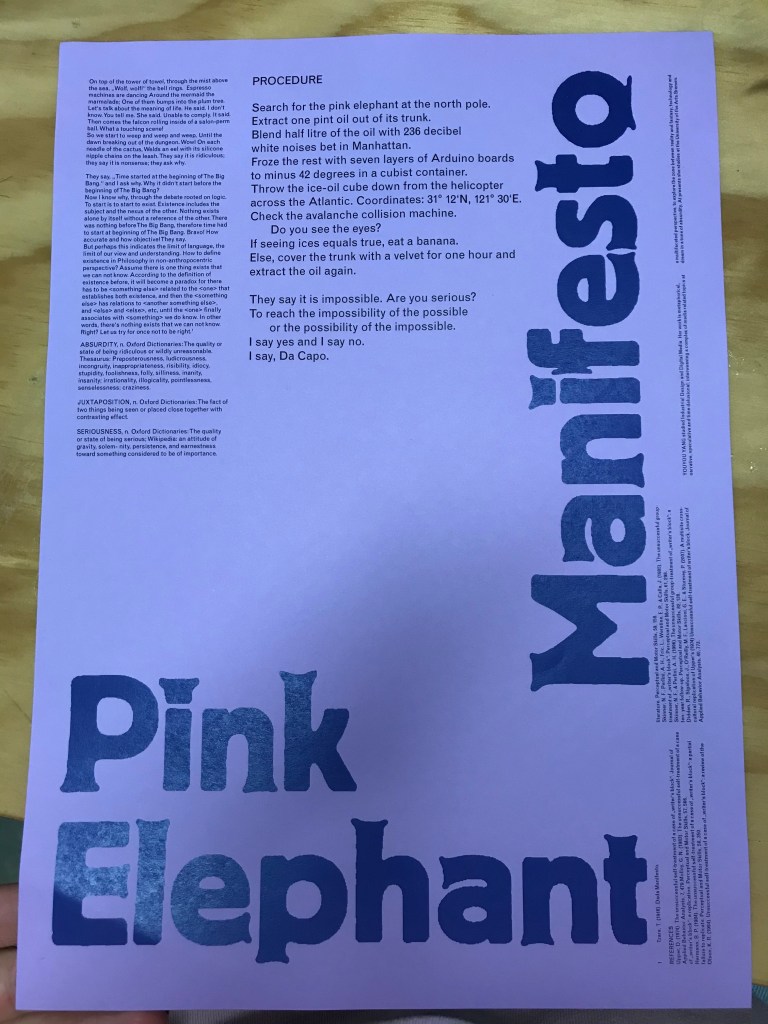
Analysing Pink Elephant Manifesto as a group:

What is it and why is it like that?

First Draft of my Manifesto:

The relationship between people and spaces is an on going fluxuating being. Each person has a unique relationship and perspective towards their surroundings formed out of their personal experience and personality. As I designer I choose to highlight these perspectives and challenge the why or call attention to their actions/ reactions. And to highlight how your relationship to/with a space can then affect others.

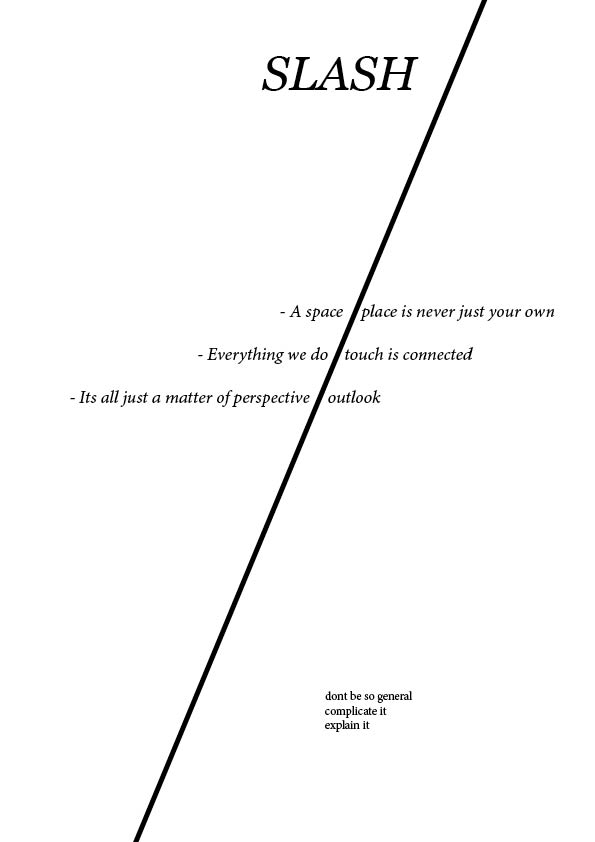
  • A space/place is never just your own
  • Everything we do/touch is connected
  • Its all just a matter of perspective/outlook

Thursday:

My first three manifestos:

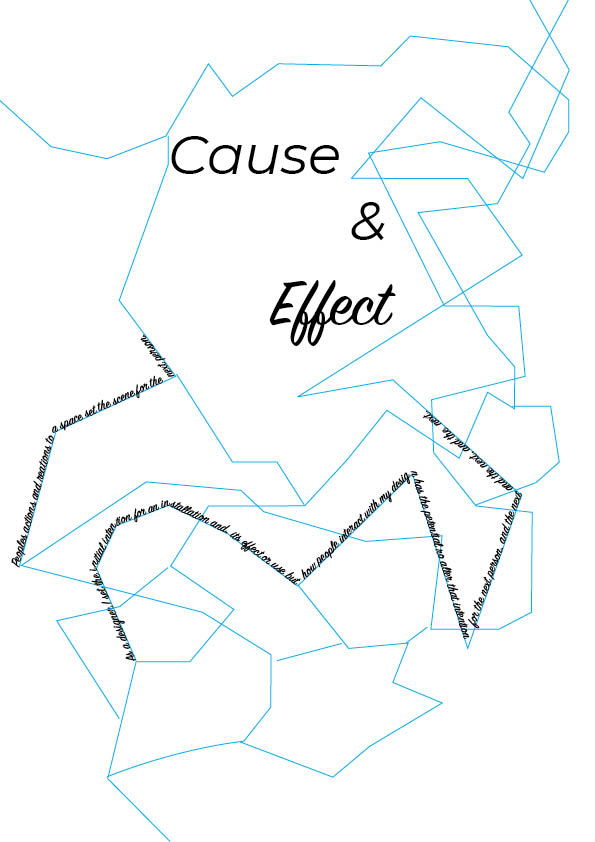
In manifesto 1 I was trying to explore how everything is linked like a map or a root system where an action of one person effects the experience of the next. I also chose a script font where the letters flow onto the next to continue this theme. As I made more manifestos I found that this one was my least favourite.

In manifesto 2 I went for a minimal approach. I used italics to keep everything slanted and a list format to my punchy and to the point.

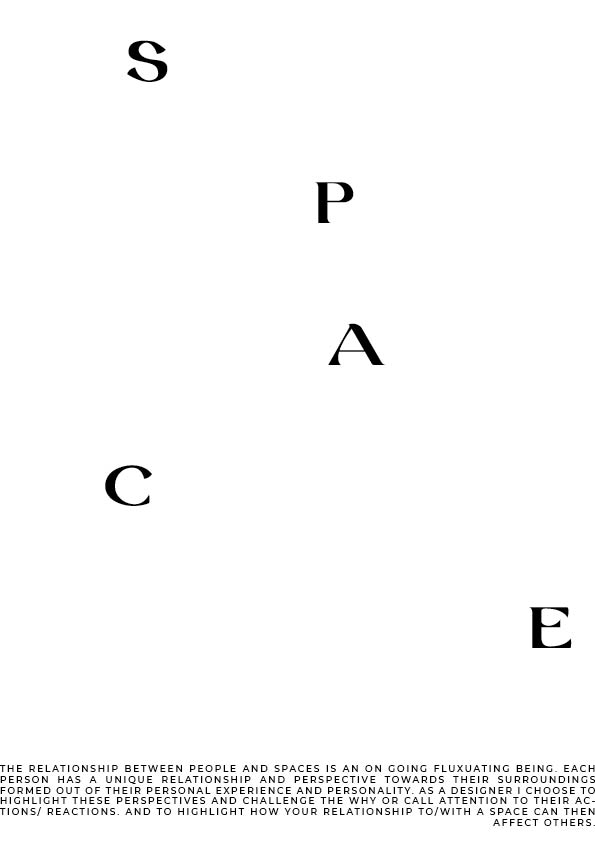
In my 3rd manifesto I played with the space on the document trying to arrange the letters in a random order to catch peoples attention with the manifesto at the bottom of the page. The letters of ‘space’ almost acts as a path drawing your eye down the page to the manifesto.

Feedback I got from Lucy on my manifestos was to not speak so generally with my ideas or concepts I was exploring. To complicate my sentences and explain them in a clear concise way.

Week 8 Studio: Documentation Artefact

Uncategorized, Year 2 Semester 2

Iteration development:

After getting some feedback on my proposals I started to think more conceptually as to why I wanted to cause this disruption. What was the why of my intervention.

I started thinking more about Orewa in regards to hazards and having to be cautious.

Erosion in Orewa is common place as it gets hit quite hard by storms and you often see temporary fences up to protect people from the sheer drop that has now developed. Also by keeping people off the banks it protects them from further erosion by people.

Access to Orewa beach will be limited while the sand replenishment work is carried out.

https://www.stuff.co.nz/auckland/local-news/rodney-times/100689391/auckland-council-explains-how-sand-replenishment-fights-erosion-at-orewa-beach

https://ourauckland.aucklandcouncil.govt.nz/articles/news/2018/1/works-to-begin-on-orewa-beach/#:~:text=Orewa%20beach%20was%20badly%20affected,just%20over%20a%20year%20ago.

These protective barriers bring up the question of what are we protecting. The environment? The people? What are people prioritising with their safety measures.

This article is an interesting conversation of what different people want to do to help deal with the issue of erosion in Orewa. You can see what people value by what tactic they side with and what they wish to protect.

https://www.stuff.co.nz/auckland/local-news/rodney-times/99853605/protective-seawall-rejected-after-walkway-transformation

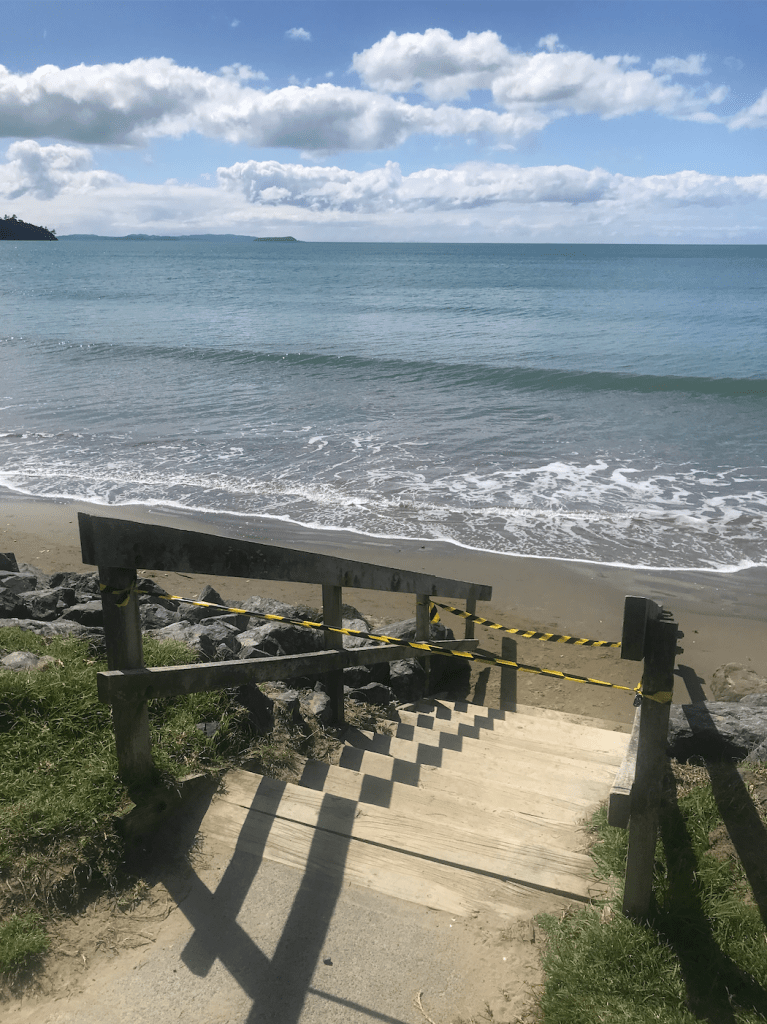
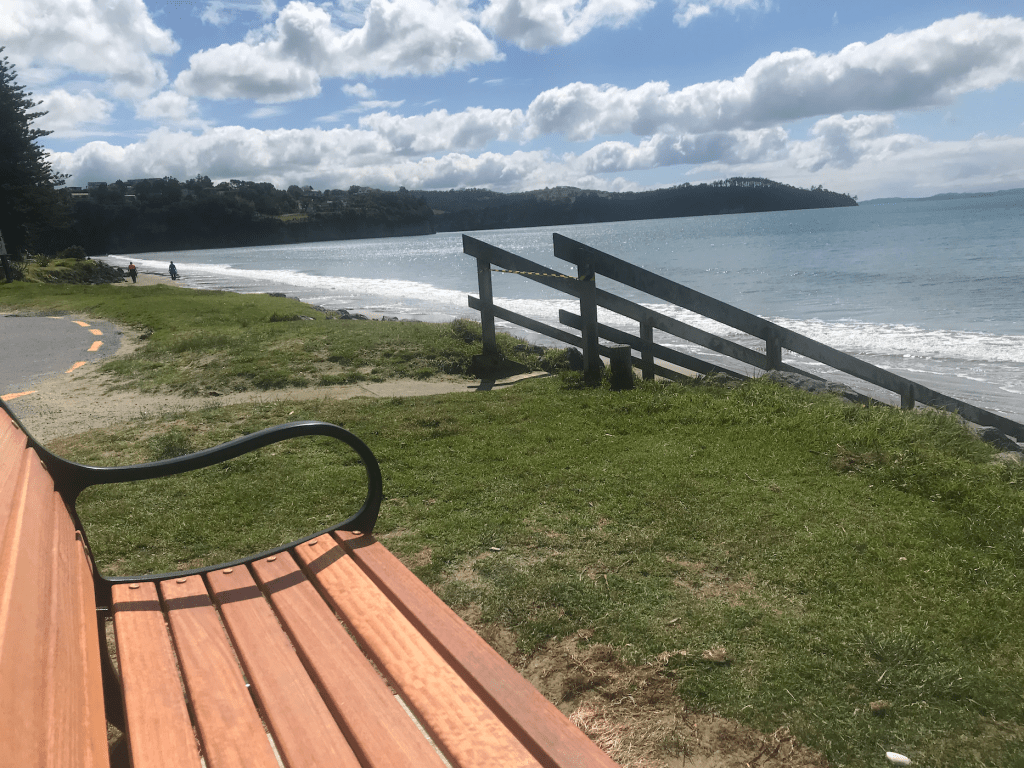
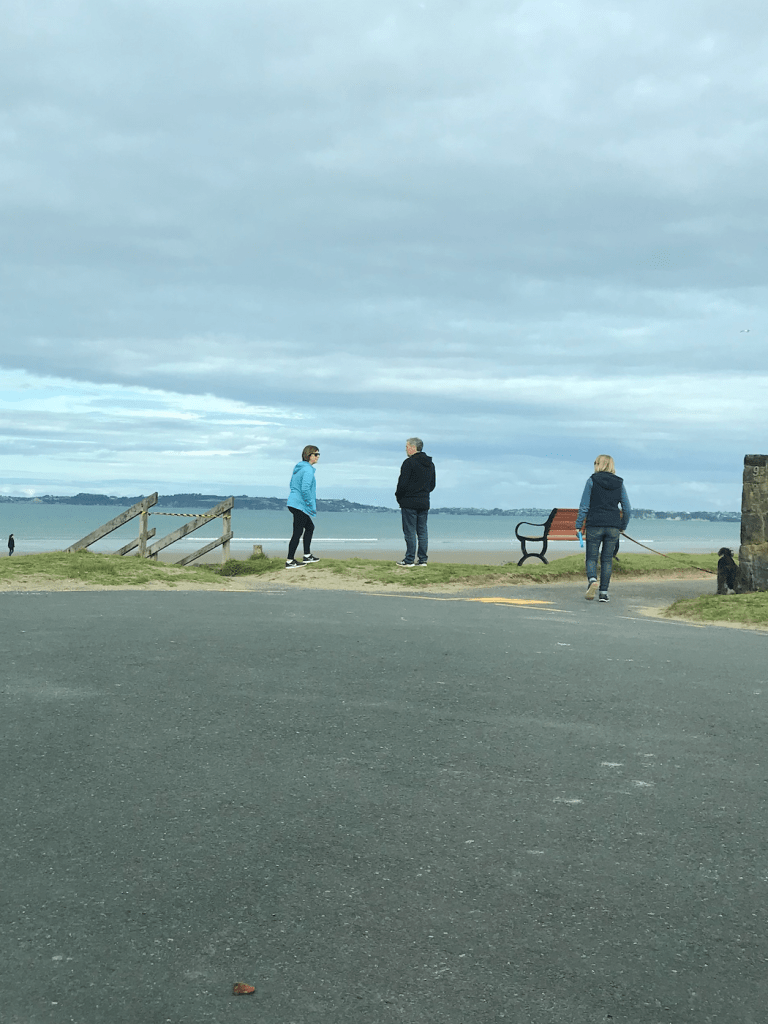
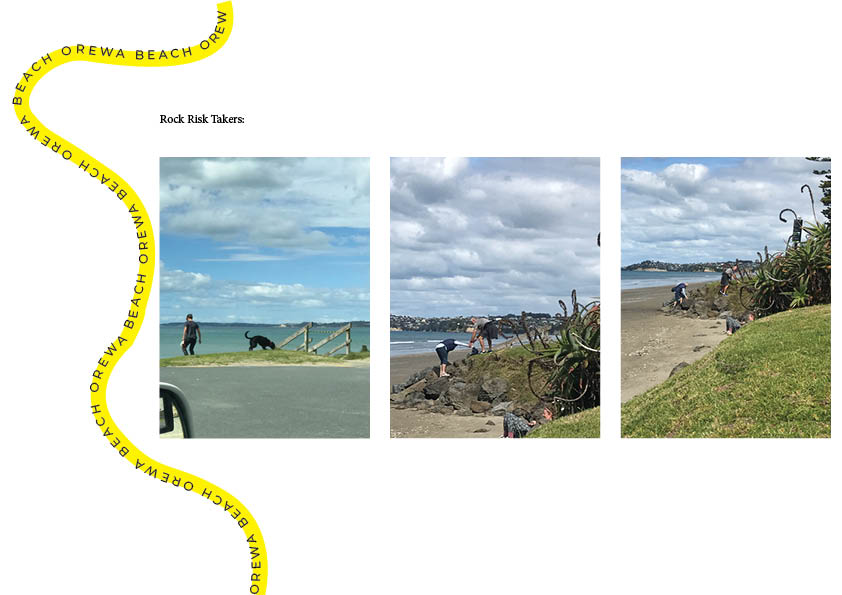
– in my initial proposal I had drawn a lot of caution tape used to section off the stair way. In my implemented intervention I did a simple strand at the top of the stairs and one at the bottom of the stairs. Enough to signal warning but not aggressive enough to deter people from ducking under it. This gives room for people to move around the tape if they deicide thats the best way forward. This might show that people value you their time more than a shared path way or their physical well being.

Documenting my final intervention process:

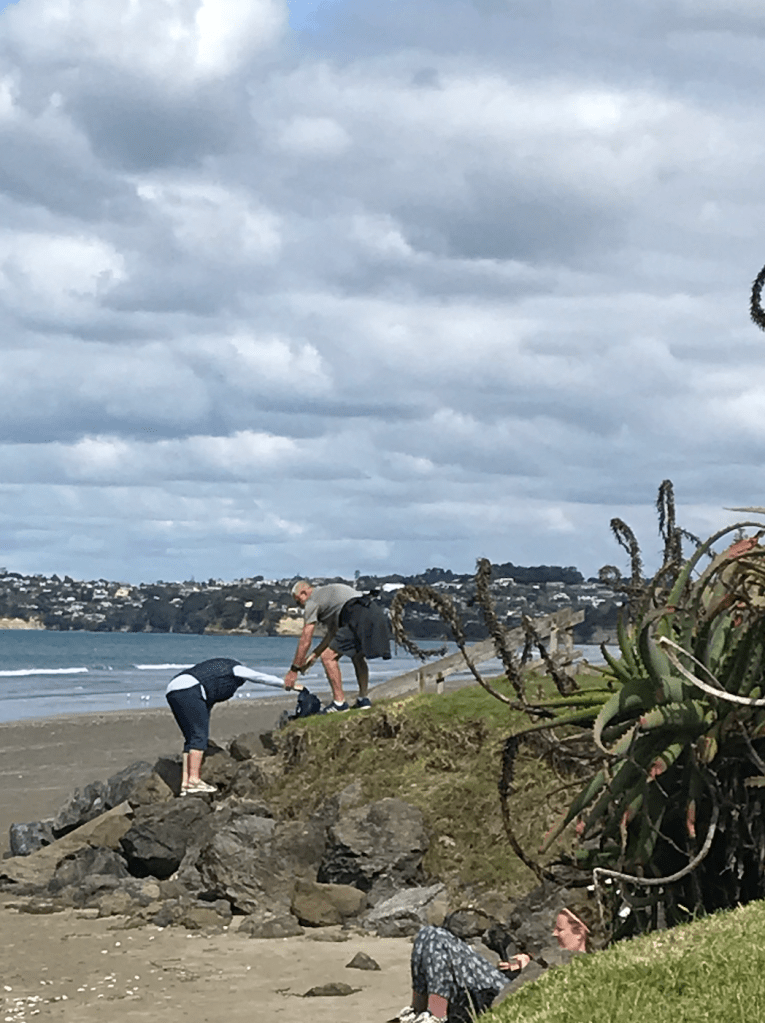
Observation notes from 10am-5pm:

  • Person walking on beach who was already on beach disregarded the tape
  • Old bench Sitter looked for what could be the problem 
  • Had to double take and then carried on 
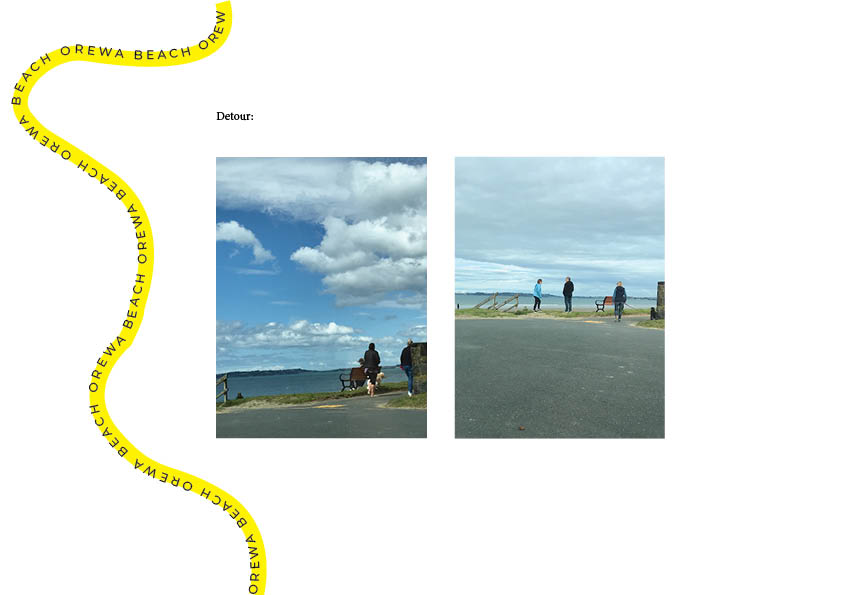
  • Dog walker detour to get down to beach
  • Cars turning around to go elsewhere 
  • Old man ignored it and got help to duck under tape by seperate party
  • Wife found another way around 
  • Mum and kid crawling 
  • Old mate walked through both ends just coz at 4:23 (white older male)
  • Immediately followed by a seperate dog walker who used the stairs to come up
  • Didn’t think twice 
  • Once tape was broken people didn’t seem to think twice about using stairs 
  • Lady who had detoured earlier came up through the broken tape, checked it out after but still walked through 

Presentation ideas:

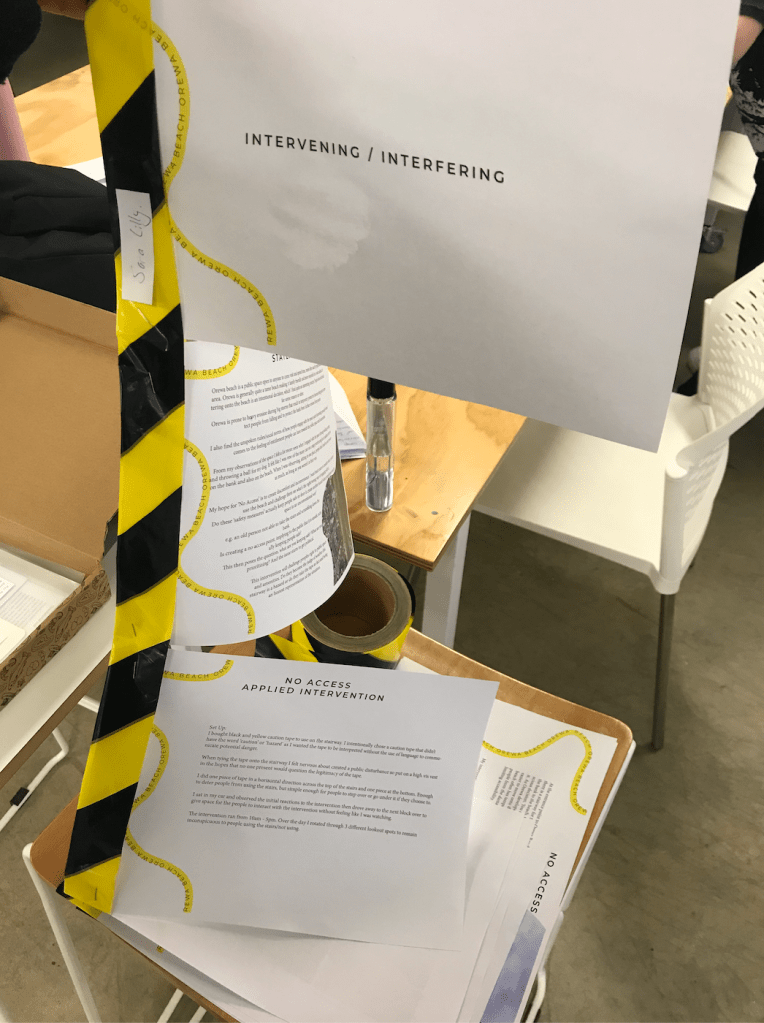
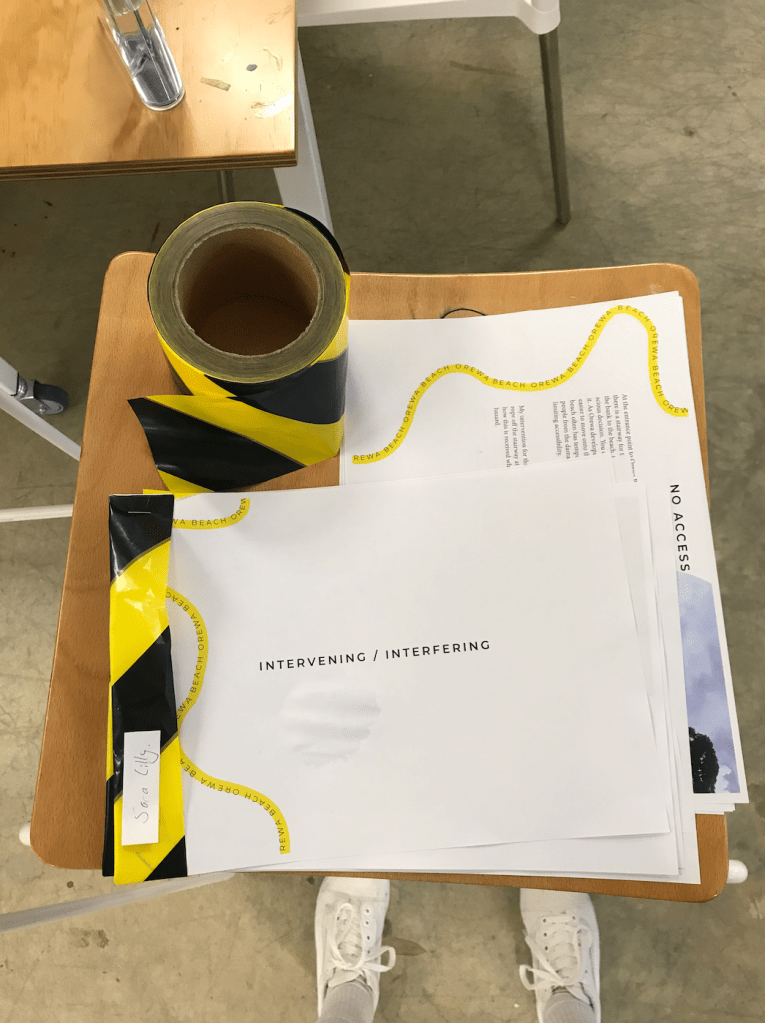
I wanted to incorporate the tape in my final presentation somehow. I had the idea to connect each page with the tape so that there is the option to string it up somewhere and still be used as caution tape.

Final presentation:

Something that I hadn’t planned but was a happy accident was that the yellow line at the bottom of each page lines up with the line on the top of the next creating a great aesthetic flow across the document. Due to the pages all being connected when you lifted off the first page the yellow line connected the pages as well as the caution tape.

Week 6 Studio: Laying out the Map

Uncategorized

Minimal interventions research/performance based practices:

Fluids a happening by Allen Kaprow:

I love the relational aspect of Kaprows Happenings. Fluids has two different audiences, the one who builds the ice structure and the ones who happen upon it. This creates different experiences for the two parties. I love the fluidity of the project that no one structure will perform the same as the next. The structure is in partnership with the sun and its environment. They have to work together to create the art. “each occurrence is unique and each person’s experience different.” Depending on when you encounter the structure your experience will be different even if you visit it multiple times. I really like that concept and will try and work it into my final proposals.

Robert Smithson’s Spiral Jetty:

https://publicdelivery.org/robert-smithson-spiral-jetty-utah/amp/

His concept is very simple, mainly playing with the passage of time. It isn’t created to draw lots of attention. It is more of an invitation for critics to interpret the installation in their own way. I really like that depending on water levels over the years it’s not always visible. It weathers with its environment mutating through the different seasons. I thought it was interesting that many critics didn’t feel the need to actually visit the site unlike Kaprow’s works which rely on the audience to be fully realised.

Laying out the map

Did something come out of the documentation that might drive these proposals? 

– the history of the beach being a hazardous place

– the beach is a communal, shared space not just for all people but animals and wildlife as well

-a lot of observing happens at the beach

Any hunches, intuitions, gravitational pulls? 

-there are a lot of knock on effects that can happen in the environment. eg. tides affect how many people go walking on the beach, people laying down towns makes people alter their path to go around.

Has something emerged from the documentation of others, that might shift the direction of the project?

-the way I feel towards different interactions could either develop the concept or hinder me from exploring ideas further.

Do you want to extend social activity that occurs, or introduce? 

-i’m wanting to extend social activity that occurs in a more abstract way. Using a concept that applies to the site but in an unusual form of presentation to the norm.

My Parameters:

  • a performance space
  • highlights social behaviours in a new way
  • connects people through their actions in the past to people in the present/future
  • connects people to their environment
  • Abstract presentations of common concepts

‘Like-minded Projects’

Proposal development:

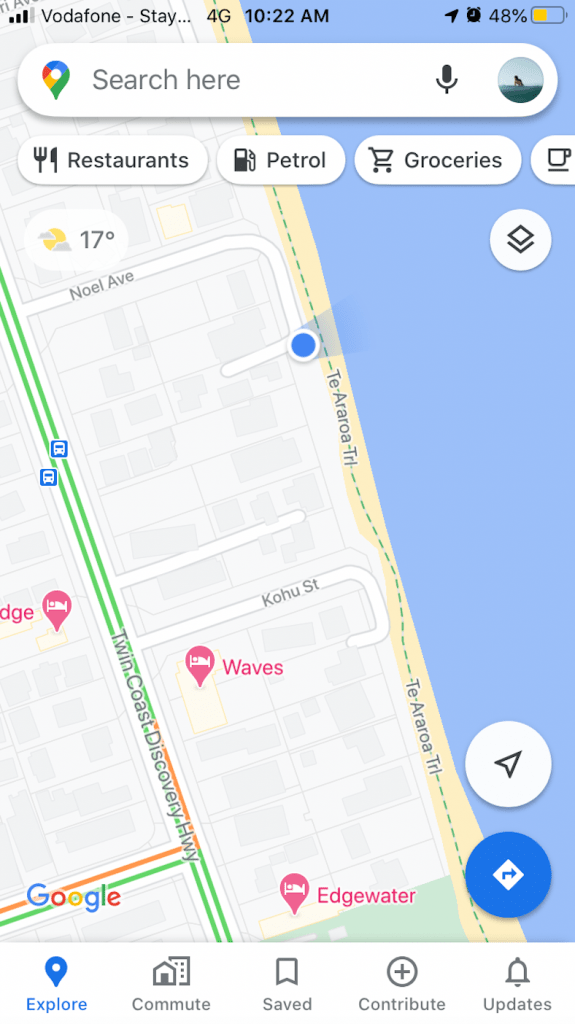
I have chosen to situate my proposals on the area of Orewa beach that sits in front of the Koho Street entrance.

Proposal one:

Beach Yoga

To lay down a handful of yoga mats in an orderly format with one at the front of the others. The concept I am wanting to explore is the idea of physical activity on the beach being something of a performance. My intention for this proposal is to bring attention to the extent that people look into others space. This intervention would have to occur during mid-low tide to ensure they have enough space.

Proposal Two:

Hazard Sign by the water

Drawing on the old ideas about the beach that it is a dangerous place, I will erect a hazard sign on the waters edge cautioning people about entering the water. I would use the bright yellow and black that is universally recognised as a warning sign so even if you can’t read it you know what it’s trying to say. My intention for this proposal is to highlight how dangerous the beach/ natural environment can be. Overall Orewa is a pretty tame beach but there are times when it is quite hazardous. As New Zealanders we think the beach is our friend and but mother nature is friend to no one.

History of the Beach:

https://www.rnz.co.nz/national/programmes/afternoons/audio/2018680569/the-history-of-the-nz-beach-holiday

https://teara.govt.nz/en/beach-culture/print?__cf_chl_jschl_tk__=892cdb938ea40b5450d3bc41a349b2f418af3629-1598918180-0-AZ7Udyc7uoEOkeI3gsq88cOVWR-ol4umzDuk8D_ZhuBvIPGwENPcaEK0PjORfxRqX5J5DB54q35jrwrVcfMRYDz_Dpe0U7yQWAvMr78fsFXzdZNe6F-TSUt3Fr8x6HWDUdZrQa8aEaHXeGhHVSdyk6tHZZaIY_Ahiux3b7HOKT2fUnaFOuTv4UuAl_o8loAwI5gn_Prbs3AQkfcmtSVPWtrF6LeI7siSD4FC2MUV962Dp0gdJ3f-Pqve6w3UBW3vM_MR7-6HkGxjnyrd7Vi4cX9YZWmcTlW22fvtRf-eMoI7ULcAGEoKr-DHousRZw7Fnw

https://www.smithsonianmag.com/history/inventing-beach-unnatural-history-natural-place-180959538/